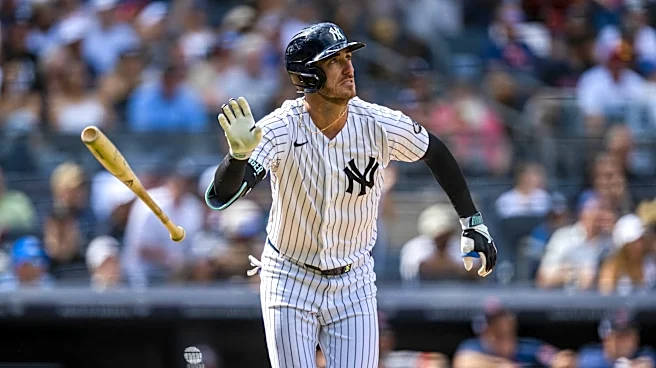

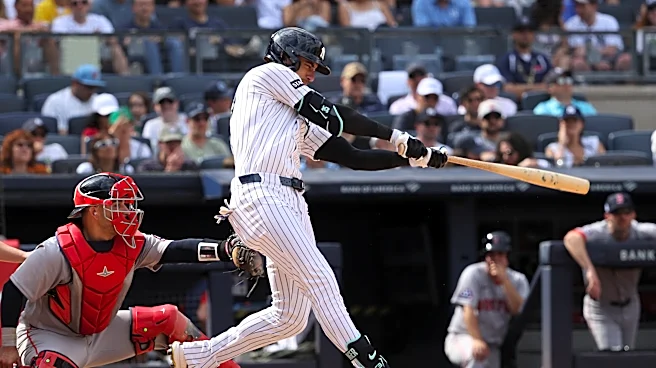
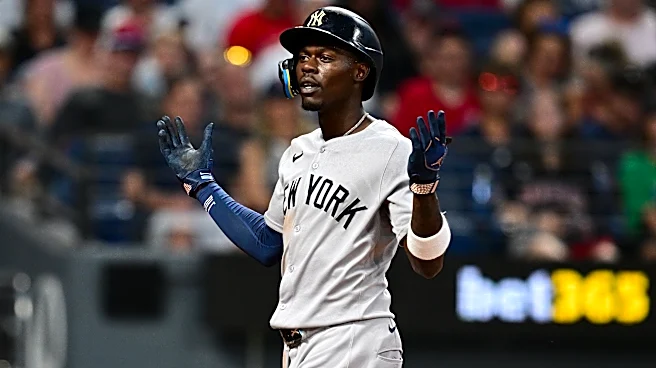


Coming into the Yankees’ May 3rd game against the Orioles, Ben Rice was riding high. His slash line stood at a mind-boggling .337/.455/.745, and he further added to it with a first-inning homer off of Trey Gibson. However, misfortune befell him in the third inning. A low pickoff attempt from Max Fried hit him on the base of his palm, and the resulting discomfort led him to be replaced on defense by Paul Goldschmidt in the fourth. After the game, X-rays came back negative, and Rice was listed as day-to-day.
However, after Rice returned to the lineup on May 8th, it soon became clear that something was off. His walk rate suddenly cratered. His exit velocity numbers took a nosedive. From May 8 to May 26, Rice hit a paltry .197/.240/.394 across 75 plate appearances, for a wRC+ of just 75. As Rice struggled, the rest of the team did too, losing 10 of 16 games during this stretch. With each passing day, the need for Rice to recapture his early-season form became more pressing.
Then, as suddenly as it began, Rice’s slump ended. From May 27th onwards through Monday’s action, Rice is hitting .395/.500/.763, with 8 of his 15 hits going for extra bases. Behold this glorious graph:

I think this shows pretty clearly that Ben’s back on track.
So, what caused the slump? The dip in power, it seems to me, can be explained pretty easily by the hand injury. However, what about the abrupt and dramatic decrease in walks? I’m not a physiologist, but as far as I know, having a bruise on your hand does not affect one’s eyesight in general or dynamic visual acuity more specifically. What gives?
Statistically speaking, the likely culprit for Rice’s uncharacteristically low walk rate was an increase in chase rate, particularly for breaking and offspeed pitches. In April, Rice ran extremely healthy chase rates of under 20 percent for both pitch groups. In May, they ballooned to over 30 percent — not egregious, but certainly above his career norms. However, as the calendar turned to June, Rice got back on top of things again, cutting his offspeed chase rate to 22.2 percent and his breaking chase rate to 14.3 percent. Here’s what that looks like in graph form:

I think we can say that Rice’s hand injury also had something to do with this decline in approach. Ben Rice’s offensive game is built around waiting for pitches he can do damage on. He’s quite passive at the plate, as his overall swing rate of 42.1 percent is tied for the 32nd-lowest mark among 161 qualified MLB hitters this year. Usually, he can afford to be passive because a) he’s good at laying off pitches out of the zone, b) he makes contact at a good rate on pitches within the zone, and c) he hits the snot out of the ball.
However, Rice’s hand injury threw a wrench into the works by sapping his power. My hunch is that, in order to maintain his production without his usual pop, Rice was either subconsciously pressing or deliberately trying to make more contact in the zone, leaving him more susceptible to pitches starting in the zone and ending up outside it. As the effects of his injury wore off, Rice returned to his normal game plan, and all was right with the world again.
In my opinion, one of the most important things I look for when evaluating a hitter’s long-term prospects is how effectively they respond to slumps. Everyone goes through cold streaks — the best separate themselves from the rest by not letting those spells spiral into months or halves. Ben Rice having a pretty cold half-month induced largely by a fluke injury shouldn’t be cause for concern. On the contrary, the fact that he’s returned to form so quickly should be music to Yankees fans’ ears.