


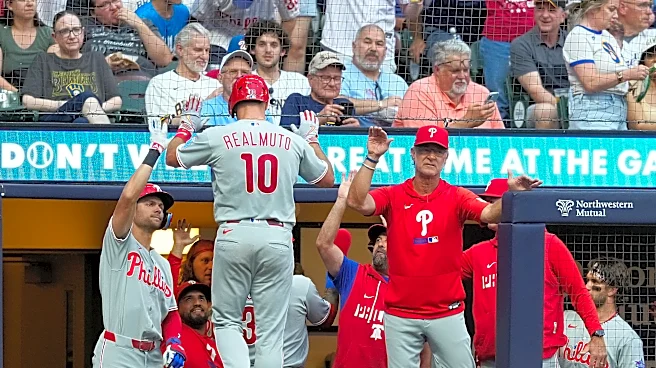




In middle school English class, I was taught about the structure of a story. It has the inciting event, the rising action, the climax, the falling action. Baseball games can be exactly like that. Or exactly not like that. This game had most of those pieces, sure, but they all came fairly early. The Phillies struck first, and they struck fast, and then the rest of the game was mostly a quiet walk towards the ninth; all falling action. There wasn’t really much of a climax, either. English teachers
might not like this sort of story—it’s rather avant-garde, not good for teaching standard story format— but Phillies fans probably enjoyed it just fine.
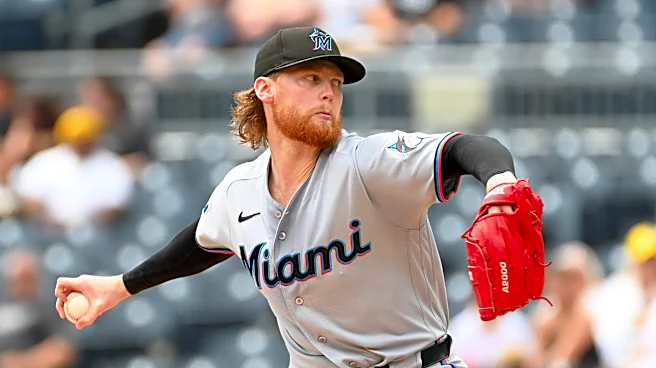
Jesús Luzardo wasn’t extremely sharp in the top of the first— he walked his first batter, had a wild pitch, and fell behind in some counts— but he got out of it without allowing a run. Marlins starter Tyler Phillips also walked his first batter (Brandon Marsh, in an atypical leadoff role), and then another (Bryce Harper, in a not-atypical role of batting third). Alec Bohm blooped a ball to shallow right that stayed just fair, and Marsh scored. Stott sent a ball flying to Monty’s Angle, and both ballplayer and ballpark did their jobs: the wall sent the ball caroming away from the fielding Fish, and Stott dashed to third as two more runs scored.
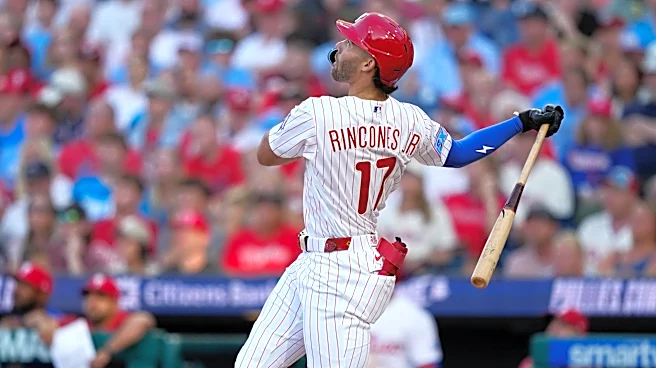
The second inning was much like the first, only more so. Luzardo navigated through the Miamis without allowing damage, and Phillips did not. Specifically, the damage Phillips allowed came via a single from Edmundo Sosa, and a subsequent homer from Marsh, sailing into center for a 5-0 lead. And then another two-run homer when Bohm smacked one to much the same place as Marsh did. 7-0, good guys.
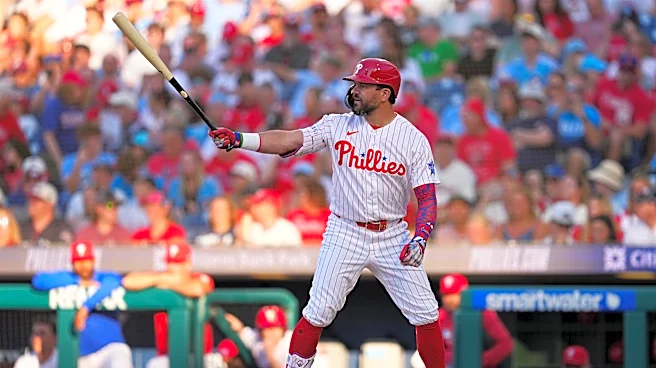
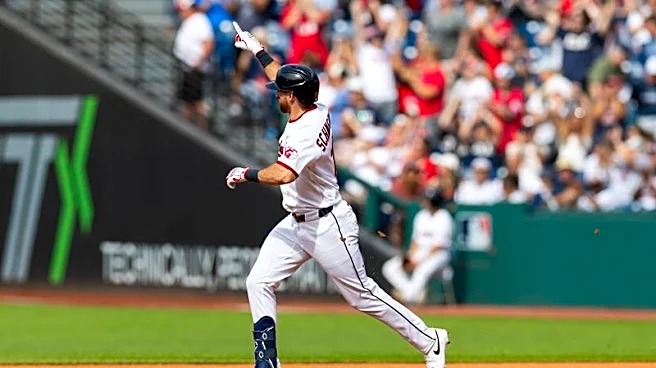
The Phillies then went scoreless in the third, and were poised to go scoreless in the fourth. That is hardly objectionable when you scored seven in the first two innings. But nevertheless, there was an objection from a certain Kyle J. Schwarber, who homered to right to give the Phils a figure 8 in the scoreboard. That was the end of the Phillies’ run scoring for the night, and it was more than enough.
The Marlins got their first hits in the fifth, putting two aboard via singles, then loaded the bases with a walk. The Marlins thought Xavier Edwards might’ve been hit by a pitch, and challenged, fruitlessly. The subsequent groundout to end the inning produced the dull, wet sound of a beached fish flapping against the sand.
The game had slowed down considerably since those thrilling first two. The Phillies plated no runs in the fifth and six, and the fish remained flopping through those innings. Finally, Miami got some water flowing through their gills in the top of the seventh, when Leo Jiménez doubled and Esteury Ruiz homered to left. Not an ideal way to end a start, but it did little to diminish what ended up as a a very good night for Luzardo : 7 IP, 9 K, 2 BB, 2 ER.
Tanner Banks was his replacement, and he kept Miami on the hook, allowing no runs. Max Lazar took the ninth. If the Marlins were instead named the sharks, there’d be a really good Austin Powers reference to be made here, but they’re not, so there isn’t. Instead, we’ll have to settle for noting that Lazar was a strike away from striking out the side to finish it. Instead, he allowed a single; though it hardly was reason to fuss, as he wrapped up the game with the next batter. The Marlins will surely hope for a dramatic redemption story in the series finale, as they’ve scored just two runs through two games. The Phillies, for their part, would surely not mind a continuation of the narrative.
The Phillies are 40-33. They’ll conclude the series against Miami on Wednesday at 1:05.