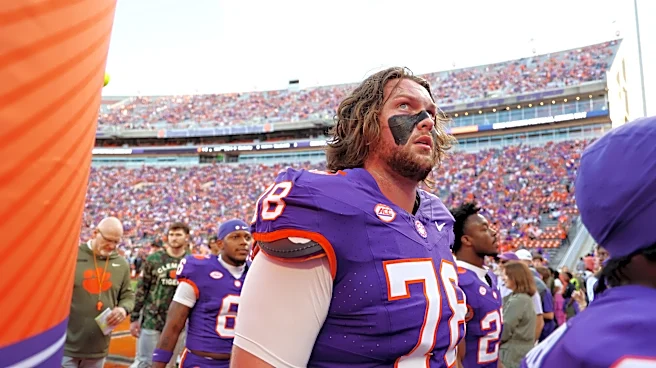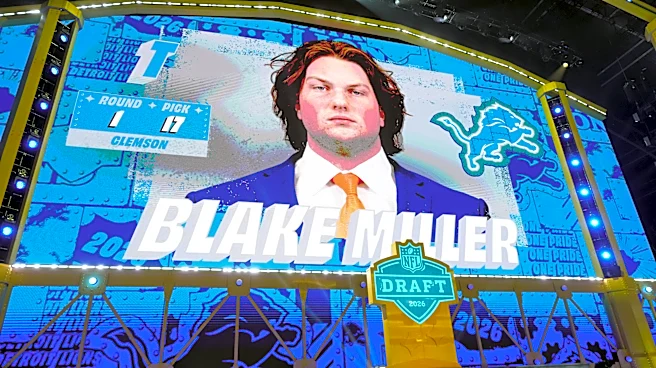





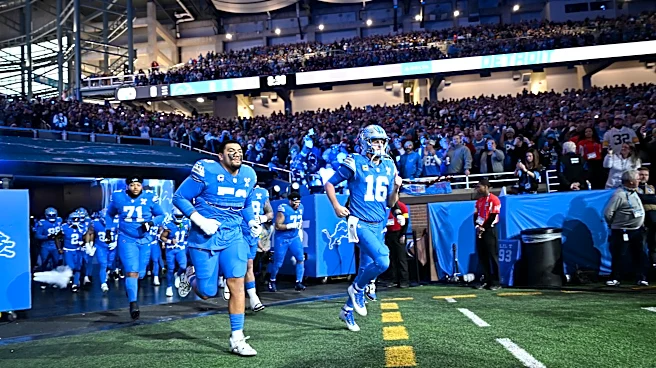
It was a roller coaster ride in the lead up to the Detroit Lions pick at No. 17. Despite some smoke from insiders suggesting that Brad Holmes was looking to move up in the draft, Detroit stayed pat and made their first selection in the 2026 NFL Draft.
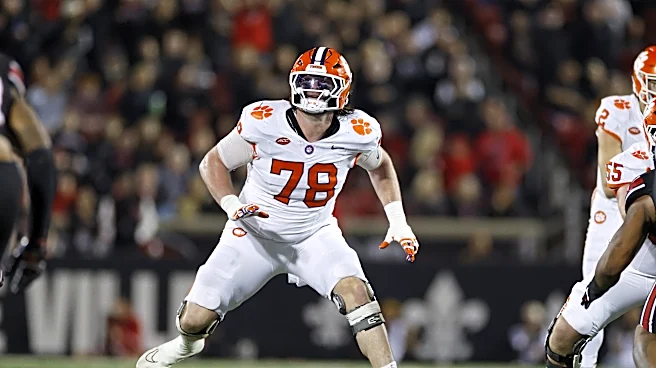
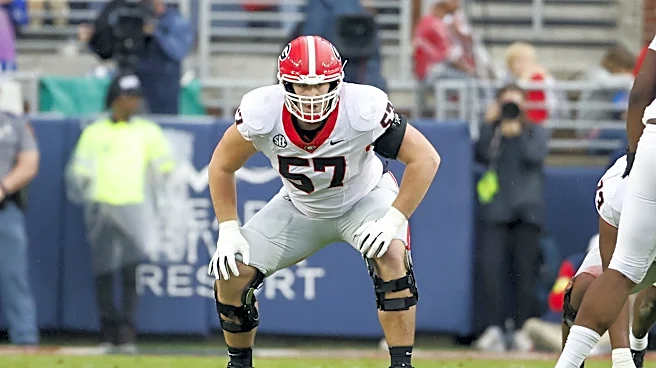
The Detroit Lions selected Clemson offensive tackle Blake Miller at pick No. 17, making him the fourth offensive tackle off the board and the fifth offensive linemen overall to be drafted in the first round. Through eight selections, none of the pool’s
offensive line prospects were picked, but from picks nine through 14 saw four of those players come off the board—Spencer Fano, Francis Mauigoa, Kadyn Proctor, and Vega Ioane.
The drafting of Miller caps off an offseason where the Lions were very clearly committed to making their offensive line the top priority. Detroit’s lone signing on the first day of free agency was Cade Mays to be their starting center. They filled out their depth bringing in veterans Larry Borom and Ben Bartch to compete for starting spots at tackle and guard respectively, and received Juice Scruggs as part of the return for David Montgomery. All of this is to illustrate how the selection of Miller represents the finishing touches of Holmes’ biggest offseason project: rebuild Detroit’s engine on offense.
In Miller, right off the bat, Detroit is getting one of the very best fits from a character and play style perspective, as outlined by Erik Schlitt and Anthony (@Btwn_TheNumbers on Twitter) in this year’s installment of their Grit Index:
“From a grit standpoint, Clemson’s Blake Miller is the clear top dog amongst offensive tackles. A powerful mauler, Miller wins with a finisher’s mentality and plays through the echo of the whistle. Throughout the Grit Index, Miller was acknowledged for a variety of traits…”
He scored in the top-tier (9.67, top 1% of this year’s class) and his tape shows it in spades.
Consistency and durability were the hallmarks of Miller’s time at Clemson, starting in 54 out of 54 games since he stepped on campus as a true freshman. One of the quotes that stood out the most when it came to connecting a player to Detroit came from Dane Brugler’s ‘The Beast”: “I think he missed one practice in four years. The thought of letting down his coaches and teammates kills him.” It immediately identified Miller as the kind of guy who holds himself accountable and plays for the guy next to him, and it was clearly endearing to a guy like Dan Campbell.
“There’s a lot of things about him, love the way [Miller] plays the game,” Campbell told Fox 2’s Dan Miller after the selection. “There’s a way that he prepares, there’s a way that he trains to get ready, all those things. But really, just turn on the tape: he’s a physical finisher, man. That’s what he does.”
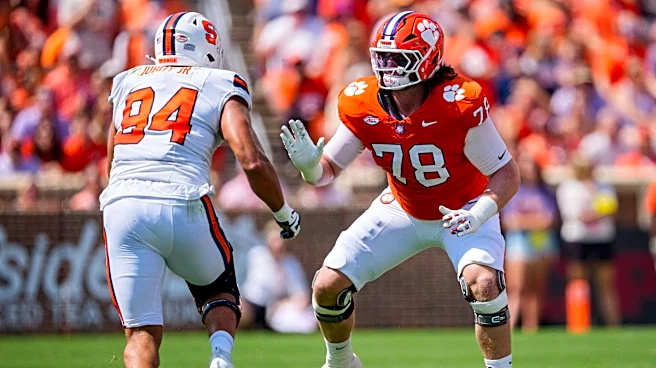
Miller spending the majority of his collegiate career at right tackle—playing just 101 of his 3,388 offensive snaps (3%) at left tackle—was considered a weakness in his projection to the NFL. But earlier in this offseason, Dan Campbell and Brad Holmes both alluded to Penei Sewell making the move to left tackle this upcoming season. Campbell said it outright at the annual league meetings, and Holmes wouldn’t talk about Borom without mentioning how good he looked at right tackle last season in Miami. The positional rigidity just won’t be an issue in Detroit, and that could have been a legitimate knock for him with other teams.
From a production standpoint, Miller was charged with just seven sacks (0.3% of pass-blocking snaps) and 68 pressures (3.5%) over his four years, and he improved both his pass-blocking grade and pass-blocking efficiency mark in each year according to PFF.
- Pass-blocking grades
- 66.4 (2022), 73.7 (2023), 77.1 (2024), 81.6 (2025)
- Pass-blocking efficiency
- 97.6 (2022), 97.7 (2023), 98.2 (2024), 98.3 (2025)
In the run game, he most recently finished with PFF’s 42nd-best run-blocking grade (72.4) in 2025, but earned praise from various draftniks when it came to his technique and skill. Brugler noted his “thudding, decisive hands as a run blocker,” his ability to “generate movement on drive blocks,” and how he “shows off [his] athleticism as a puller and on the move.” Lance Zierlin’s profile highlighted Miller’s fluidity in working to the second level, and his quickness at the snap to work in multiple run schemes. He certainly has the athleticism (the 17th most athletic offensive tackle since 1987) to show off on the move, but it’s going to require some technical refinement for him to be a more consistent run blocker.
Miller will be an essential component in the immediate and the future of this Lions offense as a whole, and if he delivers on the field, Detroit could have found an effective way to keep their salary cap in order by having a player at a premium position on a rookie contract. He has been described as a “high-floor player” by both Campbell and Holmes since being drafted, and while that descriptor can be viewed in two different lights, Taylor Decker was very much a “high-floor player” over his career, and they valued him until his availability cost him his viability for this upcoming season.
In an offseason where Detroit closed the Decker chapter with a page folded and creased, they managed to replace one of the franchise’s steadiest players with a prospect whose game is founded on a lot of the principles that made Decker successful—and a durability and toughness lauded by any profile you’ll read on Miller. It feels like Holmes and Campbell made good on getting back to what made this offense—and football team as a whole—a contender by making Miller the pick at 17.
And given that Holmes poked around and considered moving up after seeing that run on offensive tackles as the draft approached the teens, but he managed to not give up any draft capital to get what I do believe to be his guy in Miller. That’s good enough for the ol’ half-a-letter-grade bump, and hey, I did say that staying put at 17 and getting Miller would be one way the Lions could “ace” the NFL Draft.
My grade: A