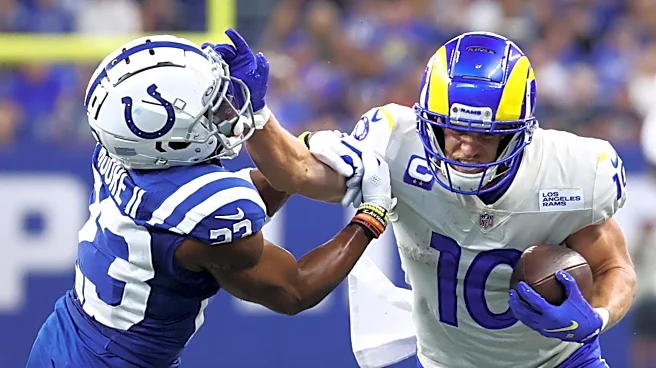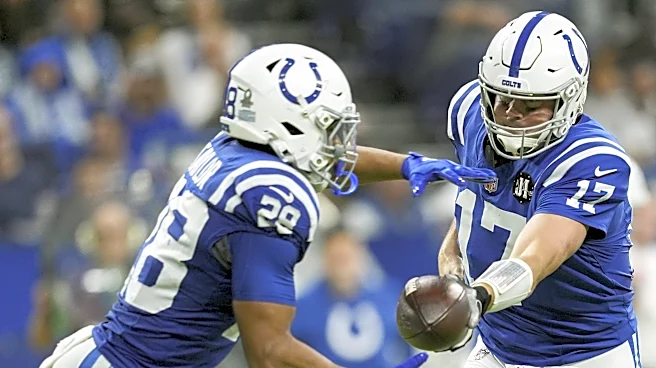




Jonathan Taylor is entering the final year of his contract, which means the Colts have another major decision coming with one of their core offensive players.
This one is a little different from most contract debates. Taylor is not a declining player. He is not someone the Colts need to move on from. When he’s healthy, he’s one of the best running backs in football and one of the few players on the roster who can completely change a game by himself.
The question is how much tread is left on the tires,
and how much the Colts should be willing to pay for what comes next.
I’ve written about the running back wall several times over the years, most recently looking at how many quality seasons Taylor might have left. The basic idea is simple: running backs do not usually decline gradually forever. They tend to hit a point where the workload, age, and physical punishment all catch up at once.
Based on my previous research, the general running back wall sits around 3,300 total NFL + college touches, with a wide range of outcomes. The standard deviation gives you about 600 touches in either direction, which means some backs hit the wall much earlier and others last longer than expected. But 3,300 is the key baseline number.
That brings us back to Taylor; he will be 27 years old this season. That’s not old in normal football terms, but for a running back with his workload, it definitely makes a difference. When healthy and stretched over a 17-game season, Taylor is averaging roughly 375 touches per year over the past couple of seasons, which is in the true workhorse running back territory.
Right now, Taylor has 1,738 NFL career touches and 968 college career touches from his time at Wisconsin. Add those together and he is already at 2,706 total touches.
If we use the 3,300-touch wall as the baseline, Taylor has about 594 touches before he reaches that point. At his healthy-season pace of 375 touches, that works out to roughly 1.5 to 2 more high-quality seasons.
That is probably the most realistic read of the situation. Taylor is not finished and he is not even close to finished if he stays healthy. The math, however, suggests the Colts should be careful about paying for three or four more years of elite running back production when the most likely outcome is closer to two.
There are different ways to look at it. The cautious view says Taylor may only have one more truly high-end season left before the workload starts to show. That would make any extension risky, especially if he has another massive workload in 2026.
The optimistic view says Taylor could be one of the outliers. If he lands on the high end of the range, around 3,900 total touches, then there could be three or even four more quality seasons left. That is possible and great players sometimes beat the curve, and Taylor has the size, speed, and durability profile to make that argument reasonable. Nevertheless, contracts should be built around the most likely outcome, not the best-case scenario.
That’s why a long-term extension would make me nervous. Giving Taylor three or four more years with heavy guarantees would be paying for a version of him that might not exist by the back end of the deal. It would also ignore the reality of the position. Running backs take punishment at a rate no other offensive skill position does, and once decline starts, it usually comes fast.
At the same time, letting this play out into the season is risky too. If Taylor has a monster 2026 season, the Colts are going to want him back and if the Colts wait until after another huge year, they could find themselves in the same kind of uncomfortable situation they had with Alec Pierce, waiting too long and sweating out a contract that should have been handled earlier. So it goes without saying… they should not repeat that mistake. Taylor is still worth extending. The key is doing it intelligently.
My recommendation would be a two-year extension worth around $34 million total, with about $16 million guaranteed and most of that guarantee concentrated in the first year. That gives Taylor strong money and rewards him for what he has meant to the franchise, while still protecting the Colts if the wall arrives sooner than expected.
The second year should have less guaranteed money and more of a flexible structure, whether that comes through higher base salary, roster bonuses, or incentives. That way, if Taylor remains elite, he gets paid well and the Colts keep their offensive centerpiece. If the decline starts to show, the team is not trapped in a long, painful running back contract.
That kind of deal makes sense for both sides. Taylor gets security before the season and avoids entering a contract year with all the risk on his body. The Colts keep one of their best players, maintain offensive continuity, and avoid overcommitting into the danger years of the running back curve.
In a perfect world, Taylor has three or four great seasons left and makes the whole conversation look too cautious, but the data says the Colts should not plan that way. The smart move is to respect the player, respect the production, and respect the risk.
Jonathan Taylor should be extended before the season, but it should be short, protected, and built around the reality that the running back wall is getting closer.