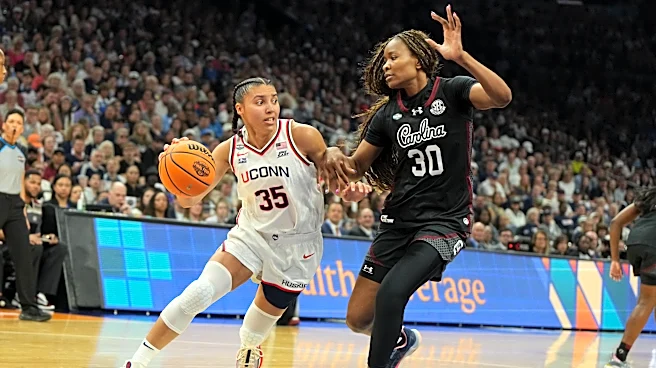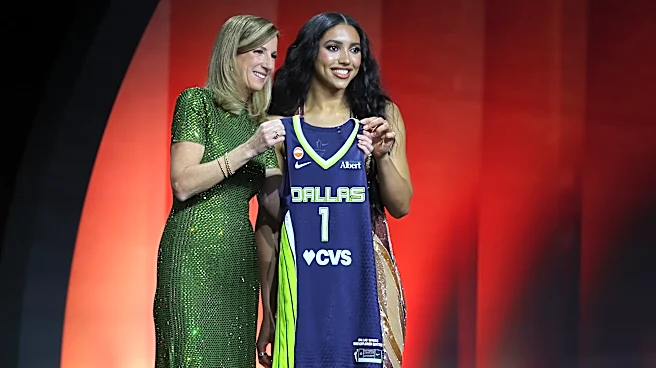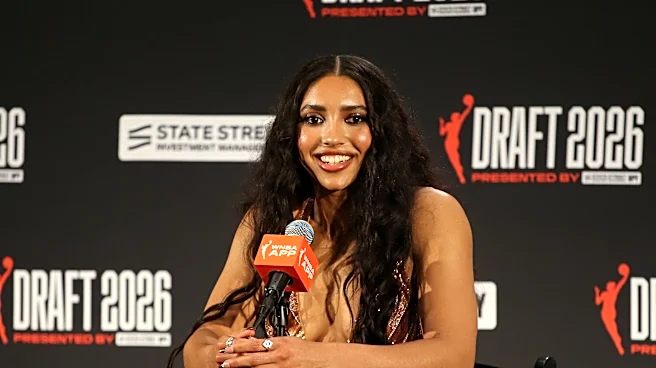





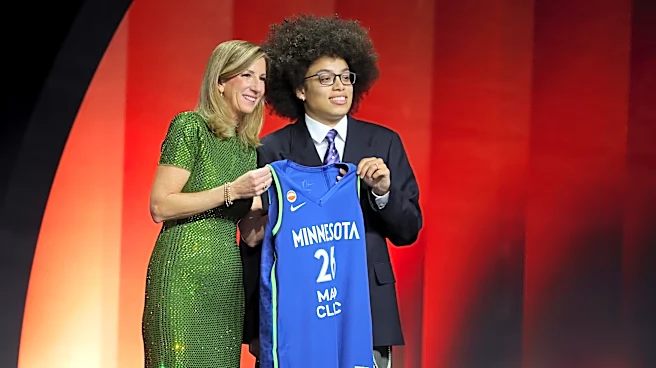
When Azzi Fudd’s name was announced as the first overall pick in the 2026 WNBA Draft, there was little surprise throughout the Dallas Wings fanbase. The pick had felt like a forgone conclusion in the days leading up to the draft—Dallas’ free agent activity, coupled with not-so-subtle hints from the social media team, telegraphed the decision.
Unlike a season ago, when Paige Bueckers’ name was etched in stone at No. 1 as soon as Dallas won the lottery, the Wings had a difficult decision to make this
time. There were at least four prospects in serious conversation for the top pick, all with legitimate pros and cons that Dallas had to factor in. A couple of weeks ago, I wrote a piece detailing the intense debate between advocates for Fudd and Awa Fam Thiam, the other prospect many mocked to Dallas at No. 1.
Ultimately, in choosing Fudd, the Wings took the easy route. They didn’t want to deal with the mystery box of the 19-year-old Fam. They didn’t think Olivia Miles’ offensive brilliance was worth pairing with Bueckers in the backcourt. Maybe they had doubts about Lauren Betts’ offensive utility, and having signed Alanna Smith and Jessica Shephard to big contracts, didn’t want to invest their top asset in another big. And above all else, it’s clear that this front office was enamored with Fudd from the start. Listening to general manager Curt Miller and coach Jose Fernandez after the draft, it seems like no other prospect was seriously considered. And it makes sense why: Fudd is an easy bet to be a good, productive WNBA player. You don’t have to rely on projection, fit, or intangibles issues with her. What you see is what you get.
And make no mistake, Fudd is going to elevate the Wings immediately. As Miller and Fernandez emphasized in their (strange, confusing) press conference, Dallas has been a dreadful 3-point shooting team for a long time. Enter Fudd, who instantly becomes one of the three best off-ball shooters in the league. Her gravity from the 3-point line will open up so much space for Bueckers and Arike Ogunbowale to operate. Smith and Shephard, plus passers in the frontcourt, will be able to take advantage of that space, too. When defenses close out to Fudd, she’s a very competent attacker and passer who can exploit the gaps in a rotating defense.
Defensively, Fudd is smart, strong, and motivated. She plays hard, knows where to be, and communicates well. Though I don’t project her as an impact point-of-attack defender in the league, she’ll be able to hold her own on ball and execute scheme. Fudd’s strong base, active hands, and basketball IQ should allow her to be a positive overall defender in the backcourt.
The issue with drafting Fudd is that the obvious value she brings on both ends can be negated somewhat by her limitations. Building a roster with Fudd as your starting two guard is not as easy as you might think. Many were confused about Dallas bringing back star guard and franchise Arike Ogunbowale on a two-year, max deal. After all, if Dallas was always planning on drafting Fudd (who plays the same position), why commit to Ogunbowale? Isn’t a three-guard starting lineup an issue on both ends?
And while the answer to that question is likely “yes,” Dallas needs Ogunbowale’s playmaking juice next to Bueckers and Fudd. Fudd’s lack of on-ball creation ability is an issue, as you need to have more than one playmaker on the floor to be good in this league. While Fudd is strong attacking closeouts and has a nice pull-up middy, there isn’t a ton of projected growth in her on-ball game. And when coach Fernandez was asked about this in the presser, he gave a clumsy, confused answer:
The Bueckers/Fudd/Ogunbowale lineup presents challenges. Although Bueckers and Ogunbowale are both strong playmakers and shooters who demand a ton of defensive attention, neither one puts much pressure on the rim. That could change for Bueckers this year, as she’s talked about putting more emphasis on attacking the basket. But Ogunbowale isn’t going to open up things with drives, and Fudd offers almost zero on-ball advantage creation to speak of. This puts a lot of pressure on Bueckers to create with ball screens and places a mandate on consistent rim pressure and foul drawing from her. She needs to do that anyway, but it’s going to add a physical toll on her body.
Speaking of that, the defensive end if where things really get tricky with this lineup. Though Bueckers and Fudd are both capable defenders (especially off ball), neither one is a point-of-attack ace. And Ogunbowale has always been a negative defender, despite her high steal totals. The big issue is that neither Fudd nor Ogunbowale are capable of guarding wings. This is going to force Bueckers, who has the size and speed to hang with threes, to guard up way more often that she should. How are the Wings going to deal with the Jackie Youngs and Rhyne Howards and Allisha Grays and Kahleah Coppers of the world? When facing teams that also have a dynamic primary ball handler, the Wings are cooked. Alanna Smith does a whole lot for Dallas on the back line, but right now the roster is at risk over overburdening her, too.
Despite the challenges this Wings’ roster faces, the team should be greatly improved this year. Is it enough to make the playoffs and possibly win a series? It’s hard to say. And I have to say, it’s odd to see Dallas all-in on competing as soon as possible with these offseason moves. After all, Curt Miller preached patience last year and claimed the Wings were following “a bit of the OKC (Thunder) model.” This draft selection and free agency period have been anything but. Sam Presti would have gone with the young “project” big in Fam, the player with the highest ceiling in the class. He would have had his sights set on the 2027 lottery, where the generational class runs about four deep. After Dallas’s moves, they’re unlikely to be bad enough to pick in that range.
And hey, that’s probably okay. Bringing in players like Fudd, Smith, and Shepard elevate things and make the product more fun to watch. The problem is that you’ve given yourself a very difficult tightrope to walk now. This has to work, and now you have no choice but to double down on the win-now time frame.
Drafting Fudd was about security. In addition to the reassuring, safe basketball floor, Fudd’s presence magnifies Dallas’ visibility and marketability as a franchise. People want to downplay that element of all this, but it’s there. The off-court reasons for drafting Fudd combined with the lack of can’t-miss, consensus top prospect created a scenario too good for the Wings front office to turn down. Look no further than Greg Bibb’s post draft comments or all the tweets about Dallas’ new partnership with Geico, a brand Fudd brought with her from NIL deals. This was an organizational decision that factored in all of the benefits to bringing in a player with Fudd’s profile and popularity. And that’s to say nothing of Fudd and Bueckers’ personal relationship — while I don’t think this was a heavy factor in their decision, it can’t be ignored either. Drafting someone the franchise superstar knows, loves, and has had previous success with is probably good investing.
There are very few reasons to think that Fudd won’t succeed in Dallas and make the franchise better on and off the court. People mocked Miller and Fernandez for stressing Fudd’s character and intangibles as key deciding factors, but those things are really important. However, if you look at the Wings’ roster, their future assets, and the core they currently have, it’s tough to squint and see a championship contender sometime soon. If it happens, it will be because Paige Bueckers becomes the best player in the world. In selecting Fudd and going big in free agency, Dallas has started down a rocky path. They’ve given themselves no margin for error with this approach. By playing it safe, they may have actually created the most dangerous situation for the Bueckers era. Time will tell if they’re right.