


What is the story about?
Yesterday,
I looked at the prospects on our top 40 or various honourable mention lists who were still prospects in the organization. Today, a look at changes prior to the deadline. I’ll do a follow-up next week to look at the prospects they add (and any they happen to subtract).
No Longer In the Organization:
- Nate Garkow (Matt’s Pref List) struggled mightily with his command in 18 appearances between New Hampshire and Buffalo and was released.
- Kai Peterson (Matt’s Pref List) continued to pile up strikeouts but struggle with walks over 19 innings in New Hampshire. He was recently released and signed with the Washington Nationals
- Hayden Juenger (Just Missed) was lit up in two appearances in Toronto, DFA’d, and traded the the Las Sacraland A’s for a 23 year old UDFA catcher.
- Ryan Jennings (#36) retired in June.
- Connor Cooke (#30) was released just before opening day after missing the 2025 season with injury.
- Jackson Horning (Matt’s Pref List) and Irv Carter (Tom’s Pref List) were featured on yesterday’s post, but have actually recently been released to make room for newly signed draftees. Hat tip to e&n4e for catching that.
Graduates:
- Spencer Miles (#27) has been a revelation, and is one of the few reasons the Jays’ bad 2026 isn’t a full blown disaster. When he was selected in the Rule 5 draft after an injury marred minor league career with the Giants, the hope was that the stuff he flashed in the Arizona Fall League last year would allow him to hang onto the back of the Jays’ bullpen for a season. Instead he’s posted a 3.26 ERA with sterling peripheral stats as both a middle inning reliever and bulk guy/spot starter and helped keep the heavily injured rotation from completely collapsing. Not half bad for a guy who’d never seen A+ before.
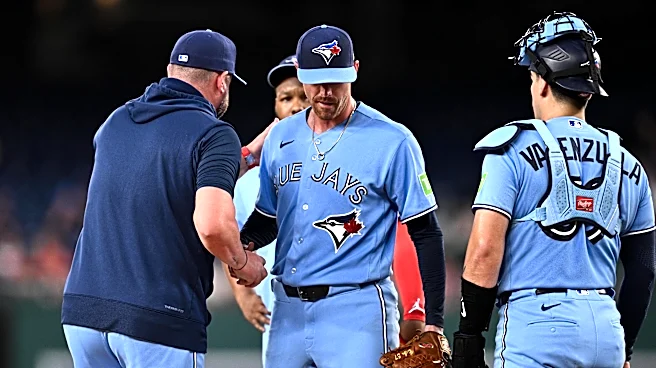
- Brandon Valenzuela (#20) has been as impressive as Miles and again has played a key role in keeping the Jays out of the true cellar of the AL. He’s justified every positive report about his defending and then some, posting elite framing and blocking metrics while controlling the run game with an easy plus arm. And he’s shown a well rounded offensive game that has him producing at a league average clip. He would start on half the teams in the league.
- Yohendrick Pinango (#13) has held his own since his promotion to MLB. His 115mph max exit velocity is still near the top of the scale, his average EV and hard hit rates are solidly plus, and his contact rate looks fine, but he expands the zone and puts it on the ground too much. As a DH, his 97 wRC+ hasn’t been enough to get him to replacement level, but I think the underlying stats show that there’s more in the tank, enough for a bench bat role and maybe a little more.
- Adam Macko (#7) has pitched to fairly unimpressive surface results in his MLB debut (a 4.91 ERA over 22.0 innings), but he’s missing bats at an above average rate, averaging almost 95 with the fastball, and his command looks playable. He looks like what we thought he’d be: a solid reliever who can go multiple innings and make a short spot start where it’s needed. He hasn’t been as good as Miles, but that’s the shape of his ideal MLB role in my opinion.
- Trey Yesavage (#1) hasn’t repeated the highs of his playoff dominance. He’s struggled with command of his splitter, especially in his meltdown outing leading into the All Star break. He still misses loads of bats, though, and batters still can’t square his fastball up at all. The headline results are already pretty good, and as he gets farther from the shoulder issue that delayed his season debut he should find more consistency and settle in as a quality sidekick to Dylan Cease as a playoff calibre 1-2.
Trade Acquisitions:
- Ryan Sprock was the return for Tommy Nance. He hit throughout his college career, at Elon and in the wood bat Northwoods league, but slipped to the 8th round because of his iffy glove at third and lack of raw power. The Twins converted him to catching soon after he signed, and he took to it immediately. In the pros, Sprock has walked way more often than he’s struck out, sprayed line drives around, and hit for enough power. He looks like a bat first backup catcher and fits on the back third of a top 40.
- Dub Gleed was acquired from the Marlins along with $250,000 in international bonus pool money for Leo Jimenez back in March. He has a strong approach and is an above average contact hitter with fringy power. He’s a below average runner and a fringe defender at third who’s spent significant time at first. It’s a tweener profile, without the glove to play up the middle or the thump to start in a corner, but he’s produced through AA and can be a bat oriented corner utility guy who fits towards the back of a top 40.
Top-40 Relevant Draftees:
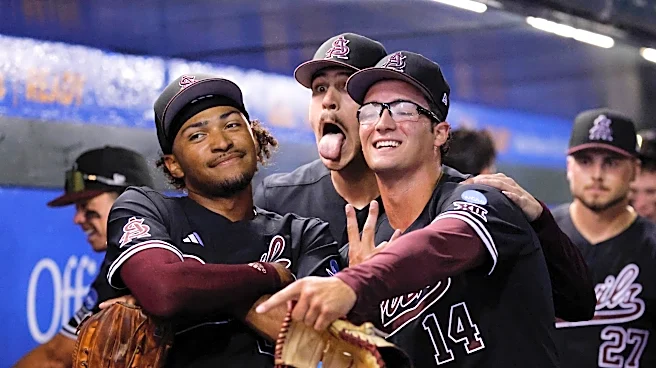
- Cole Carlon, LHP, 39th overall, signed for $2.4 million. Carlon spent his first couple of seasons at Arizona State in the bullpen, but broke out in a huge way this season when he moved to the rotation and added significant velocity. He now sits 96 and crests 100, but his best pitch is actually a devastating high 80s slider. He has work to do to refine his change and curveball, and while his command progressed this year it’s still below average. If he makes those strides he has front of the rotation upside, but even if he doesn’t the slider-fastball combo is enough to close. He fits in the 4-8 range in the top 40.
- Will Brick, C, 131st overall, signed for $2.5 million. He’s a no doubt catcher and potential plus or better defender with maturity. Offensively, he has a sound approach and bat to ball skills, with raw power that could be above average with development but a swing that doesn’t elevate enough to get to it fully right now. Prep catchers are an ultra high risk demographic, but Brick has both the glove to have a solid chance of at least being a long term backup and the all-around offensive potential to be a first division starter. He fits towards the back of the top 10.
- Ryan Coney, SS, 103rd overall, signed for $600k. Cooney has exceptional contact ability, with the ability to shoot line drives all over the field while rarely swinging and missing. Defensively, he profiles best at second base and can be average there. His minimal power caps his upside, but it’s possible a plus hit tool allows him to make it work as a borderline starter anyway, and he can be a contact oriented utility infielder if he falls a little short of that. He likely lands around 20th on the list right now.
Pop Ups:
- Jay Harry was the return for Trevor Richards back in 2024. He can play passable defence anywhere up the middle and is an above average contact hitter, but an ultra-aggressive approach and little power have made him a below average hitter above A ball. This season, he’s tweaked his swing to lower his launch angle and de-emphasize a previously pretty extreme pull approach. Counterintuitively, that’s resulted in a leap in power production and a 137 wRC+ across AA and AAA. It’s hard to tell whether the approach will hold up in the big leagues, but he can play enough roles that he’s likely to get some kind of chance, which would have been a surprise if you’d told me four months ago. He belongs somewhere in the middle of a top 40.
- Tucker Toman was a big budget second round signing back in 2022. He never produced and quickly fell off the prospect radar. In 2026 he’s finally ditched switch hitting and accepted that he’s a lefty, and the result has been a 124 wRC+ in his first full season at A+. He still swings and misses a little but he knows the zone and has power and can stick at third. This isn’t a full scale breakout, but he’s still 22 and at least relevant for the first time in a couple of years and would be on my pref list or maybe the back end of the 40.
- Danny Thompson jr. went almost totally unremarked on after signing for just $5,000 out of UNC Greensboro last year. In his first full pro season, though, he’s struck out an even 30% of batters he’s faced and forced his way up to AA as a starter. Thompson has solid control of a four pitch arsenal including a four seamer that gets up over 95, a change, slider and two-plane sweepy curve. Nothing is plus, but all four offerings are within range of average and the slider is a little more than that. With continued AA success to close the year, he’ll be in the 10-20 range on next year’s list.