

Minnesota Timberwolves at Boston Celtics
Date: March 22nd, 2026
Time: 7:00 PM CDT
Location: TD Garden
Television Coverage: NBC, Peacock, Telemundo
Radio Coverage: KFAN FM, Wolves App, iHeart Radio
There’s a certain kind of loss that tells you everything you need to know about a team.
Not the buzzer-beater losses. Not the “we got unlucky” losses. Not even the “their best guy went nuclear” losses. I’m talking about the ones where you can rewind the tape, pause it in the middle of the second quarter,
and say, “this is where it slipped away”, even if the final margin comes down to one possession and a corner three.
Friday night against Portland? That was one of those.
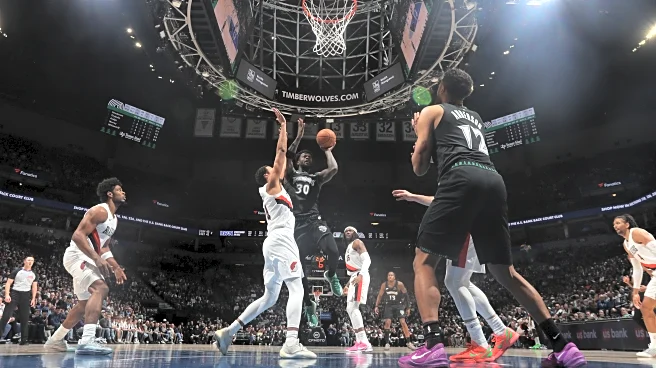
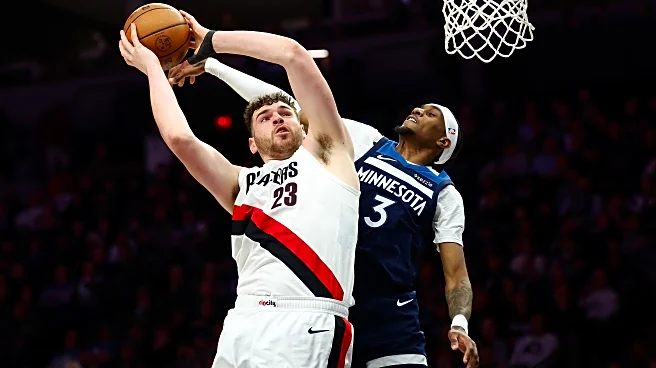
The Timberwolves had the opportunity sitting right there in front of them: finish the homestand 3–0, stack another win without Anthony Edwards, and create a little breathing room in the Western Conference standings. Instead, they walked away with a loss that dropped them from the fourth seed to the sixth. Minnesota now finds itself in a three-way tie with Houston and Denver, and, because the Wolves won’t allow themselves to have nice things, they hold none of the tie-breakers.
The worst part? You can’t even chalk it up to bad luck.
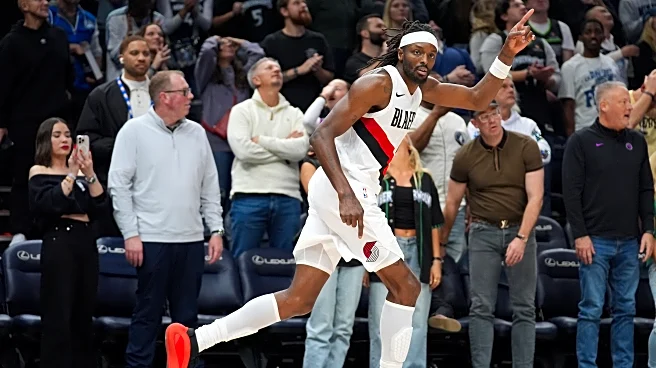
Yes, the final defensive sequence is what everyone will remember. Minnesota was clinging to a one-point lead and needed one defensive stop. Just one. And instead, they give up offensive rebound after offensive rebound, can’t secure the ball, can’t finish the possession, and eventually Jerami Grant is standing in the corner with six seconds left on the shot clock like he’s at an open gym, calmly drilling the go-ahead three.
Game over.
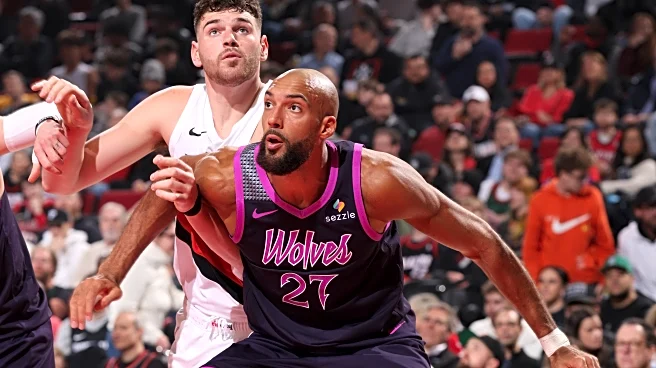
But if you think that’s why the Wolves lost, you weren’t paying attention. This game was lost long before Grant’s shot. It was lost on the glass. It was lost in the paint. And most of all, it was lost during a second quarter stretch that felt like watching a car skid off black ice in slow motion.
Portland scored on 10 of 11 possessions. It wasn’t just bad defense. It was a complete breakdown of structure, communication, and effort. The perimeter defense fell apart, which meant driving lanes opened up like automatic doors at a grocery store. The Blazers got uncontested looks at the rim. Minnesota couldn’t string together stops. And on the other end, the Wolves looked like five guys who had just met each other in the parking lot.
Ball movement? Gone. Shot selection? Questionable at best. Rhythm? Nonexistent.
By the time the dust settled, Minnesota was down 17 points, and the game had already tilted in a way that made everything else harder than it needed to be.
Now, to their credit, the Wolves did what they’ve done a handful of times this season. They fought back. They erased the deficit. They actually took the lead by the end of the third quarter and gave themselves a chance to win.
But that’s kind of the problem with this team, isn’t it? They’re constantly asking themselves to be perfect late because they weren’t disciplined early.
If they don’t dig that 17-point hole, they don’t need that final stop. If they don’t get outworked on the boards all night, maybe Portland doesn’t even have a chance to take that shot. If they defend with purpose for 48 minutes instead of 40, maybe we’re talking about a professional, workmanlike win instead of another postmortem.
At this point in the season, there are no moral victories. Not with the standings this tight. Not with the playoffs looming. Not when every game swings three spots in the bracket depending on how things break. Here’s the reality now: the Wolves have gone from flirting with the three seed to sitting in the six, tied with Houston and Denver, holding zero tiebreakers, and staring at a schedule that does them absolutely no favors. And oh yeah… Anthony Edwards is still out.
So now the conversation shifts from “can they climb?” to “can they survive?” Because coming up next is Boston, then Houston, and then Detroit. That’s not a stretch you ease into while trying to rediscover your identity. That’s a stretch that exposes you if you don’t have one.
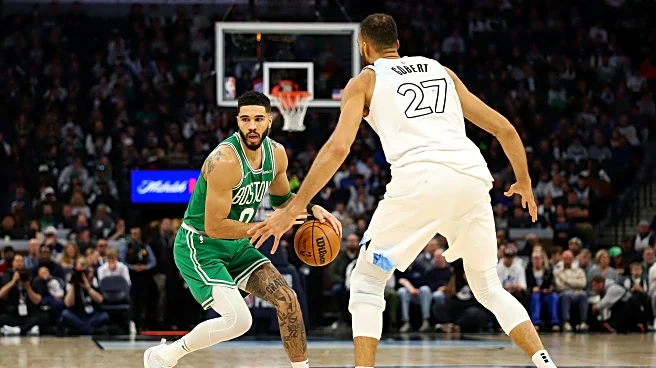
Let’s start with Boston, because that’s the immediate problem. The Celtics are getting healthier. Jayson Tatum is back. Jaylen Brown is still Jaylen Brown. They’re one of the most complete teams in the league when they’re right, and unlike Minnesota, they’ve shown an ability to weather adversity without completely losing their footing.
And if we’re being honest, it’s not entirely clear how the Wolves match up with them right now without Edwards. Which doesn’t mean they can’t win. It just means the margin for error is basically nonexistent. So if they’re going to pull this off, it’s going to require a level of discipline and execution we haven’t consistently seen.
Here are the keys to the game…
#1 – Value every single possession.
The Wolves have had a bad habit lately of being careless with the ball and sloppy with their decisions, which often turn into easy transition opportunities. You cannot give Boston free points. Every possession has to mean something. Every pass has to have purpose. If Minnesota starts gifting the Celtics extra chances, this thing could get out of hand quickly.
#2 – Win the rebounding battle.
On Friday night, Portland outworked them, plain and simple. Boston doesn’t have a Donovan Clingan-type rim presence, but they absolutely will scrap, rotate, and crash when the opportunity is there. Rudy Gobert needs to be a vacuum. Julius Randle, who, let’s be honest, had a rough night against Portland, needs to be better. Nothing deflates a team faster than playing 20 seconds of good defense and then giving up an offensive rebound and a reset.
#3 – Hunt high-efficiency offense.
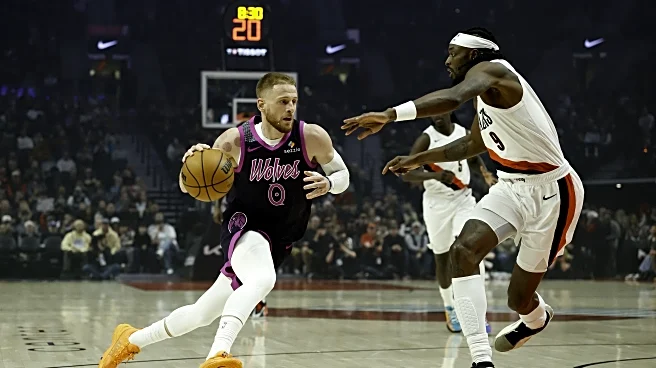
The second quarter against Portland was a masterclass in what not to do. Forced shots. Stagnant possessions. Hero ball without the hero. Against Boston, that’s a death sentence. This needs to be a connected offense. That means feeding Gobert around the rim, getting McDaniels and Randle downhill, and creating clean looks for guys like DiVincenzo, Bones, and Ayo. You’re not going to out-talent Boston without Edwards. You have to out-execute them.
#4 – Do not allow the avalanche. We’ve seen it too many times this season. A bad three-minute stretch turns into a bad five-minute stretch, which turns into a double-digit deficit that suddenly feels insurmountable. Boston is one of the best “run” teams in the league. They smell blood, and they go on those 12–2 bursts that flip games. Minnesota has to recognize those moments early. That’s on the players to stay mentally locked in, and it’s on Chris Finch to hit the timeout button before things spiral.
#5 – This has to be a Julius Randle game.
There’s just no way around it. Without Edwards, there isn’t a version of this game where the Wolves win and Randle is just “fine.” He has to be great. Not just as a scorer, but as a leader, a rebounder, a defender, a facilitator. Friday night was probably his worst performance of the week, and it showed. The engagement wasn’t there. The physicality wasn’t there, and it cost Minnesota the game.
The good news? We’ve seen the version of Julius that can carry this team. The one who attacks, who bodies people, who makes quick decisions, who bends the defense and opens everything up for everyone else. That version exists. Minnesota needs him to find it again… immediately.
This week isn’t about aesthetics. It’s not about style points. It’s not about proving anything to the national media or climbing some imaginary power rankings.
It’s about survival.
The Wolves had a chance to make things easier on themselves Friday night, and they let it slip. Now the margin is thinner, the schedule is tougher, and the stakes are higher.
They don’t have to be perfect, but they do have to be better.
And they have to figure it out quickly, because the standings aren’t going to wait for them to get comfortable.