

Let’s have an annoying conversation.
Frankly, most discussion around the Houston Rockets these days airs on the side of irritating. They’re in an irritating position. The Rockets are young, but Durant isn’t. They’re good, but not good enough. They’re X, which is good, but they aren’t Y, which is better. The Rockets are like the time you saw your favorite artist live, but the seats were worse than you’d thought, and the guy in front of you is really tall, and even though you’re at the Kanye West concert,
and he hasn’t had his antisemitic meltdown yet, it’s not as special as you want.
Ugh.
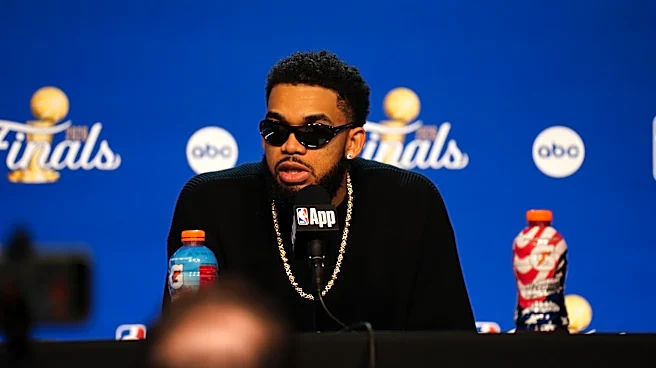
This conversation will be annoying because it’s going to be cliched. Two teams are in the NBA Finals. Every year, that leaves 28 teams (and their fans, and their semiprofessional writers) wondering how they got there, and how they can get there. It’s the age-old search for the NBA’s new meta.
Yet, here I am, writing the generic “what can the Rockets learn from an NBA Finalist” piece. Here’s the deal: These teams advanced to the NBA Finals. The Rockets did not. So surely, there’s something to be learned here.
From the Spurs, there isn’t much to learn. You just need to get so remarkably lucky in the draft that even rational people entertain conspiracy theories. You can draft Josh Primo, Blake Wesley, Jeremy Sochan, Rob Dillingham, an old man, and an infant all in the first round. If you get to draft Victor Wembanyama and Dylan Harper, you can just stash the baby on Amen Thompson and camp Wemby in the paint.
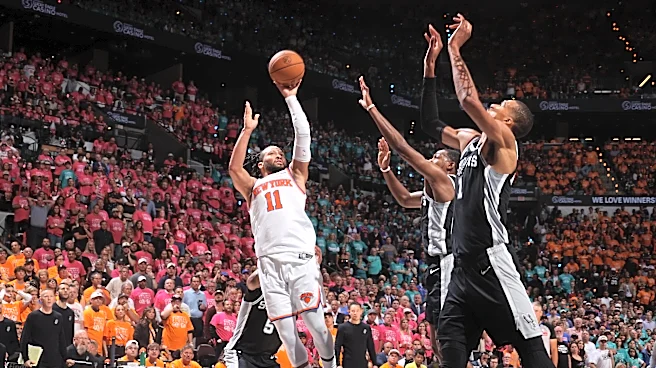
The Knicks are different. What they’re doing demands admiration. There was precious little luck involved in their process.
How did they do it?
The Knicks made smart, bold decisions
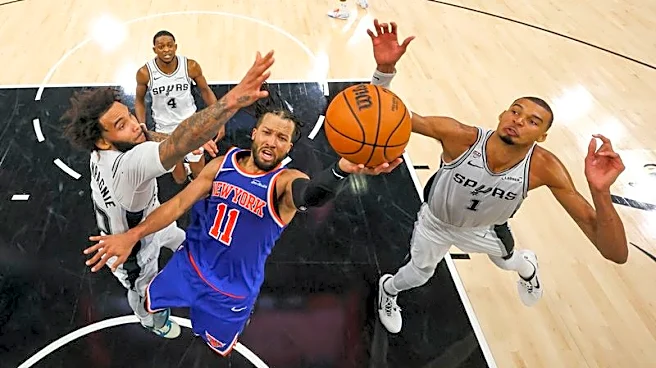
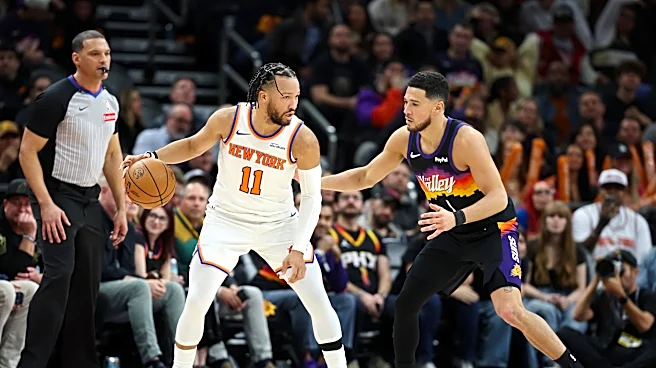
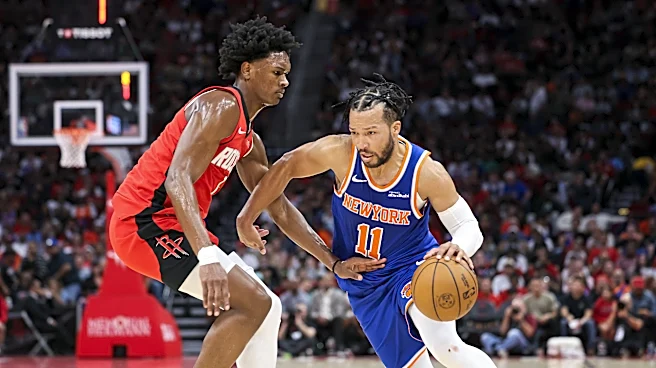
It starts with Jalen Brunson.
When the Knicks handed him a four-year, $104 million deal, you wouldn’t have to search far to find someone who thought it was an overpay. By the time he signed a five-year, $156 million extension, it was widely understood that he was taking a massive discount to enhance the team’s cap flexibility. Outside of that signing, this group was largely built on the trade market.
The Karl-Anthony Towns for Julius Randle and a pick deal evoked the Hitler vs. Stalin meme. The Knicks were flipping a losing player for another, slightly better losing player. A chorus of eye rolls.
RJ Barrett and Immanuel Quickley for OG Anunoby. This was perceived as a good deal, and it was. We’ll elaborate later.
Five first-round picks for Mikal Bridges? Outlandish. You’d have to win a championship to justify this deal, and the Knicks weren’t winning any championships. This leads me to the first quality this front office has shown that the Rockets could learn from:
Sheer, unadulterated audacity.
Let’s get back to that Anunoby deal. Barrett was 23. He was averaging a respectable 18.2 points per game. Rest assured that he had supporters who felt he’d reach his ceiling if the Knicks were just patient. The team identified him as a sub-championship player and moved him anyway.
It was bold. Fortune favors the brave. It’s a consistent theme in the Knicks’ decision-making process. They’re seemingly impervious to outside noise. This organization has done whatever it thought it needed to do. It has trusted its own internal evaluation process, and it has paid off.
This is not about any particular Rocket. Barrett, as a talented-but-flawed, productive young player, could be Thompson, Alperen Sengun, or Reed Sheppard. The point is that if the Rockets do not believe any one of these young guys could get on the floor in the NBA Finals, they should trade them and live with the fan outrage. The fans will calm down when the team is in the NBA Finals.
Did I mention the NBA Finals?
The Knicks have targeted playoff-proof players
Towns’ turn as a plus defender has certainly been unexpected. Now that it’s happened, take a look at the Knicks’ playoff rotation.
See any non-shooters besides Mitchell Robinson? See any defensive liabilities at all? That’s right, you don’t. One non-shooter. Zero defensive liabilities.
Here’s an analogy I’ve been toying with lately. A team’s offensive creation is its weapon. Shooting and defense are its armor. The defensive aspect of that analogy is obvious, but spacing the floor protects your star creator’s ability to create.
In the NBA Finals, you can afford as few weak links as possible. This isn’t unique to the Knicks. The Thunder, Celtics, and Bucks’ rosters were all similarly constructed. Even the Nuggets insulated the best offensive creator in the world (at the time) with a platoon of shooters and defenders.
Ultimately, this entire piece just reduces to another “Sengun and Thompson can’t shoot, Sengun and Sheppard are both questionable defenders” piece. It’s the reality the Rockets need to be facing. They should look to the Knicks, who realized they didn’t have a championship-caliber roster and took bold steps to build one.
That doesn’t mean trade everyone now. The Rockets can continue building through the draft. The first step is to find their Brunson (yes, I know Towns is on track for Finals MVP, but Brunson bears the brunt of the defensive pressure). It doesn’t matter how you do that, but once you do, you can’t be scared to part with beloved young players to put the right team around him.
In time, the Rockets might be fun to talk about again.