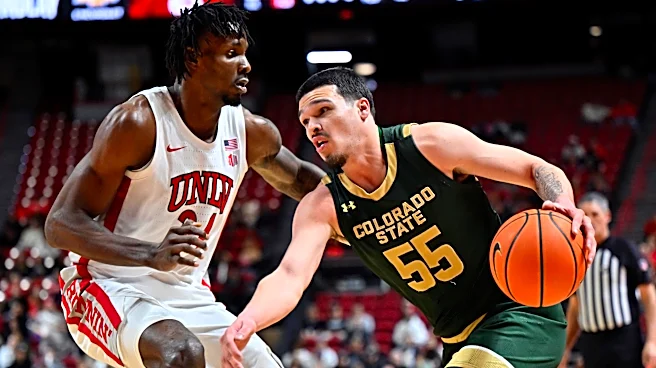


Watching Jevin Muniz is a course in subtle forms of manipulation.
Stand him up next to a player like Jason Crowe Jr., and Muniz’s 6-foot-6 frame more closely resembles a hybrid forward. Compared to other lead guards, his pace is almost ponderous, an amalgam of patience, pace and leverage. Muniz uses his size to probe the lane, lure help and start pinging skip passes to the opposite wing. In switches, he can take a smaller guard into the post, flattening out a defense and creating seams for cutters
to bolt to the cup.
Steadily, Muniz’s acute spatial recognition and savvy vision are all you can see.
See enough of him, and you start to think Muniz represents a case study for another quietly crucial need in Columbia: bolstering the rotation with another creator who can gin up advantages instead of keeping the offense moving.
And with a wave of players pursuing a fifth year of eligibility — including Muniz, who previously suited up at Florida Gulf Coast and Delaware State — coach Dennis Gates has a late-summer shot at plugging that gap.
If he wants.
To be clear, Crowe isn’t the reason adding another set of hands might be prudent.
We’ve spent time this offseason laying out the opposite case. The freshman’s near-effortless shot-creation is the axis on which this roster turns. There’s also enough evidence to support the theory that MU could leverage Crowe’s abundant gravitational pull to coax more productive passing from his touches.
That potential, though, comes with risk. Our conservative projections indicate Crowe will garner about 72% of minutes and soak up roughly 24.4% of possessions. Recent seasons by highly touted freshmen like Jeremiah Fears and Darius Acuff Jr., though, make it clear that pushing a 30% usage threshold isn’t unheard of, either. That means the Tigers confront a couple of issues. First, do they have enough depth to redistribute some of that workload? The answer is likely yes.
But it might not be enough to have several guys capable of dribbling the ball while Crowe catches a breather. Which raises the second — and more subtle — matter. When we survey the roster, is there somebody else who can, to a certain extent, replicate Crowe’s gift for creating advantages and splitting a defense open? That’s where the answers get interesting. And why perusing the portal might not hurt.

Theoretically, the top candidate is BYU transfer Kennard Davis Jr., who the staff felt was miscast in a layover at BYU, which failed to tap into the St. Louis native’s potential as a jumbo creator.
We’ve already spent time examining that premise. For this go-around, the distinction matters more than the label.
Davis’ case rests heavily on roughly a dozen games during his sophomore campaign at Southern Illinois. The Vashon product averaged 18.4 points over that stretch, parlaying that output into a hefty payday at BYU. Once in Provo, Davis’ on-ball role withered, his usage rate dipped to 14.3%, and he operated as a complementary spacer waiting on kickouts from Rob Wright III and AJ Dybansta.
That said, his stint in Carbondale remains useful — and explains MU’s outlook. For example, Davis ranked in the 87th percentile nationally for pick-and-roll scoring, efficiency buoyed by his potent pull-up shooting from deep. And a structured film review showed a passer capable of delivering the ball on time and on target, assuming the initial screen gave him an edge.
That qualifier winds up doing a lot of work.
At times, Davis struggled to create separation when defenders switched, iced side ball screens or stayed attached over the top. When he couldn’t turn the corner, attack the nail or put an opponent in rotation, Davis became a connective passer making pedestrian ball reversals.
Charting outcomes from Davis’ ball-screen work shows his turnovers stemmed from the same issue. Davis isn’t a reckless passer. More often, his giveaways resulted from a loose handle or faulty footwork when he throttled down, pivoted or changed direction after a defender headed off an attack angle.
So, the questions Davis’ play poses have little to do with whether he can discern coverages. The root cause is more elemental: Can he create enough of an advantage to manipulate the second level of a defense or tax a rim protector if his optimal route goes away?
Gates can feel secure entrusting Davis to bring the ball up the court, trigger a set, and exploit defenders caught ducking under a ball screen. That’s the kind of organizational work that — over time — makes Crowe’s life easier.
Maximizing Davis still demands Crowe bend the defense out of shape first. Helpful as Davis might be, his presence by itself doesn’t quell the possible need for another pressure-resistant guard who excels at getting two feet in the lane.

It’s also a natural segue into how Aaron Rowe’s presence should shape the discussion.
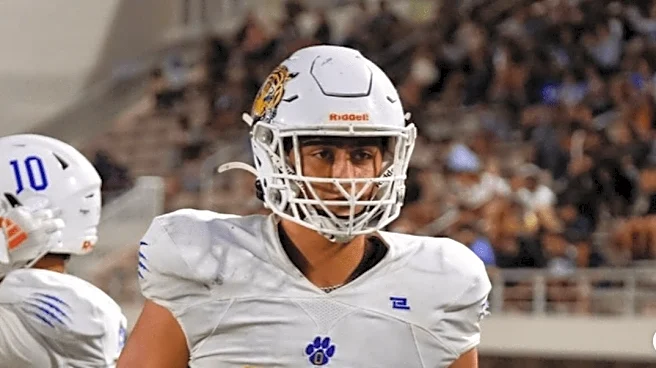
The Father Tolton grad fits the archetype naturally: elite burst, a well of experience splitting creation duties, and enough refinement in his passing feel to keep a possession ticking along. What Rowe long required was more functional strength, and a redshirt is precisely the type of environment where those gains are nurtured – away from scrutinizing eyes. That lack of public proof, though, means taking it on faith that Rowe’s taken the necessary strides.
The last we saw of Rowe before his hiatus, he was trying to rediscover the form that had him on the cusp of five-star status. At the Quincy Shootout in January 2025, he handed out seven assists in a victory over Modesto Christian, mostly by making early and uncomplicated reads: identifying spacers in early clock, tossing hit-ahead passes and picking out cutters in the half court. Bland as that work is, it’s precisely the task list that another handler could take off Crowe’s hands. And because Rowe is accustomed to split duty from his time at Tolton and with Mokan Elite, the projection isn’t speculative.
The rub remains unchanged: what happens when Rowe must unpick the lock on a set defense by himself?
During his final summer in the EYBL, Rowe’s pick-and-roll touches only netted an average of 0.583 points, and he turned the ball over 27.5% of the time. Defenders eventually worked out they could quickly dip under screens, knowing Rowe hesitated to pull up from deep off the bounce. Hard hedging, blitzing and trapping sped up his processing. And when his speed carried him downhill, contact knocked him off the driving lines. Rowe only shot 44% at the rim on the break – a brutal figure for a prospect whose profile was rooted in eating up foes in transition.
Those were not isolated flaws. Strength, deceleration and decision-making were linked. They carried over to his homecoming that winter. And it sent Rowe tumbling to No. 172 in 247Sports’ composite index.
So, how do we properly harmonize our expectations? To keep the former five-star label from doing too much work, I built a simple model using 45 freshman ball handlers ranked between Nos. 125 and 175 in 247Sports’ composite index between 2022 and 2025.
Plug in Rowe’s projected 16.4% of minutes, and the model spits out a 0.16 Bayesian Performance Rating. Crucially, we shouldn’t treat that as a warning flare. It describes a lightly used, roughly neutral reserve. Not necessarily a dependable third creator.
That doesn’t erase Rowe’s upside, but he would need to earn substantially more playing time — close to 40% of minutes — to push toward the upper tail of that group. Vitally, it can also serve as a real-time gauge of how quickly Rowe is regaining the form we want to see.

By contrast, Jordan Crawford supplies us with more recent evidence. It also circles back to an earlier concern.
Crawford and Davis have games cut from the same pattern. At South Dakota, the redshirt junior’s most bankable skill was shooting off the catch, and importing him to Columbia should help with spacing around Crowe.
That said, Crawford found some success with the ball in his hands. Against teams that finished in the top 150 of KenPom, he averaged 0.914 PPP playing out pick-and-rolls. A simple question distinguished that performance: Did Crawford shed his defender?
Like Davis, knocking down triples off the bounce proved Crawford’s most reliable tool in ball screens. And he didn’t need to ditch his defender to make it happen completely. Even a slight lag might give him all the airspace required.
On tape, we can see Crawford’s competence at punishing a trailing defender. And if Crawford draws help, he’ll make an uncomplicated passing read. More than space, a ball screen could help narrow the decision tree for him.
In our 53-possession sample, Crawford made 18 passes after utilizing a ball screen. Almost all of them were bland ball reversals or other forms of connective passing rather than assists. But every time he rejected a screen, Crawford ended the trip with a low-quality shot.
Every giveaway or poor field-goal attempt tied back to Crawford failing to create separation. Often, it saw Crawford trying to manufacture an advantage by turning down multiple screens, resetting or trying difficult finishes over length. Meanwhile, his handle became vulnerable to the grubby hands of defenders hedging the screen or stunting into a gap.
Put another way, Crawford is handy when the scope of the on-ball work is clean and tidy, but that dependability falters if you ask him to put an organized defense on tilt or rescue a stalled possession. Sound vaguely familiar, too? It’s the same critique that applies to Davis.
Again, we shouldn’t dismiss the value of guards capable of competence on the second side of the floor. But Crawford’s body of work came in the Summit League, where defenses can be more porous compared to other mid- and low-major conferences. Keep in mind, too, that MU helped guards successfully acclimate to life in the SEC by paring back the demands placed on them to power an offense in the half-court.

Enlisting Cord Stansberry raises the same concerns as assigning creative duties to Crawford. While the Western Carolina transfer could crack open some space, he struggled with making it last.
That tension proved often consequential for the Catamounts’ offense. WCU’s offense was 4.3 points per 100 possessions better with Stansberry in the mix, while stationary jumpers remained his most trusty weapon. But when Tim Craft explored a larger on-ball role against stronger opponents, that reliability faded.
Across 21 charted PNR initiations against top-150 foes, Western Carolina produced just eight points — or 0.381 points per trip. As the table clearly indicates, manufacturing legitimate separation was the critical variable. It’s not just the fact that Stansberry struggled to score. His decision-making also broke down. Four of the six PNR passes he made without a cushion wound up as turnovers.
Functionally, Stansberry’s work in ball screens became more playable once a defense was forced to rotate. In video snippets below, you can see what success looks like against Cincinnati. Stansberry rejected a high ball screen, attacked the open angle gifted to him by Shon Abaev and reached the rim before help rotated. By contrast, notice what happens when longer and more agile defenders – like Virginia Tech’s Neo Avdalas or Duke’s Cam Boozer – stay attached.
Looking back, Stansberry’s efforts with handoffs add a further layer to the diagnosis. He only scored two points in 10 touches when facing top-shelf opponents. All 10 ended in a Stansberry jumper or runner. None reached the rim, drew a shooting foul or produced a shot for another Catamount.
More telling was that four of them saw Stansberry generate clean separation – and fail to cash out. Against better defenders, those windows he pried would close before he could get on balance, reach the lane or force another rotation.
In Columbia, MU could have the personnel to improve the geometry and spacing surrounding Stansberry’s on-ball reps. Legitimate shooting might postpone stunts. Having credible rollers would occupy backline help. Bluntly, he’s another guard who might need assistance after an advantage has already emerged.
At this juncture, the distinction should be clear. Gates isn’t short on guards comfortable with dribbling up the floor to initiate a set. Davis organizes. Rowe has some pep to put pressure on a vacant gap. Crawford punishes trailing defenders. And Stansberry makes the next decision after getting separation.
What’s less clear is whether MU has an obvious alternative to Crowe. That matters when he rests, when foul trouble intervenes and, more uncomfortably, if an injury ever sidelines him for a prolonged stretch. That’s precisely the appeal in exploring another guard – not simply absorbing or patching over the minutes that Crowe rests, but acquiring another pressure-resistant source of paint touches.

Fortuitously enough, the portal received a shipment of new options as recently graduated seniors responded to the NCAA’s age-based eligibility rules by seeking court orders allowing them to suit up for another season. Unlike the spring, this might be a buyer’s market, because the supply of talent exceeds the number of available slots. And because many programs already completed overhauls, NIL dollars are less plentiful.
In other words, veterans seeking another payout might face a compromise. If they covet a headlining role, they might have to drop down to a mid-major program. And if they’re seeking slightly higher compensation, a high-major program might be able to beat other offers — but to fill a supporting role.
There is, however, a roster wrinkle to consider.
Under the House Settlement rules, men’s basketball rosters are capped at 15, and leaving a healthy player off effectively means cutting him loose from team activities and resources. But a documented season-ending injury suffered before the roster deadline creates an exception: that player can remain outside the 15-man limit while continuing to rehab and, once medically cleared, practice with the team. Hypothetically, it would allow MU to fit Annor Boateng, who is recovering from a knee injury, with a medical redshirt — and open a slot.
Over at RockM+, my compatriot Matt Watkins has done the nitty-gritty work of surveying options, including forecasting Bayesian Performance Ratings. Why should you care? Because most depth pieces to solid starters have BPRs between 2.5 and 5.0. Next, we can look at each player’s assist rate, turnover rate and 3-point shooting.
Sorting and filtering by those variables turns up the list you see below: seven vets that might meet Mizzou’s potential need.
But we can carry our search a step further, too.
Remember, the goal of any late addition would be bolstering the guard rotation with a proven advantage creator. That’s where play-type data comes in handy. For each player in our tranche, we can chart their average pick-and-roll possessions, including passes, for each game and how many points those touches yield. Then, we can throw them on a scatter plot and see how they compare to Division I benchmarks.
That’s how a player like Muniz bubbles up to the surface. Notice how he resides in a box bounded by median performance in the lower right and elite performance in the upper left. The same can be said of Nebraska’s Jamarques Lawrence and Seattle University’s Maleek Arrington. The next logical step would be to call up tape on Lawrence and Arrington to see how it compares to other options.
While this isn’t intended as a stump speech for Muniz’s candidacy, it’s hard to ignore his bona fides. Against KenPom top-100 opponents, 62 of his 95 pick-and-roll opportunities ended with a pass. Those dishes generated 1.032 PPP, and he only turned the ball over 9.7% of the time. Put another way, Muniz is already accustomed to a complementary role where getting the ball doesn’t mean he needs to finish the possession himself.
Nor does he rely on overwhelming burst. At 6-foot-6, Muniz uses angles, his frame and a stable base to get legitimate depth on drives, warp the second level and preserve options once help arrives. And if another creator takes over? He can slide off the ball, where he knocked down 38.3% of his catch-and-shoot 3s at Colorado State. That combination — productive creation without requiring a starring role — is precisely why a player of his ilk makes sense for this exercise.
Would Muniz spurn a known role in Fort Collins for the siren song from a high-major? I can’t say. But using EvanMiya’s handy roster outlook tool, we can see (loosely) how Muniz might slot into the Tigers’ rotation.
No matter if Gates were inclined to make another shopping trip, reasonable questions exist about the Tigers’ ball-handling depth.
He has four players capable of keeping the engine idling. What remains uncertain is whether anyone besides Crowe can consistently generate the kind of pressure that forces a set defense to react.