


Each week, I’ll publish two film-room previews: one focusing on the offense and one on the defense. These are primarily film-based, focusing on the schemes, tendencies, and matchups that could shape Sunday’s game, with all statistics coming from the Fantasy Points Data Suite. I also record a video version for Patreon, where I break down the plays in greater detail and where you can further support my work.
Yet another week watching an opponent’s offense and thinking, “Well, this looks quite fun.”
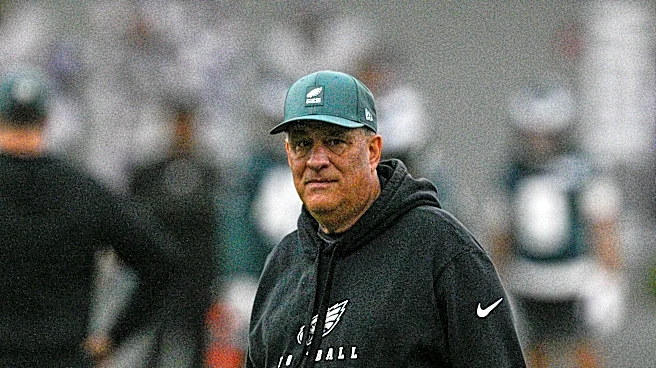
The Panthers have a quarterback playing very good football, two talented receivers, and creative ways to get their best players favorable matchups. They also have an offensive line that can make the whole thing fall apart. Bryce Young is doing a lot to overcome that, but the Eagles’ defensive front has opportunities this week. Vic Fangio’s challenge is getting after Young without giving this passing game the isolated downfield matchups it wants.
Pass Game
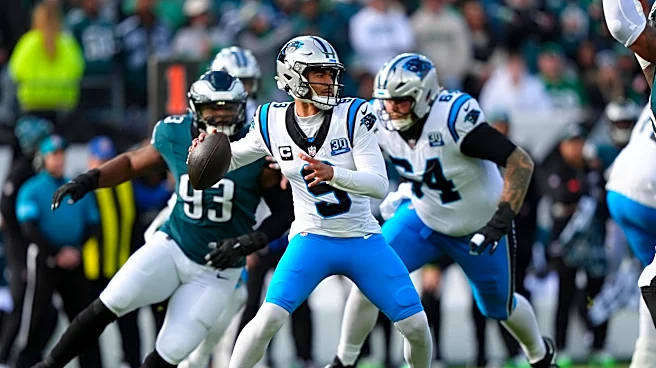
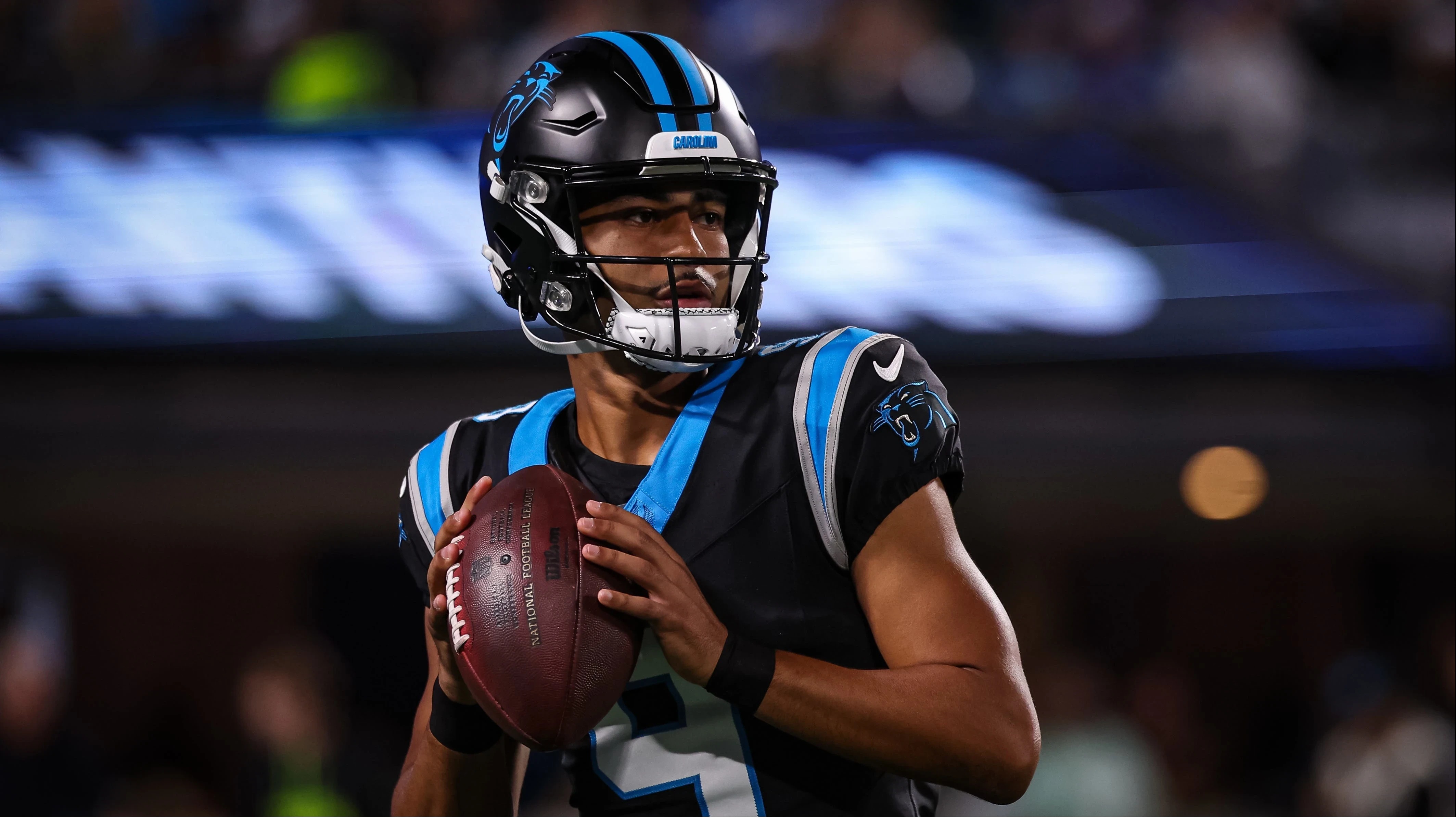
Young is playing with real confidence. His release is excellent; he’s throwing with anticipation, and he’s placing the ball accurately enough to give his receivers opportunities to make plays after the catch. He’s also doing this without putting the football in harm’s way very often. Nine touchdowns and two interceptions through four games reflect the combination of aggression and control that shows up on film.
This is absolutely a vertical passing offense. Young isn’t standing back there looking for a checkdown on every snap. He’s willing to attack outside the numbers, throw into tight windows, and give his receivers opportunities when the coverage leaves them isolated. Here, Jalen Coker wins downfield, and Young hits him in stride. If the Eagles are going to play single-high coverage, their corners had better be comfortable turning and running.
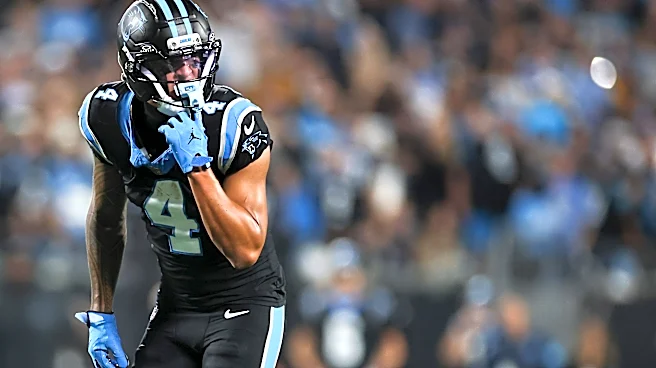
Coker deserves proper attention alongside Tetairoa McMillan. He has caught 18 of his 22 targets for 222 yards and two touchdowns, despite playing in only three games. He’s a big receiver who can win outside, contribute after the catch, and do some of the physical work this offense asks of its receivers. This isn’t a passing game where you can tilt everything toward McMillan.
Darren Waller is the other receiving weapon who stood out, particularly in the red zone. The Panthers can spread the defense out and let him work against a linebacker or safety, and his option routes give Young an answer based on the defender’s leverage. They also use him on crossing concepts, where his size gives Young a target even in tight coverage. The Eagles’ linebackers and safeties will have some difficult coverage assignments if the rush doesn’t get home.
I like the variety in this offense. You get the familiar under-center outside-zone action with a boot off it, but there are also boots and keepers from the gun, RPOs, empty formations, and spread passing concepts. They can condense the formation and threaten the run or spread everyone out and make the defense declare its intentions. Young looks comfortable operating within those different structures. It’s a fun offense to study.
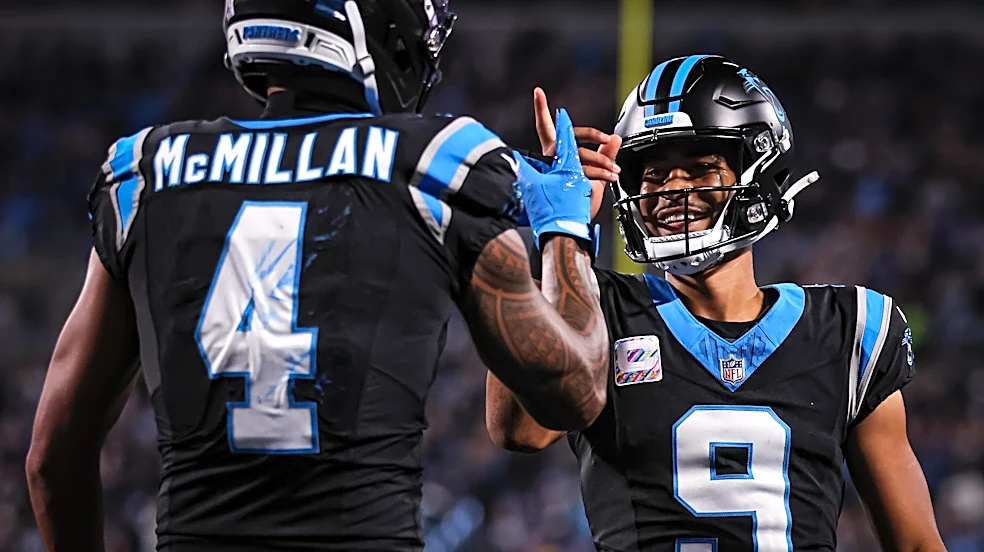
McMillan, though, is the player who can take over a game. He’s playing like a true WR1. He is strong at the catch point, can go up and get the football, and take over a game if you let him. The Panthers move him and Coker around to create favorable matchups rather than leaving them in the same positions all afternoon.
Against single-high coverage, Young will give McMillan opportunities downfield. According to Fantasy Points Data, Young ranks fourth in attempts against single-high safety coverages, with 755 yards and six touchdowns, despite having played only four games. That matches what I saw. The Panthers see those outside opportunities and go after them.
For the Eagles, I wouldn’t play a ton of single-high this week, which is where Young is at his most comfortable.
However, the protection is a significant problem. There are plays where the Panthers look completely overwhelmed, including against pressure looks, and their willingness to keep attacking downfield can make those failures look particularly ugly. They don’t always take the immediate underneath answer. Sometimes they want the shot, and the protection simply doesn’t give Young enough time.
Individual blitzes have caused some awful breakdowns, but Young has generally punished the blitz this season. The offense is averaging +0.35 EPA per dropback against blitzes, and only one of its ten sacks has come against a blitz. The other nine came against non-blitz looks. The Eagles should have opportunities to get home without constantly sending pressure. This is a week to trust the front 4.
Young’s production drops from +0.41 EPA per dropback in a clean pocket to −0.02 under pressure. Make him operate under pressure while keeping enough defenders back to contest the throws he wants. I would play a ton of split-safety coverages while rushing 4.
Their use of empty makes this offense particularly interesting. Young loves throwing from empty, and the Panthers are happy to attack vertically from it. Many offenses use empty to get the ball out quickly and spread out underneath defenders. The Panthers can do that, but they will also ask their receivers to win downfield with only five blockers protecting. Young’s use of empty has always been unique. The Eagles won’t face many similar challenges this year.
Young is 17-of-22 for 237 yards from empty, averaging 10.77 yards per attempt, behind only Brock Purdy. It’s a small sample, but it supports how dangerous these plays look. And, once again, McMillan is a major part of it. Spreading the defense out can make it easier for Young to identify his best matchup, and he’s accurate enough to take advantage.
Personally, I would want Fangio to show pressure against these formations and then change who actually rushes. Simulated pressures could test the protection while preserving seven defenders in coverage. The Eagles don’t have to send six just because the Panthers have emptied the backfield. They need those five blockers to sort out the rush correctly and give Young a less comfortable picture behind it.
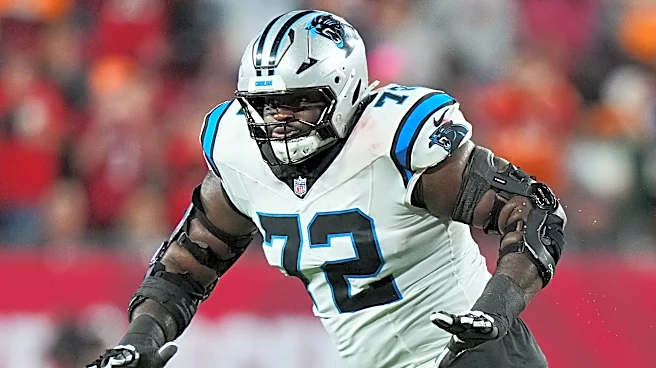
Rookie right tackle Monroe Freeling is the clearest individual target if he is available (he may be out). He has some good reps and has done useful work in the run game, but his pass sets can look clunky. His feet are choppy, he struggles to establish enough depth, and speed rushers can reach his outside shoulder before he is properly set. His hands then arrive late because he’s trying to recover.
He can also narrow his base and expose his chest, giving rushers chances to convert speed into power. It isn’t just a case of running around him. The rest of the line doesn’t inspire much confidence either. Rasheed Walker and center Luke Fortner have allowed 20 and 19 pressures, respectively. Fortner’s struggles make the interior an important part of this matchup. Jalen Carter creating immediate pressure through the middle would limit Young’s ability to climb away from the edge rush.
Young does move well within the pocket. He can slide, climb, and deliver while taking contact, so the Eagles need their rushers working together. Winning around the edge means less if they leave him a huge escape lane directly in front of him.
One other tendency worth highlighting is the pistol RPO package. It is a clear part of what they want to do from that alignment. They use motion and receiver positioning to create leverage, then give Young a decision based on how the defense responds. The Eagles’ underneath defenders have to fit the run without handing him an easy throw behind them.
Run Game
I don’t think this is a particularly good running game overall, but I do think Chuba Hubbard is a very good back. Hubbard has the vision and acceleration to turn a modest opening into something useful, and he is particularly good at recognizing when a run needs to bounce outside.
The Panthers run outside zone, inside zone, and duo, with crack toss and pin-pull adding ways to get the ball toward the perimeter. The most obvious tendency from watching their explosive runs is the direction: defend the left!
Ten of the 11 explosive runs I reviewed went to the left. That includes designed runs left, duo runs Hubbard bounced, and runs that initially went right, but he cut back to the left. This isn’t one concept repeatedly producing the same result. Different designs are ending up in the same area.
On duo, Hubbard is especially good at staying patient enough to let the blocking develop before finding space outside. The Eagles can’t assume that an initially downhill track means the ball will stay between the tackles. Their edge defenders need to control the perimeter, and the pursuit needs to arrive under control.
Crack toss adds another challenge because the receiver can block down on the edge defender while a puller gets outside. The corner has to recognize that block and replace outside in the run fit. This is a week where the secondary’s contribution against the run will be important. A corner who follows his receiver inside without responding to the crack can leave Hubbard with far too much room outside.
Ten of those 11 explosive runs also came from under center formations. But the passing game is much better in the shotgun. So, they can be a little bit predictable with their formations. Some of that is by design, though, as they want the defense to expect the run, so they can hit them with play action.
I trust the Eagles to handle this running game. They have faced better rushing attacks recently and done a reasonable job.
Final Thoughts
I enjoyed watching Young this week. He’s playing aggressive, accurate football, and the Panthers have given him receivers worth trusting. McMillan and Coker are an excellent 1-2 punch at WR, too. I would be surprised if the Eagles shut this passing game down completely.
But I would also be disappointed if the defensive front didn’t have a significant impact. The protection has enough individual weaknesses for the Eagles to create negative plays without needing to live with the risks of constant blitzing. I’d prioritize winning with four, mixing in simulated pressure, and changing the coverage picture.
The Eagles can afford to concede some short gains. What they cannot afford is giving Young a comfortable pocket to launch downfield or letting Hubbard repeatedly escape to the left for explosive runs. Make the Panthers sustain drives, force the offensive line into obvious passing situations, and finish when the protection breaks down. I trust Fangio to put together a good plan for this matchup. The front has to make it work.
Thank you for reading! I’d love to hear your thoughts, so feel free to comment below and ask any questions. If you would like to support me further, please check out my Patreon here!