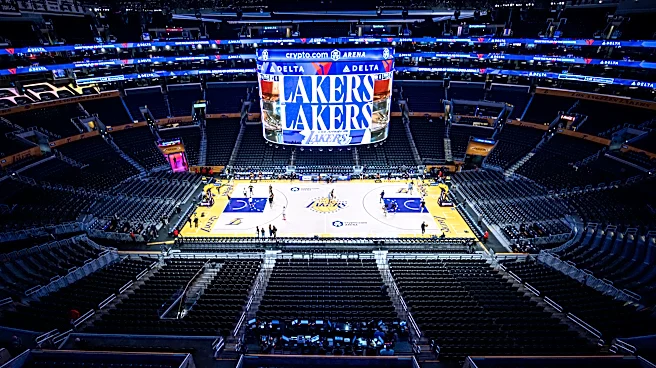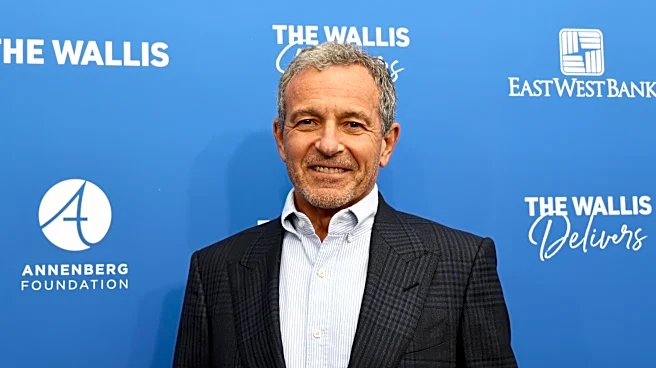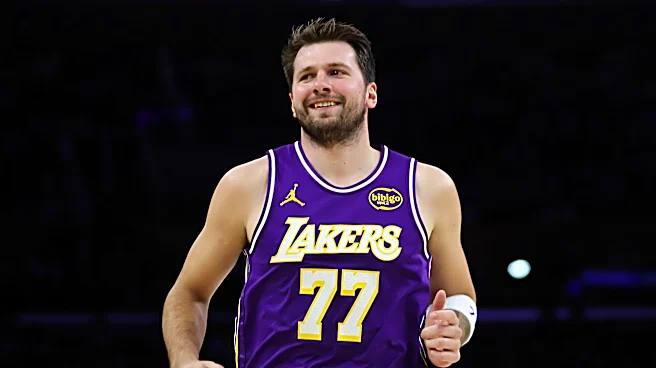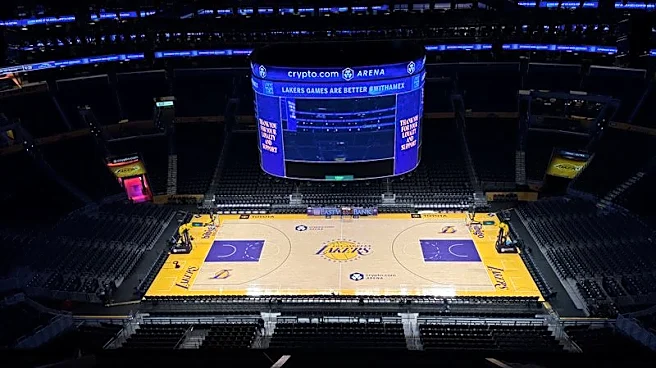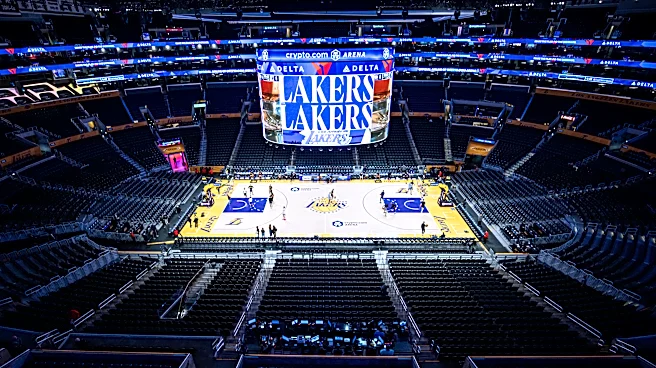

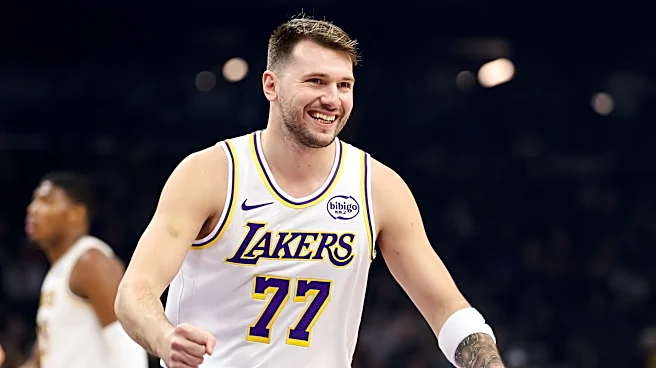
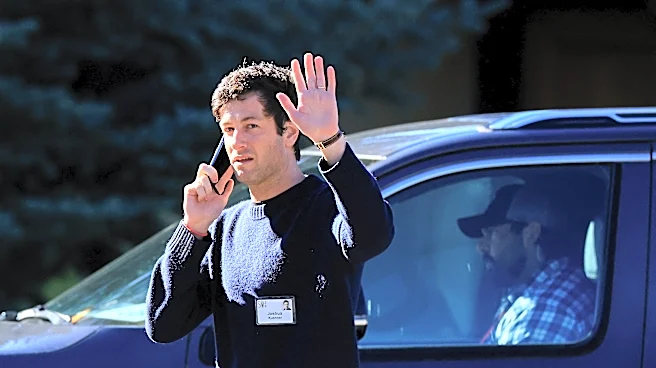
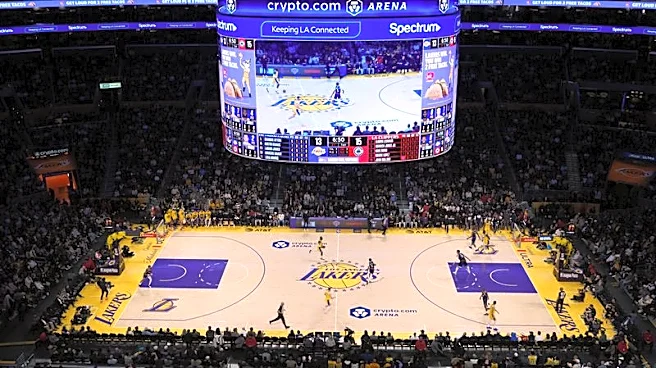
48 hours ago news broke that the Los Angeles Lakers had been sold for $12 billion. The impending transaction was announced a little more than a year after the last time the franchise changed hands. The profit on the deal for current owner Mark Walter is a cool $2 billion.
It’s impossible to tell whether the stewardship of new owners Bob Iger and Josh Kushner will be better than Walter’s was. In ownership terms, Walter didn’t get past the second date. Who knows what the long-term relationship would
have looked like? All we know is that the franchise sure appears to be dating around after getting out of a long-term relationship with the Buss Family. With a $12 billion valuation, the purple-and-gold-digging is pronounced.
It’s pretty easy to see who benefits from this transaction. Current NBA owners—majority and minority—should be saying, “Woo” and/or “Hooo” in response to the deal. Franchise ownership has always been a slow-simmering prospect. You buy the team for millions, shift around numbers on the ledger so officially you run a loss that you can write off on taxes, then sell a couple decades later for a huge multiple of the amount you originally paid.
This sale is different in a few ways. It’s not for a multiple of the purchase price. The margin is only 20-25%. But the sale came quickly. That’s a healthy return on investment for a year. More to the point, the raw numbers are huge. 20% amounts to two…billion…dollars. Ask anybody if they’d like to make that kind of money in that time span. Even the most jaded of wealthy tycoons will say yes.
The amount of the transaction, the speed with which it occurred, and the mindset behind it signals a weather change for the NBA. It’s been coming for a while. We’ve written about it before. But it’s here now.
NBA franchises are no longer entities unto themselves, branded fiefdoms in which professional basketball is contested for the purposes of excelling at a sport and winning trophies. Increasingly, franchises are investments—incredibly expensive investments—with ROI as the true measuring stick of success and actual basketball as the leveraging “widget” from the Business 101 textbook.
If you’re a basketball fan, this is not good news.
The size of the purchase alone tells us how the Lakers are viewed now. The positive spin is clear. They’re worth more than any NBA franchise ever has been. That’s a huge windfall for Walter and it’s likely to lift the tide for all other boats. The cost of proposed expansion franchises in Las Vegas and Seattle probably just increased sharply. Why let a new owner buy into the league for $2 billion when they can turn around and sell for $8 billion in a few years? The league is getting fabulously, sloppy-drooling rich.
But the not-so-hidden side effects of this new mindset are likely to become obvious over the next couple decades. Owners and investors may profit (along with a few transcendent stars, no doubt). I’m not so sure basketball fans will.
We don’t talk about it much, but money shapes reality in a weird way. The more money involved in a given situation, the weirder it gets.
Let’s say I go to my local grocery chain deli counter and spend $1.50 on a corn dog for lunch. I have a close relationship with that transaction. If this is my chosen midday meal, chances are I’m not flush with cash. That $1.50 represents a small, but significant portion of my daily budget. I’m going to pay for that corn dog and eat it immediately. It’s part of my sustenance for the day…literally how I stay alive. The value of the corn dog is high to me. Ingredients, calorie count, cooking method, freshness, convenience, and price all matter to me, intimately and personally.
Now let’s change the scenario. The store and deli counter are the same, but this time you see me walk up to the clerk and order everything in the case, all at once. Everybody around is going to wonder what’s going on. But as they bag up my massive purchase, we can probably assume some things.
First, there’s no way I can eat ALL of these corn dogs, chicken strips, sandwiches, and vats of mayo-soaked potato salad. I must be doing something with them. Whatever that “something” is, it doesn’t just involve my lunch anymore. Anything I eat will be incidental. I’m now a step removed from the process, hovering over production and consumption instead of participating in it directly and being personally affected by it.
Second, I can’t be investing my personal lunch money. This glut of food won’t sustain me for long. It’ll rot before I can eat 2% of it. I must have other money in reserve to eat with or I just made an incredibly stupid purchase. Ergo, I’m wealthy enough that this endeavor won’t make or break me. Unlike the guy in the first example, my entire day doesn’t revolve around this and probably isn’t even seriously imperiled by it. I’m just as removed financially from this exchange as I am nutritionally.
Third, unless I’m throwing the world’s biggest impromptu block party, it’s likely that the purpose for this purchase is investment. Somehow I think I can turn this case of food costing X dollars into X+more dollars, recouping my cost and earning a profit. Those corn dogs have stopped being lunch for me. They’re a commodity instead. I don’t really care what they taste like, how they’re made, how healthy or unhealthy they are. I want to know how much they cost and how much I can sell them for. Anything I can do to reduce the former number and increase the latter is good for me. If the corn dogs taste like warmed-over moose droppings but sell for a bigger margin, my aim has been fulfilled. In this way I’m not just removed from the product, I’m divorced from it. It’s no longer a subject in my day. It’s an object, designed to serve another end which I—the real main-character in this scenario—determine.
All of these changes—distancing, rising above, divorce from product—happen when we imagine changing a $1.50 corn dog purchase into a $15,000 deli-case spree. Imagine what happens when the investment soars into multiple billions.
First, that’s not your money. It’s not even real. Nobody carries $12 billion in cash down to the local deli counter. That money is accounted in assets, investments, numbers on a theoretical spreadsheet somewhere. You can borrow against it, but even that’s not your money. It belongs to the bank. And it’s not their money either. A modest percentage of it is given to them by depositors. The rest they’re allowed to pretend they have, to loan out to people. If every client of the bank demanded their money at once, the bank couldn’t pay it. The government would have to step in with deposit insurance, which would then cost all of us in taxes to make good. Or Uncle Sam could just invent more money. Either way, all of this is so far removed from the investor’s daily life that “billions” might as well be an imaginary word. All it means is that every time you want something, the answer is “yes”. Also most people are really nice to you. Nothing you’re doing will EVER affect your lunch or actual dollars in your pocket.
Second, as we just illustrated, the more the quantity of money increases, the greater the distance becomes between owner and consumer. We’re seeing this around the league already. Majority owners have a stake in billion-dollar franchises, but they always have a cadre of co-owners, bought in at a lesser level. Beneath them are presidents, boards, and other lead executives. You have to filter through all the layers of management before you get to the humble ticket representative or arena usher, the people with whom consumers will interact. This isn’t the owner of your local bodega looking you in the eye and thanking you as you purchase a can of evaporated milk for your Christmas fudge. If you register at all, it’s as a single tick on the “ones” column on one line of a vast financial report that the owner is probably paying someone to summarize for him or her anyway.
The distance between investor and product increases just as radically. Remember the moose-dropping corn dogs? The investment mindset devalues the product as its own entity in favor of over-valuing how it can be sold and the margins it can generate. Every bit of money the owner saves is, by definition, good. Every dollar they can extract from consumers, equally so. We’re not shooting for excellence, integrity, or any inherent metric. We want repeated, bankable turnover of dollars: low expenses, higher prices, churned through as many times as possible.
I’m a bit of an energy drink afficionado. I was drinking White Monsters WAYYY before White Monsters were cool. I walked so blue-collar Joes and trendy Instagram influencers could run.
Little-known fact, though. When Monster was still in their teenage years as a company, a rival burst on the scene. The drink was called Bang. Their cans packed a wallop: 300 mg of caffeine, more than any Monsters around. They also had sharp, inventive flavors and were seemingly coming up with new ones all the time. Vibrant vibe, creativity and innovation, great taste…this was the go-to drink for me.
But something funny happened. Bang got bigger. Right around COVID-time, they entered into an agreement with Pepsi for distribution. There may have been some cross-pollination in management or ownership too? I’m not sure. What I do know is that in short order, things changed. You could find Bang in a lot more places. I remember taking drives specifically to hunt for distributors back in the day. Now nearly every store carried it! But they carried the same four flavors, no longer the rainbow of choices that had existed prior. New flavor innovations stopped. (It’s been ages since they came up with something truly different.) The drinks nowadays are essentially the same as they were back in 2015, but that’s the point. They’re exactly the same. This isn’t a hip, interesting, consumer-pleasing venture anymore. It’s churning out product to be consumed by as broad of a bell-curve cross-section as they can manage.
I read recently that Coke is taking over for Pepsi with Bang distribution. Anyone think that’ll help?
If you don’t think this example works, imagine your favorite local restaurant, run by a three-star Michelin chef, being taken over by Yum brands or the parent company of Applebee’s. What do you think is going to happen?
That’s exactly the transformation the NBA is undergoing. Investors—divorced from the product, playing with money they have little real connection to except on spreadsheets, trying to cut costs and increase profits, creating a predictable, turnstile revenue stream until they can sell to the next set of investors for a marginal profit—are taking over franchises for just that purpose. Nowadays nobody else can afford to get into ownership because valuations have soared so high, the same way nobody can afford to buy Bang in 2026 except another corporation even though they started from scratch in 2012. Franchise after franchise will get converted to this model until big-time investors own them all.
If you think the quality of NBA basketball is going to benefit in any way from this, well…that would be bucking the trend of nearly every other investor/corporate takeover we’ve ever seen.
It’s probably too late to stop the train. You can see the evidence of the evolution all around. Hard aprons are limiting player salaries. A few, prominent players are making most of the money while the general workforce makes do with far less. The middle-class player is disappearing, leaving a min-max salary system, mirroring corporate America. True excellence is being milked out of franchises systemically in favor of an ever-rotating, largely indistinguishable series of champions like so many nondescript energy drink flavors in shiny cans. (This is the dark side of “parity”. What happened to the Celtics’ championship dynasty in the making? Ownership changed. Salary rules changed. Bye-bye Michelin stars, hello chicken sandwiches and a side salad.) Teams don’t market based on quality of product but by image, influencing/coolness factor, or fan loyalty. Nobody is saying to you, “Come see the Blazers because we’re truly great and we’ll get even better in the future!” It’s, “Hey, we’re family, right? And we’ve got shiny new scoreboards!”
But this Lakers quick-flip from an apparently-shady investor to a pair of opportunistic ones marks a new evolution in the process, with the league’s marquee franchise to boot. If they can do this with the Lakers, what franchise will they not do it with? If you can convince Gandalf to turn to the dark side, what hope do Merry and Pippin have?
So welcome to the new NBA, I guess. It’s slick. It’s a growing market. People are making more money than ever before, faster than they ever have. The only thing missing in all of this is actual basketball. The people with stakes in that game are increasingly fewer. Unless something radical happens—and I can’t imagine what that would be—the influx of money is going to whitewash that truth, covering the rot beneath until the foundation is gone and all that’s left is the paint job. That’ll be fine for investors getting in and out with their profits. For those of us who actually love the product and the sport? Maybe not so much.