




And just like that, it was over.
One tweet from Shams Charania was all it took to end several weeks of speculation, amateur detective work, Timberwolves emoji analysis, and increasingly elaborate attempts to convince ourselves that LeBron James had always dreamed of spending the
final chapter of his career in Minneapolis.
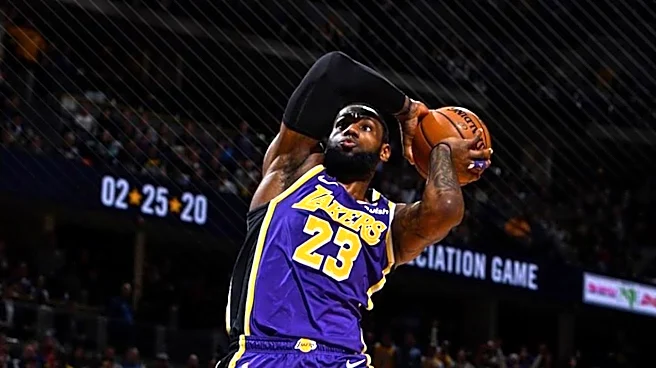
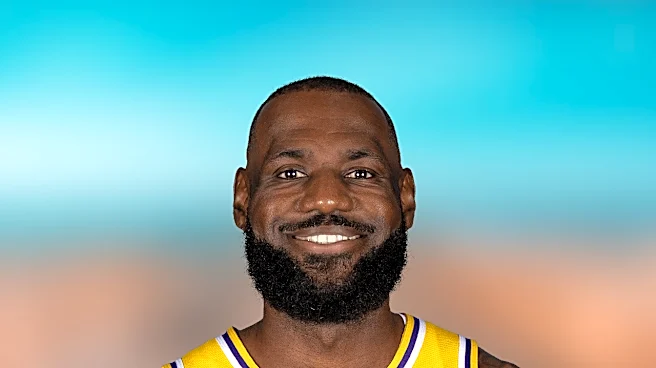
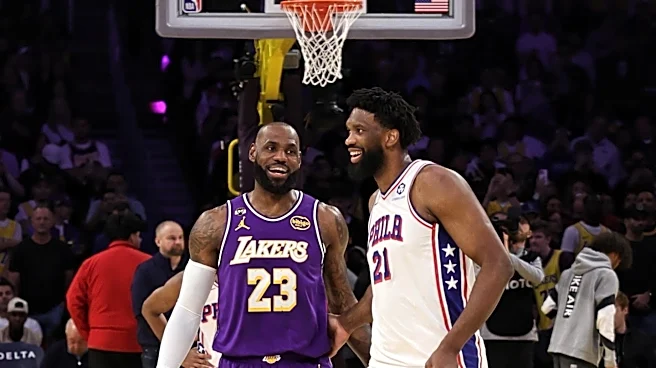
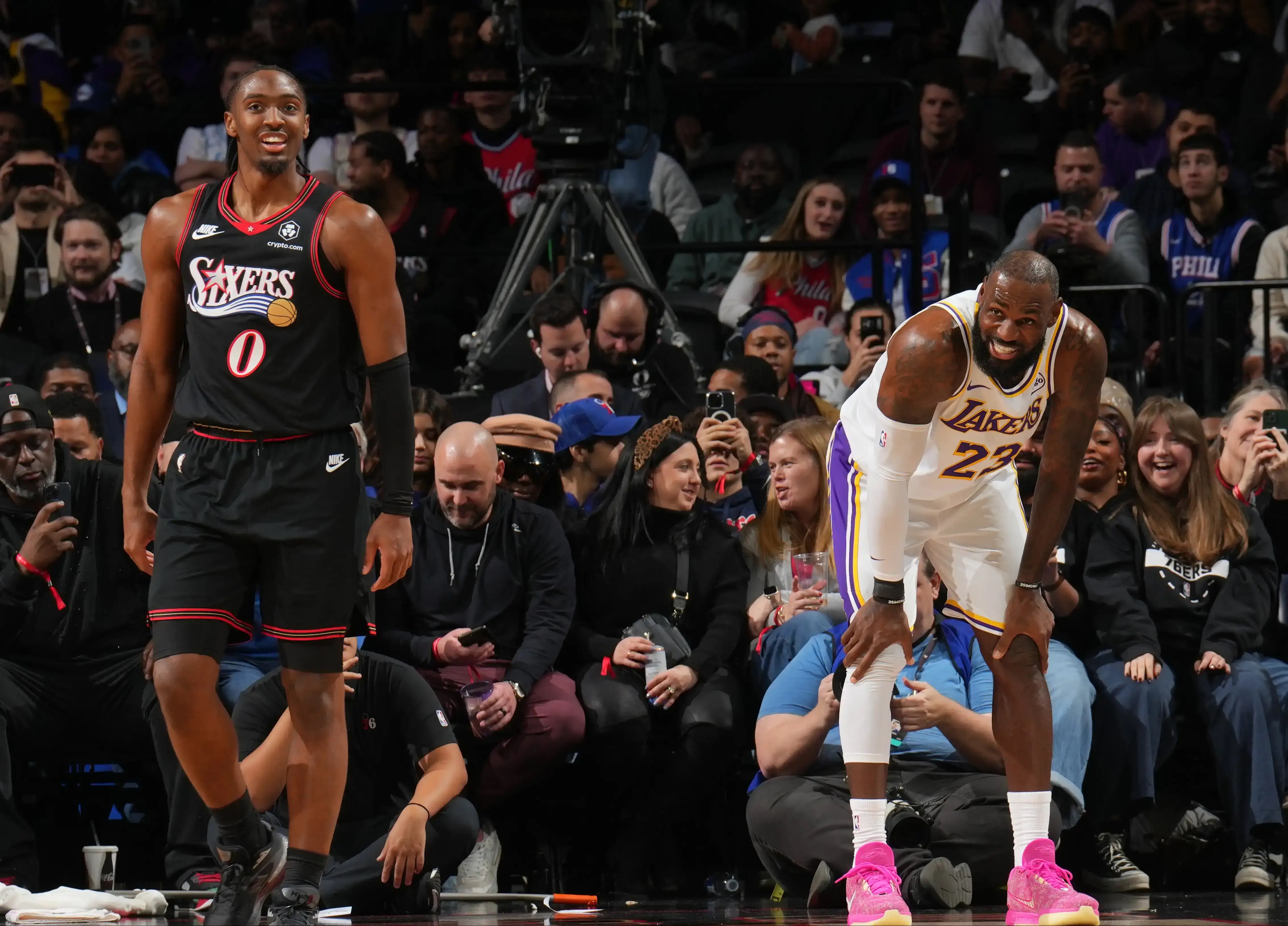
According to Charania, acting on information from Rich Paul, LeBron will join the Philadelphia 76ers on a two-year contract for the upcoming season. Minutes later, James confirmed the decision with a post of his own on X, officially closing the door on Minnesota and ending his latest “Where will he go?” saga.
He is not taking his talents to Lake Minnetonka to form a super team with Anthony Edwards and LaMelo Ball. He is not slipping into the glaring vacancy at power forward, organizing Minnesota’s offense, chasing another championship, and forcing the NBA to place half the Timberwolves’ schedule on national television.
Instead, LeBron has decided to hitch the twilight of his career to Joel Embiid’s knees, which at this point appear to be held together by athletic tape, optimism, and whatever material IKEA uses for the backs of inexpensive bookshelves. Good luck with that.
The news is disappointing, even if it is not exactly shocking. Minnesota was reportedly among the handful of serious contenders, but there was always a difference between being in the conversation and being the final choice. Wolves fans understood that. There was no guarantee that the greatest player of his generation would suddenly look at the Upper Midwest and decide this was the natural destination for the closing act of his career.
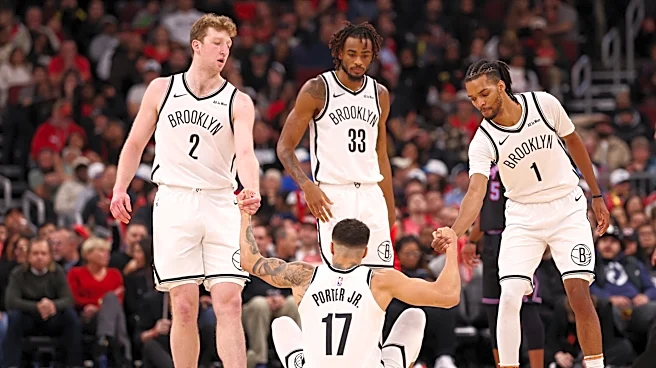
Still, it was fun to imagine. For a few weeks, Wolves fans could picture LeBron wearing Minnesota colors and occupying the precise position this roster still needs to fill. On a purely basketball level, the fit made an enormous amount of sense. The Wolves currently have a glaring hole at power forward after an offseason that sent Julius Randle to Brooklyn and Naz Reid to Charlotte. James could have stepped naturally between Jaden McDaniels and Rudy Gobert, giving Minnesota a formidable three-four-five combination built around length, strength, intelligence, and defensive versatility.
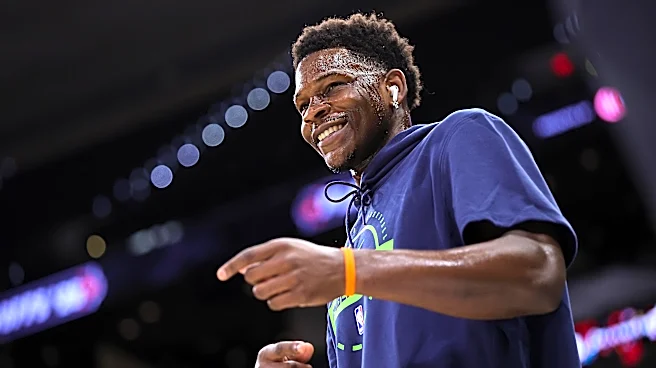
He also would have been joining Anthony Edwards at exactly the moment Edwards is beginning to make a credible push toward becoming the face of the league. That part mattered beyond wins, losses, and lineup combinations. LeBron choosing Minnesota would have represented the most dramatic validation imaginable for a franchise that spent most of its history as a punchline. For decades, imagining a player of LeBron’s stature voluntarily signing with Minnesota would have required the kind of suspension of disbelief normally reserved for superhero movies.
But the organization is not that franchise anymore. Under Alex Rodriguez and Marc Lore, with Tim Connelly reshaping the basketball operation and Edwards becoming a legitimate superstar, the Timberwolves have climbed out of the NBA basement and established themselves near the top of the Western Conference. They have become a legitimate contender. National media members have spent the past weeks talking about Minnesota as a place where championships might actually be won rather than somewhere promising seasons go to die.
That is why LeBron’s final decision stings, but it should not erase the significance of Minnesota being involved in the first place. The Wolves did not win the sweepstakes, but they were invited into the room. For this franchise, that alone represents progress.
Of course, progress does not solve the power-forward problem. The Wolves dramatically reshaped their roster this summer. Randle and Reid, two cornerstone pieces of the team’s recent success, are gone. Their departures carried an obvious basketball cost and, in Reid’s case, a substantial emotional one. It remains to be seen how Connelly and Finch will address the void created by their departures.
Those tough transactions allowed the Wolves to acquire LaMelo Ball from Charlotte, creating one of the most exciting backcourts in the NBA. Ball and Edwards now give Minnesota an almost absurd amount of creativity, athleticism, flair, and offensive possibility. Together, they could produce the kind of nightly highlight package that would have consumed Sports Center back in the 90’s.
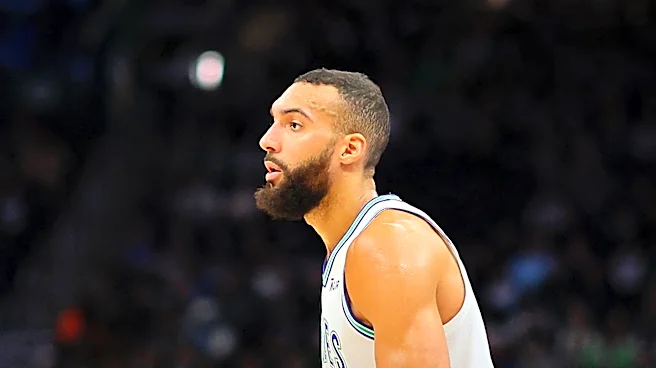
Minnesota still has Gobert anchoring the middle and providing the basis for an elite defense. He remains a four-time Defensive Player of the Year and, unlike Philadelphia’s preferred center, actually stays on the court.
Oh, and I forgot to mention…. “We got Jaden McDaniels.”
That sentence should never be treated as an afterthought.
Ball, Edwards, McDaniels, and Gobert form an impressive foundation. The roster may be imperfectly configured, especially at power forward, but its strengths are obvious and substantial.
While the LeBron drama has been sucking the oxygen out of the room, other Wolves developments flew under the radar. Apparently, Anthony Edwards got married, adding another unexpected chapter to an offseason already packed with roster changes, superstar rumors, and franchise-altering decisions. That news may not change Minnesota’s offensive rating, but it contributes to the larger sense that Edwards is entering a different phase of his life and career.
Signs of that evolution are beginning to show up elsewhere. Reports suggest that Edwards is attempting to organize a team gathering in Paris so the new-look roster can build cohesion alongside Gobert. That may sound like a minor offseason detail, but leadership is often revealed through exactly these kinds of actions. Edwards has always possessed the charisma, confidence, and talent of a franchise player. The next stage is becoming the person who actively shapes the team’s culture, brings teammates together, and understands that championship contention begins long before opening night.
For the first time, there is no question about whose team this is. Randle is gone. Reid is gone. Mike Conley’s veteran influence has diminished as Edwards has ascended. LeBron is heading somewhere else. Ant is now the undisputed leader of the Minnesota Timberwolves, not merely their most talented player. That distinction matters.
There have been moments in Edwards’ career when his immense ability appeared to be developing faster than his maturity. That is not unusual for a young superstar, particularly one who entered the league with the personality and confidence to command a room before he had fully learned how to command a franchise. But organizing offseason workouts, prioritizing team chemistry, and showing renewed energy after the acquisition of Ball all suggest that Edwards understands the responsibility now sitting in front of him. The Wolves do not need him to become LeBron James. They need him to become the fullest possible version of Anthony Edwards.
The Western Conference will not make it easy. It never does. Oklahoma City remains a powerhouse, although the financial realities of the second apron have begun pressing against its roster. San Antonio has rapidly become a major threat, and the Wolves know firsthand how difficult that matchup can be. Minnesota pushed the Spurs to the limit despite a hobbled Edwards, no Donte DiVincenzo, and the complete disappearance of Julius Randle.
The Wolves came close under difficult circumstances. Now they will return with a dramatically different offensive structure, a rejuvenated Edwards, and Ball providing the playmaking they sorely lacked. There will be growing pains. The frontcourt balance remains unresolved. The chemistry between the new backcourt will require time. Ball’s health will always be part of the equation.
Could the Wolves fare better than LeBron’s new team? That is impossible to answer in July, but Philadelphia’s path is hardly risk-free. James may believe the Sixers provide his best championship opportunity, yet their entire plan rests heavily on Embiid remaining available when the games matter most. Recent history suggests that is less a roster strategy than an annual hostage negotiation with the human body.
Perhaps Philadelphia will put everything together. Maybe Embiid will stay healthy, LeBron will summon one more deep postseason run, and the Sixers will finally escape the maze of second-round disappointments that has defined this era. Or maybe the New York Knicks will ceremoniously bounce them from the playoffs again while Philadelphia wonders why it built another championship plan around a center who cannot reliably survive until May.
For Wolves fans, the correct response is neither despair nor denial. LeBron would have helped. His arrival would have elevated Minnesota’s profile, solved a positional need, and delivered one of the most important moments in franchise history. Losing that possibility is disappointing.
But the Wolves are not suddenly lost because a 41-year-old superstar chose another destination. Their future remains tied to Edwards, Ball, McDaniels, Gobert, and whatever additional moves Connelly can make to balance the roster. It remains tied to the growth of young players, the development of team chemistry, and Edwards’ evolution from explosive superstar into complete franchise leader.
The path did not disappear when LeBron chose Philadelphia. It simply became Edward’s path again.
And perhaps that is not entirely bad. There will be no daily LeBron drama consuming the season. No endless debate about whose team it is. No national media caravan treating every quote as evidence of an internal power struggle. No need to reshape the franchise’s identity around the preferences of a superstar nearing the end of his career.
The Wolves can move forward with Ant at the center of everything. They can allow Ball to unlock the offense, Gobert to stabilize the defense, McDaniels to terrorize opposing wings, and Edwards to determine how far this group can climb.
Because in the end, did we really want that geriatric, flopping diva arriving in Minneapolis, disrupting the chemistry, dominating every press conference, and stealing attention from the greatness of Anthony Edwards anyway?

Do not answer that.
I am working through something.
For now, I will sit with my sour grapes, prepare myself for the LaMelo-Ant experience, and look forward to another season of following this strange, exhilarating, occasionally maddening franchise through every high and low.
The Wolves’ pursuit of their first Western Conference title, and ultimately their first NBA Finals appearance, will continue without LeBron James.
It would have been historic if he came.
It could still be historic that he did not.