





Welcome to November. After one month of hockey, I think we have a big enough sample size to officially say it: The New Jersey Devils are starting yet another season hot.
It wasn’t like that immediately, as the team limped out to a 2-3-0 start. Poor finishing and goaltending were the main culprits, but there was also a general lack of cohesiveness from game to game. One night they look like world-beaters like in the season opener against the Philadelphia Flyers, and the next they’re getting their oil
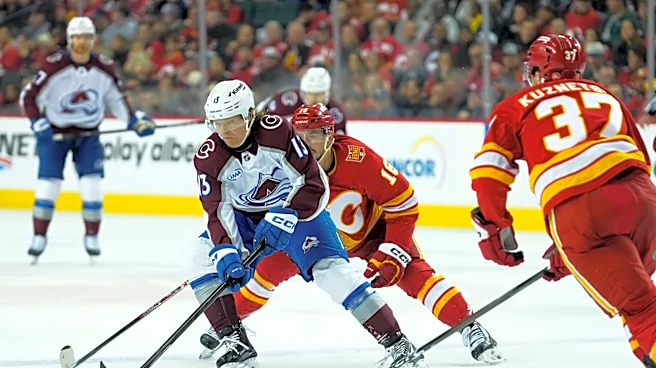
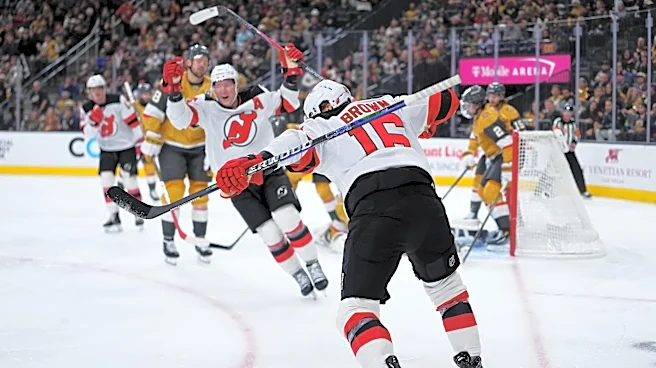
changed by the New York Islanders. But after a shaky first five games, New Jersey has won seven of their last nine contests. Six of those wins have come in regulation, and five of them have been multi-goal victories. And the Devils aren’t just beating up on the JV teams either, as this stretch has included victories over the Colorado Avalanche, Dallas Stars, and Vegas Golden Knights, among a few other scrappy teams like the New York Rangers, Detroit Red Wings, and Anaheim Ducks. Their underlying metrics remain near the top of the league, and they’re finally getting the results that their process should have been producing all along.
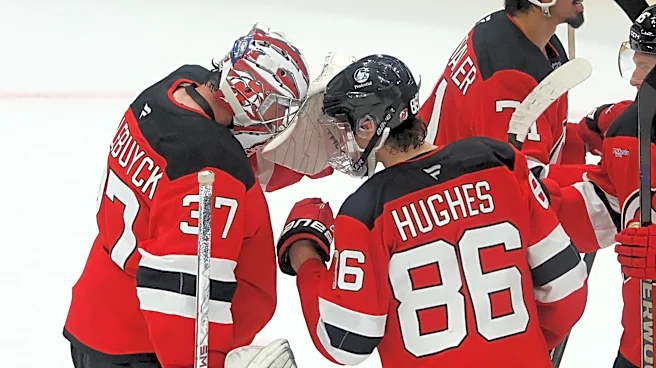
And of course, they made a huge splash to acquire Connor Hellebuyck, who has won his first two starts with his new club.
New Jersey is 9-5-0 heading into the season’s second month. That’s not a crazy hot streak, but it’s good enough for a 108-point pace, which, of course, is excellent. But any Devils fan can tell you that it’s not about how this team starts, it’s how they finish. Since the soaring highs of the 2022-23 campaign, New Jersey has made a habit of starting a season strong, only to fade over time. It cost them a playoff spot in 2023-24 and 2025-26, and it almost did in 2024-25.
This prevailing sentiment of “Yeah it’s great that they’re playing well right now, but I’ve seen this movie before, and this year’s team is bound to collapse like all the others” has been a common one amongst Devils fans lately. So today, I wanted to take a look back at those strong starts that ended up being mirages. Was there a common theme linking them all? Were there red flags that either went ignored until it was too late or were otherwise not able to be solved? And most importantly, are we seeing any major warning signs that this season’s hot start is nothing but smoke and mirrors? There were many, many issues that these past Devils teams faced of course, but we won’t touch on all of them. Only the primary ones that played the biggest role in destroying each campaign. We’re not going to be able to predict the future of course, but let’s try to find as many answers as we can.
2023-24
How Long The Good Times Lasted: Early January
The 2023-24 season was a streaky one for the first few months. New Jersey got off to a 6-2-1 start. Then they lost seven of their next nine. Then they won eight of their next 10. Then a three-game losing streak. And finally a stretch of four wins in five games, culminating in a 4-2 win over the Chicago Blackhawks on January 5, 2024.
And that’s when the bottom dropped out. New Jersey did not suffer a losing streak longer than three games that entire season, so there were no prolonged winless stretches. But after that January 5 contest, the Devils won consecutive games only three more times the rest of the season, and each of those were only exactly two wins in a row. It was a slow, steady decent down the standings on the way to a 38-39-5 campaign.
Major Red Flag #1: Goaltending
We start with, inarguably, the 2023-24 Devils’ biggest problem: Stopping the puck.
New Jersey climbing to a respectable 21-14-2 record after their win on January 5 is actually remarkable when you consider what they were getting from their goaltending at the time. Through January 5 of that season, the Devils’ team save percentage sat at a hideous .880, which, to the surprise of no one, was dead last in the entire league. After at terrific year in 2022-23, Vitek Vanecek came crashing back down to earth. Akira Schmid was unable to replicate the magic of that first round series against the Rangers the previous spring, and Nico Daws was better (.894 save% in 21 appearances), but still not good enough.
The two goaltenders that performed the best for New Jersey that season were the two they acquired at the trade deadline: Kaapo Kahkonen and Jake Allen. Allen posted a .900 sv% in 13 games, while Kahkonen had a six-game heater, registering a killer .923 sv%. But it was too little, too late to save (pun intended) the season.
Eventually, the goaltending woes became too much to overcome.
Major Red Flag #2: Unsustainable shooting
Arguably the biggest reason why goaltending didn’t sink the Devils earlier was because of New Jersey’s own ability to beat goaltenders.
Once upon a time, the New Jersey Devils were actually a great shooting team. I know it sounds fake, but it’s true. Through January 5, 2024, the Devils had the fifth-best shooting percentage in the NHL at 11.18%. New Jersey took a bit of a step back offensively in 2023-24 from a process standpoint, in part due to key injuries to players such as Dougie Hamilton and Jack Hughes. But a shooting percentage bender made up some of the lost ground.
But as usual, regression to the mean won out in the long run. After January 5, New Jersey’s shooting percentage plummeted to 9.89%, tied for 21st in the league over that span. Once the Devils forgot how to finish, it was over.
2024-25
How Long The Good Times Lasted: Christmas
Fresh off one of the most disappointing seasons in franchise history, former general manager Tom Fitzgerald made sweeping changes to the organization. He fired previous head coach Lindy Ruff late in the 2023-24 campaign and replaced him in the 2024 offseason with Sheldon Keefe. Tyler Toffoli, Colin Miller, and a few other pieces were moved at the 2024 trade deadline, and folks like John Marino and Alexander Holtz were traded over the summer. They were replaced in the offseason by the likes of Paul Cotter, Stefan Noesen, Brenden Dillon, and Johnny Kovacevic. The team’s identity took a noticeable shift from the rush-based attack that thrived in 2022-23 and stumbled a bit in 2023-24, to a grittier, dump-and-chase oriented approach with more hulking players, especially on the blue line.
And for a time, this approach worked. After a 5-0 beatdown of the New York Rangers in the final game before the Christmas break (December 23, 2024, to be exact), New Jersey sat at 23-11-3. In fact, that game marked the seventh straight match in which the Devils held their opponents to 20 shots or fewer. On top of that, Fitzgerald’s Big Game Hunt from the offseason, Jacob Markstrom, teamed with Jake Allen to give New Jersey some solid goaltending through Christmas of 2024. The offense was clicking, the process was great, and the Devils were flying high.
But on the other side of Christmas, the Devils couldn’t sustain that level of play. The offense shriveled up, the goaltending got worse, and the team stumbled it’s way into the postseason. New Jersey’s 91 points in 2024-25 usually wouldn’t come close to being good enough for an invitation to the dance, but the Metropolitan Division was so weak that year that the Devils were able to barely hold on for dear life. Thanks to poor offense and a frankly hilarious run of injuries, New Jersey bowed out in five games in the first round to the Carolina Hurricanes. To this day, I will argue that the series was closer than it appeared on the surface, and if the Devils were fully healthy, I think they would have won it. But we don’t live in that convenient alternate universe, we live in the one where the 2024-25 Devils were one of the worst teams in hockey for the last four months of the season.
Major Red Flag #1: Depth scoring
One of Tom Fitzgerald’s most infamous quotes came in his end of season press conference in May of 2025. When asked about the team’s lack of offense, in particular from the bottom six, he gave us this gem:
For a general manager of an NHL team, not knowing what depth scoring is seems…less than ideal.
And while a suffocating defense held teams at bay until Christmas of 2024, the paper thin depth up front eventually caught up with New Jersey. The top of the lineup was punching above its collective weight, led by Jack Hughes and Jesper Bratt each registering 45 points in 37 games. Nico Hischier led the team with 17 goals through Christmas, close to a 40-goal pace. Noesen played on the top line with Hischier and Timo Meier and surprised everyone by potting 16 goals before Christmas, largely on the power play.
But once cold spells (and, later in the season, injuries) came for the big guns, the rest of the lineup couldn’t pick up the slack. Players like Cotter, Erik Haula, Tomas Tatar, Nate Bastian, Curtis Lazar, Ondrej Palat, Justin Dowling, and Kurtis MacDermid clogged up the bottom six (and sometimes the top six), offering almost no offense at all. Noesen predictably slowed way, way down after Christmas, scoring just six more goals the rest of the season.
New Jersey was getting by on unsustainable defense and an extremely top-heavy offense. Once the top of the lineup cooled off, It caught up to them in a big way after Christmas.
Major Red Flag #2: Offense from the blueline
Along similar lines, it wasn’t just the depth forwards not pulling their weight either. Aside from Dougie Hamilton, Luke Hughes, and a brief early-season cameo from Seamus Casey, New Jersey was generating next to no offense from the backend. Kovacevic and Brett Pesce each registered 17 points. Dillon was right behind them with 16. Jonas Siegenthaler scored nine points in 55 games. Trade deadline acquisition Brian Dumoulin chipped in a mere six points in 19 games. Getting offense out of the defense was like pulling teeth.
And it wasn’t just the raw point production either. Hamilton and Hughes could move the puck well, and Pesce wasn’t terrible in that regard either. But the rest of the D corps were grenade-handlers that stifled any offense that the Devils were trying to generate. Once the league figured out how to penetrate New Jersey’s defensive structure, the Devils were unable to make up for their lack of secondary offense with smothering defense.
Major Red Flag #3: Unsustainable shooting…from some key individuals
Through Christmas of 2024, New Jersey’s team shooting percentage was 11.03%, good for 11th in the league. That’s a bit higher than you’d expect to find the Devils, but it’s not a crazy shooting binge that anyone would reasonably expect to drop dramatically. However, while the Devils weren’t riding a lucky shooting percentage at a team level (thanks in large part to the bottom six and the blueline depth being terrible shooters, which ironically was sustainable), we did see some lucky runs from a few key players in 2024-25:
Noesen is the real standout here. His performance over the first few months of 2024-25 was never sustainable, and it should have been obvious to everyone that his shooting luck was going to run out very soon. Meanwhile, Hischier, Bratt, and Dillon were all outperforming their career marks by significant margins, Seamus Casey went on quite the heater in his limited time with the club (I didn’t include his career shooting percentage because he’s played so little at the NHL level), and even Ondrej Palat was outshooting his career norm early in 2024-25.
Now, every team is going to have players who shoot a little hotter than normal during any given stretch. So it’s not a surprise to see that New Jersey had some players go on shooting heaters into Christmas. But the point is, that was unsustainable, and the offense that went through those players was destined to dry up soon. Players like Hischier and Bratt continued to rack up goals, just not to the degree that we saw through Christmas of that year, while everyone else went ice cold the rest of the way. And when the goals stopped flowing, the Devils needed the depth scoring to pick up the slack, which it did not.
2025-26
How Long The Good Times Lasted: Black Friday
New Jersey went on an eight-game winning streak in October, then lost three of their next four, then won four of their next five, and then alternated between a three-game losing streak and a three-game winning streak that ended in a 5-0 win against the Buffalo Sabres on Black Friday. And once the unofficial holiday season hit, that was all she wrote for the 2025-26 New Jersey Devils.
After that win in Buffalo, the Devils sat near the top of the NHL standing at 16-7-1. But then they lost their next five games and seven of nine overall. After a modest two-game winning streak, New Jersey then suffered through another prolonged stretch of losing, dropping eight of their next 10 contests. The amazingly hot start was wasted, and the Devils plodded through another maddening year that ended before the playoffs.
Major Red Flag #1: Mediocre process
You wouldn’t know it based on the results, but the Devils actually had some pretty mediocre underlying metrics through their eight-game winning streak in October. Per Natural Stat Trick, here are the 5-on-5 numbers:
Despite that, the Devils had a goal differential of +13. Something had to give; either New Jersey needed to start dominating puck possession a lot more if they wanted to keep winning, or their middling process would catch up with them.
It turned out to be the latter. The roof didn’t fully cave in until after Thanksgiving, but those early warning signs regarding the advanced stats turned out to be prophetic. Up until the team returned from the Olympic break with a tweaked system, New Jersey struggled to control play. And that failure to gain territorial dominance caught up with them and torpedoed their season.
Major Red Flag #2: Depth scoring
Once again, New Jersey failed to address it’s depth scoring problem. To be fair, there was a little improvement in this area. Players like Connor Brown, Arseny Gritsyuk, and Cody Glass added a reasonable second layer. But it’s not like they set the world on fire either, with 43, 31, and 26 points respectively. Plus in Brown’s case, most of those points came when he was bumped up to the top six to play with Hughes and Bratt. You could hardly be called “depth” when you’re playing in the top six with elite players like that.
But aside from that trio, the depth was once again abysmal. Cotter, Palat, and Noesen were joined by the likes of Luke Glendening, Juho Lammikko, Maxim Tsyplakov, Nick Bjugstad, and Evgenii Dadonov. Add in Lenni Hameenaho, who showed flashes but wasn’t NHL-ready, and those nine players combined for 51 points in 349 collective games. That is a points-per-game rate of 0.15, which comes out to an 82-game pace of just over 12 points.
The Devils wasted so many lineup slots on players who just could not do anything offensively. And when injuries once again hit to key players like the Hughes brothers, the depth could not pick up the slack. It was obvious from the start, and it played a huge part in costing New Jersey its season.
Major Red Flag #3: Goaltending
Another repeat red flag from a previous season. To be more specific, we’re talking about Jacob Markstrom, as Jake Allen was actually quite good last year.
Through Black Friday of 2025, according to Natural Stat Trick, Markstrom was rocking a Goals Saved Above Expected of -6.73. That was “good” for 70th out of 78 goalies that played at least one game through that date. Eventually, the lack of quality goaltending caught up to New Jersey, much like it did in 2023-24. As mentioned, Allen was fine throughout the season, but Markstrom was terrible, posting an .883 save percentage in 44 games for the Devils in 2025-26. New Jersey was not nearly a good enough team to overcome that.
So What About This Year?
Let’s go through all the red flags we identified over the last three years and see if any of them are applicable to this year’s squad.
Goaltending:
Well, considering the Devils just traded for Connor Hellebuyck, I am much, MUCH less concerned about goaltending sinking New Jersey’s season again. Hellebuyck has been solid in his first two games with the team, and while he won’t post .923 save percentage the entire season, I still expect quality netminding out of the future hall of famer.
I will admit, though, that it’s possible Hellebuyck goes the Jeremy Swayman route of missing all of training camp and part of the season until finally returning to action and then struggling. That’s what happened to the Boston Bruins’ franchise goaltender in 2024-25. There’s also the fact that Hellebuyck is already 33, with tons of miles on the odometer. He could absolutely burn out or get injured, or both. That being said, I have way more faith in the current version of Hellebuyck (and Allen as the backup) than I did in any of the goaltending the Devils have gotten since 2023-24.
Depth scoring:
Just looking at the talent on this roster, I am very confident they will outperform anything New Jersey got from the bottom of their lineup over the last two campaigns. Newcomers like Evan Rodrigues, Anthony Mantha, Jesper Boqvist (kind of), and Amadeus Lombardi, along with holdovers like Brown and Glass are much more talented than the likes of Glendening, Lammikko, and Lazar. Again, it’s possible they stop producing, but I am confident what we’ve seen out of them thus far is just the beginning, and the offense will keep flowing from the bottom six.
Unsustainable shooting:
Hockey is a funny game. Through the first give games of the season, New Jersey’s finishing woes reached new heights. But then regression to the mean hit hard, and now all of a sudden, the Devils are scoring goals in bunches. But despite the recent outburst, New Jersey is still in the lower half of the league as a team. The Devils are shooting 10.53%, good for 23rd in the NHL. So if anything, I expect that number to go up, not down. I do acknowledge that this current Devils team probably has below-average shooting talent, but even with that being the case, this is another red flag that I do not think applies to this current team.
At the individual level, there are some shooting percentage hot streaks going on right now. Thanks to his two-goal night in Colorado last week, Brown is rocking a 33.3 shooting percentage. Meanwhile, all of Gritsyuk, Hischier, Boqvist, and Declan Chisholm are all in the 20’s. Other players like Noesen (16.7%) and Luke Hughes (13.9%) will come down as well. But there are plenty of players who are due for huge regression to the mean in a positive way, such as Meier (2.0%), Hamilton (2.9%), Glass (5.0%), and Bratt (7.1%). Unlike in years past, I have confidence that when the shooting percentage rampages end, there will be other players there to account for the lost offense.
Mediocre process:
This topic has been talked about to death on this site, so I won’t go into detail again. I’ll simply leave it at this: The Devils’ advanced metrics are incredible according to multiple public models. None of these individually are the be-all, end-all. But when so many of them agree, it’s a good indication that there is some signal there, not just noise. And just watching the games and using my own eye test, I can tell you that I see a team that, while not perfect, is controlling play and is routinely the better team in most games they play. Sometimes by a lot. Given how much new general manager Sunny Mehta has bolstered the roster, I think New Jersey’s territorial dominance, is sustainable. This, to me, is not a red flag that might be due for some regression.
It’s also worth noting here that I think Keefe’s revamped system is playing a role here as well. Having more talent on the roster is great and all, but actually putting that talent into a system that better suits the club’s strengths, as opposed to trying to be a carbon copy of the Florida Panthers when the team isn’t built to play like that, is very important. The Devils are leaning into their speed and skill much more, and there is better synergy between the players and what they’re being asked to do.
Offense from the blueline
This is the one red flag I’m a little concerned about. Luke Hughes won’t shoot 14% forever. Meanwhile, players like Pesce, Siegenthaler, Kovacevic, and Dillon offer little to no offense themselves. Perhaps it’s not fair to lump Pesce into that group, as I do feel that he is a clear step above the other three. But it’s still true that Pesce is not a guy that the Devils can count on for significant amounts of points.
There are positives though. Hamilton has been incredible at driving offense this season, he just hasn’t racked up the points to show for it. They will come in time. Chisholm has shown flashes of the dynamic offense that Mehta raved about over the summer. As he gets more comfortable, I think we can expect a little more scoring out of him as well. And Hughes himself, while scoring more than he should, is also due to rack up more than the two assists he currently has.
Still, I am a bit concerned that so much of the blueline is made up of all-defense lumberjacks. They don’t have to be prime Bobby Orr to produce value, but they still need to chip in at least some secondary offense.
Conclusion
I regret to inform you that it is time to hope again. I don’t think this hot start is a mirage.
After going through the last few years and finding the main reasons why each season ended in failure, In my opinion, there is significantly less cause for concern thus far in 2026-27. Sunny Mehta has done a great job addressing all the issues that plagued the Devils in seasons past, and Sheldon Keefe is allowing his team to play to their strengths much more than the past couple years. Whereas the past three campaigns featured hot starts that fizzled out, I think this one is much more sustainable.
Obviously the one major issue that has sunk New Jersey over the last three seasons that we have not discussed today is the injury bug. The reason I stayed away from injuries is because by their nature, they are random. Yes, players like Jack Hughes can reasonably be labeled as injury prone. But until injuries actually happen, none of us can predict if they actually will happen, and how severe each injury will be.
But even in the case of injuries, I really do believe that Mehta has set this team up to succeed in the face of man games lost. At the very least, I think he’s been leaps and bounds better in this regard than his predecessor. There is no replacing players like Jack Hughes or Nico Hischier or Jesper Bratt. But this current team can weather the storm better than in any season since 2022-23.
This Devils team is not perfect. No team is. There will be issues that pop up throughout the course of this season that will inevitably need to be addressed. But at long last, I think that we are finally looking at a hot start that is sustainable.
Your Take
What do you think of all these numbers? Do you think any of these past red flags apply to this current team? Aside from those, what other major issues do you foresee with this team, if any? Do you agree that this year’s hot start appears much more sustainable than in prior seasons? As always, thanks for reading!