
AUSTIN — No Colin Simmons, no problem?
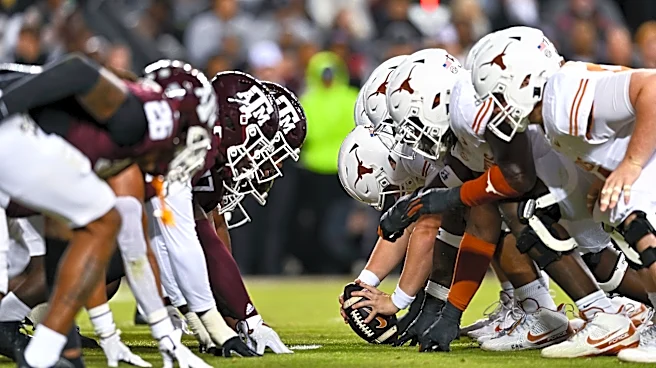
It’s not exactly that simple for the Texas Longhorns heading into Friday’s regular-season finale against the Texas A&M Aggies, for which the standout edge rusher was listed as questionable on the first two initial SEC-mandated player availability reports.
Simmons has been able to play two games since suffering a high ankle sprain in last month’s loss to Florida, and Texas still unquestionably misses his speed off the edge and improved ability to defend the run,
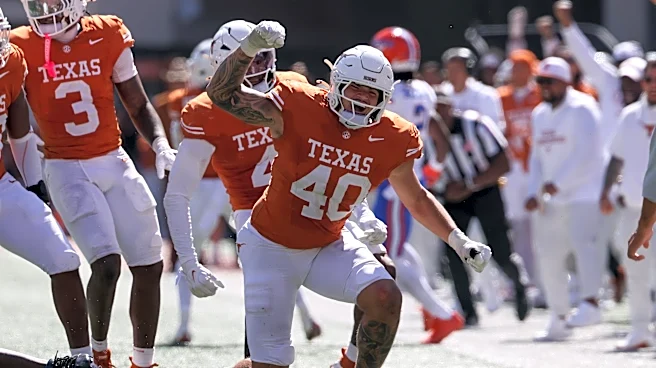
but in addition to senior linebacker Rasheem Biles making an impact as a blitzer, sophomore edge Lance Jackson and senior edge Colton Vasek have both stepped up for the Longhorns in recent games, allowing Texas to maintain its elite defense.
While Jackson and Vasek are both making a difference, their respective journeys to this point have looked quite different.
A consensus five-star prospect out of Texarkana Pleasant Grove, Jackson finished the 2025 recruiting cycle as the nation’s No. 21 prospect and the No. 2 edge, according to the 247Sports Composite rankings, following a senior season during which he recorded nine sacks and 28.5 tackles for loss.
For a prospect of Jackson’s caliber, any drama in his recruitment was remarkably absent — despite holding close to 30 offers from top programs, the 6’5, 274-pounder visited Austin for a Junior Day in early 2024 and committed one day later, then stayed true to Texas until he signed.
After showing promise as a freshman, playing 261 snaps and recording 16 tackles and two sacks, Jackson has emerged as an impact defender this season in what Texas head coach Steve Sarkisian termed a “phenomenal season.”
“We’re asking this guy to do a lot of different things. He’s playing multiple positions. He’s doing it at a really high level. Had a big-time sack fumble Saturday. He’s the lead against the run. His effort is tremendous, and what I love about Lance is he plays with an edge. He plays with a real edge and he sets the tone for how we want our guys to play,” Sarkisian said.
Jackson’s combination of size, length, and mass enable him to all the way from three technique to everything outside as far as a nine technique. Against Ole Miss, defensive coordinator Will Muschamp often employed him in coverage, too, a role in which Jackson has only allowed four catches for 29 yards.
Early in the season, Jackson was putting himself in position to make plays, but was struggling to finish them with six missed tackles over the first six games. Since then, his growth has resulted in fewer mistakes and more big-time plays.
The alignment versatility for Jackson showed up against Missouri with his ability to wreck the preferred outside zone scheme employed by the Tigers. That’s physicality, holmes.
In the blowout win over Arkansas, Jackson played the best game of his career, earning an astounding 94.9 overall grade from Pro Football Focus by recording five total pressures, including that sack fumble, four tackles, and three defensive stops. No other Power Four edge graded out higher than Jackson last week.
Excellent setting up end-tackle twists because of his strength crashing inside, Jackson uses the threat of his inside moves to maximize his danger off the edge. He doesn’t have the pure explosiveness of Simmons — that’s a physics problem as much as anything — but he moves exceptionally well for his size.
When the Arkansas right tackle got too flat on his pass set worrying about an inside move, Jackson’s ball get off and length combined to get the tackle out over his toes, allowing him to easily take the edge and force the fumble.
The concern about Jackson’s inside moves is a result of his impressive lateral quickness that allows him to win across the face of offensive tackles.
Those are the ways in which Jackson’s physical attributes show up on the field — he’s good enough off the edge to force opponents to use a tight end to chip him, but even that tactic can’t account for how his motor amplifies his athleticism.
Jackson’s intensity, the fuel for his motor, sometimes runs too hot — Sarkisian also addressed the five penalties Jackson has committed this season, the most on the team defensively, noting that he would rather have to pull back on his hard-nosed young defender than to find ways to get his motor to fire. It fires and it misfires.
“I wouldn’t change it for the world — I think that what he provides for us is irreplaceable that way,” Sarkisian said.
It’s an issue further maturity should solve. And, in any case, those moments do not obscure the incredible ceiling that Jackson possesses as a potential future first-round pick.
Less than two years into his Texas career, Jackson is on the right trajectory to reach that ceiling.
The Longhorns defense is also benefitting from the long-awaited breakout season by senior defensive end Colton Vasek, a Texas legacy from Austin Westlake whose high-profile flip from Oklahoma during the 2023 recruiting class elevated his profile beyond his ranking as a fringe top-100 prospect.
Added to the program at a time when the Horns were desperately seeking edge-rushing talent, Vasek’s career was derailed by injuries over his first three seasons.
“For Colton, I couldn’t be happier. You’re always happy for guys on your team, and everybody’s journey is different. Colton’s had a tough road with the multitude of injuries that he’s gone through,” Sarkisian said.
As a freshman, Vasek redshirted after suffering a back injury. In 2024, hip and shoulder injuries limited Vasek to 65 snaps over 11 games and led to offseason surgery to repair a torn labrum. Despite the surgery, Vasek continued playing with a harness on his shoulder in 2025, when his playing time doubled, but he only made three tackles.
Passed by younger players on the depth chart, Vasek only projected as a special teams contributor in 2026. Instead, he’s found an increasingly important role since Simmons was injured, averaging 22 snaps per game during the five-game Texas winning streak, recording 16 of his 23 tackles with three tackles for loss and two sacks.
“For him to be able to be healthy this year and be a real contributor for us, not only on defense but on special teams, it’s awesome. I’m really happy for him, and he serves as such a great model for other guys in the program who are going through injuries or different setbacks along the way — look at 92, man. Look at what he’s been through, and look at how he’s contributing to the team now,” Sarkisian said.
One of Vasek’s sacks came at a big moment in the Missouri game — tied at 20-20 in the fourth quarter and backed up in their own territory, the 6’5, 252-pounder pinned the Tigers at their own goal line by dropping Austin Simmons for a 10-yard loss.
As a run defender, Vasek can make opponents pay for leaving him unblocked on the back side.
Notice Jackson playing the 4i there.
Vasek also been effective in coverage. In 23 coverage snaps this season, the Austin Westlake product has only allowed three catches for nine yards.
One of his best plays in coverage won’t show up in the box score — anticipating a Texas tendency, Missouri isolated Vasek against running back Jamal Roberts on a wheel route, the type of play a good offensive coordinator schemes up during the week and waits for the right time to call. But instead of producing an explosive, potentially game-changing play, Vasek played his assignment, took the right angle, and had enough juice to run with Roberts down the field, forcing Simmons off that read.
And Vasek still remains a core contributor on special teams, reprising the role he’s played over the last several seasons — with 195 snaps over four units, only Ryan Niblett has been on the field for more snaps on special teams than Vasek.
“He blocked a field goal or gets his hand on a field goal two weeks ago,” Sarkisian said. “He’s on punt protection. He’s on kickoff return, so his role on the team has elevated, and I couldn’t be happier for anybody on the team than for Vasek because I know what he’s been through to get to this point.”