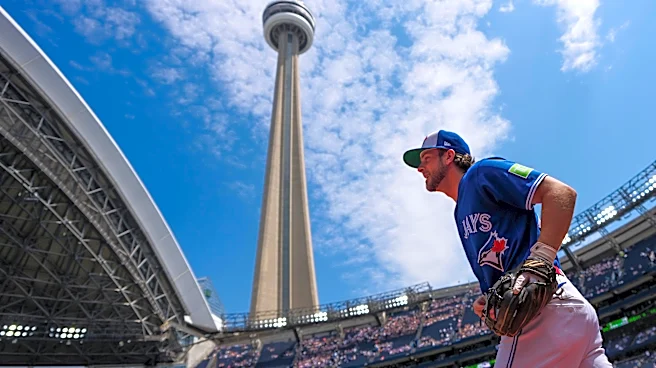





The New York Mets (35-49) will grab their passports for their upcoming road trip as they head to Canada to face the defending AL Champion Toronto Blue Jays (39-45). The Mets opened up their home schedule in 2025 against the Blue Jays and swept them in a three-game set. The last time the Mets traveled to the Rogers Centre in Toronto was September 2024, when they took two out of three, including the game where Francisco Lindor broke up the no hitter with a ninth inning solo homer and was the catalyst
to a six-run eruption during that magical September run.
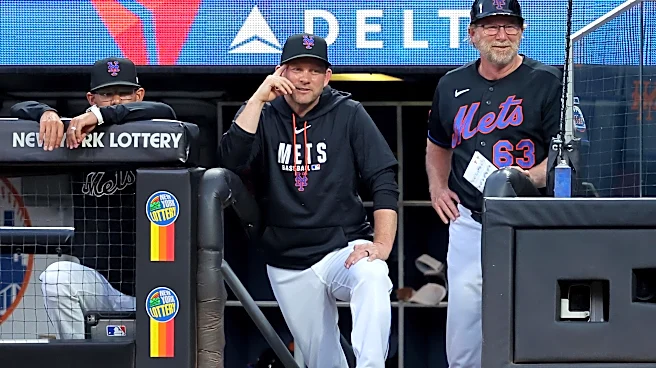
The Mets made headlines across the league this weekend by firing Carlos Mendoza ahead of their series with the Phillies. Was it the right move? Time will tell, though it was probably too late to have any real effect on their postseason chances. Did it pay any immediate dividends? The short answer is no. The longer answer is no, not really, but they did slightly look better at times, and other times they looked like the exact same team, which is most likely just the result of them not being a good team.
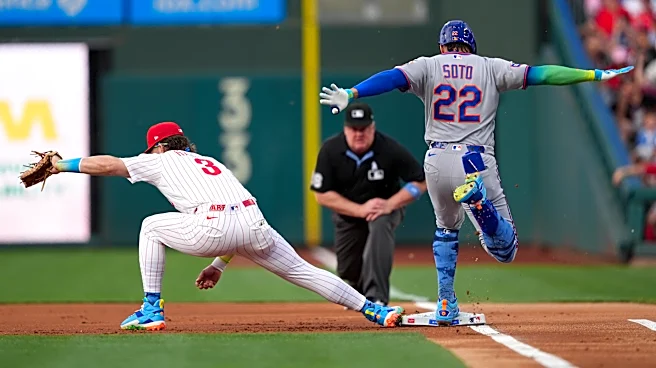
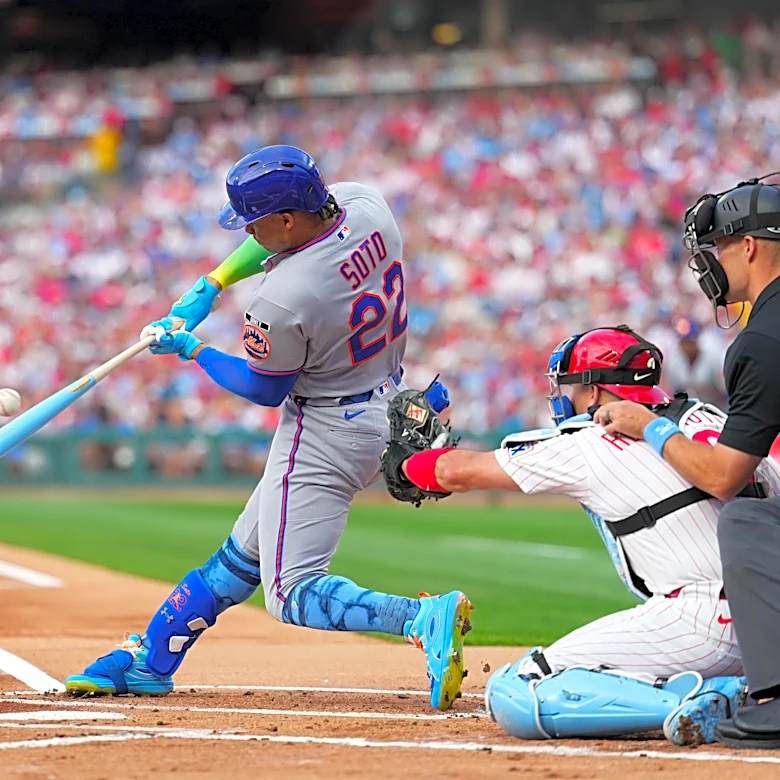
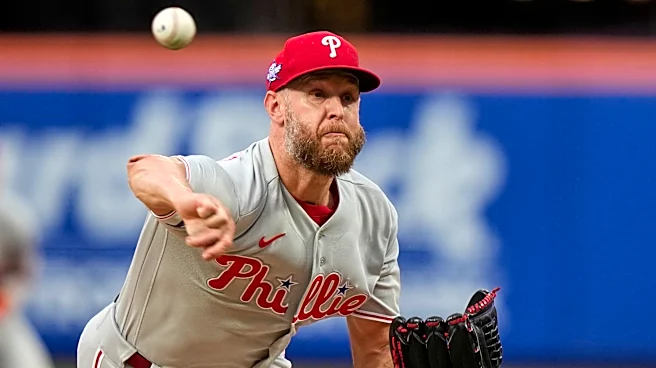
All that is to say the Mets lost two out of three games to the Phillies to conclude a 1-6 homestand. They looked better than they did against the Cubs in that four-game sweep, but that’s an incredibly low bar to clear. They were in every game, outscoring the Phillies 11-9 overall, but the offense still struggled. In Friday’s 2-1 loss, the lineup collected just five hits in 31 at-bats (.161), though Derek Hill’s insane home run robbery of Juan Soto in the first inning really proved to be the backbreaking play. In Sunday’s seesaw 5-4 defeat, New York left 14 runners on base, going 2-for-16 with runners in scoring position and blowing several opportunities, none more glaring than the bases loaded, one out situation in the bottom of the eighth. The Mets thankfully capitalized in Saturday’s 6-2 win, bringing four runs across in the sixth and two more in the seventh after falling behind on a Bryce Harper two-run homer.
There were some positives on the pitching side of things in the series, at the very least. For one thing, Zach Thornton had a much better showing than he did in his debut, tossing six innings of one run ball in Friday’s loss before getting sent back to the minors. If nothing else, he’s catapulted himself right up the pitching depth charts, and considering the team will need another starter sooner or later, it’s very likely he’ll get the call. Christian Scott also looked very good in his return from a hip impingement, allowing two earned runs over 4 1/3 innings while striking out six. Lastly, Kodai Senga pitched the final five innings of Sunday’s loss and, despite picking up his seventh defeat of the year, limited Philadelphia to two runs over the five frames. Aside from Kyle Schwarber’s home run, which proved to be the difference, it was Senga’s best showing in a while.
The Blue Jays have endured a World Series hangover this year without the benefit of even winning the title. They fell in a really tough seven-game series to the Dodgers, dropping both games 6 and 7 at home. They also came within two outs of closing out the series in Game 7 and eventually fell in extras. They find themselves in third place in the AL East but sitting outside the playoff picture, well behind both the Rays and Yankees in the divisions and the Mariners for the final spot in the Wild Card race. Despite losing six in a row and sitting six games under .500, they are just 2.5 games back of the postseason, which really speaks to how bad the American League is this year.
Toronto’s offense has been a big reason why they have failed to replicate their 2025 success so far. They enter play today with a 95 wRC+ and a .701 OPS, both of which are ranked 12th in the American League. Meanwhile, their 343 runs scored and 86 home runs are both 11th among AL squads. Comparatively, the Blue Jays posted a 112 wRC+ last season, which was third in the AL, and their 798 runs scored and their .761 OPS were both second only to the Yankees. They’re not doing much better on the pitching side of things. Their rotation sports a 4.54 ERA (12th in the AL) and a 4.20 FIP (10th in the AL). Their bullpen is their biggest strength, posting a 3.75 ERA (fourth in the AL) and 3.83 FIP (fifth in the AL).
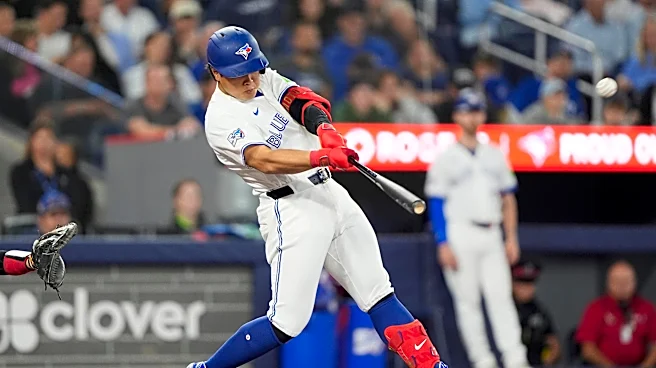
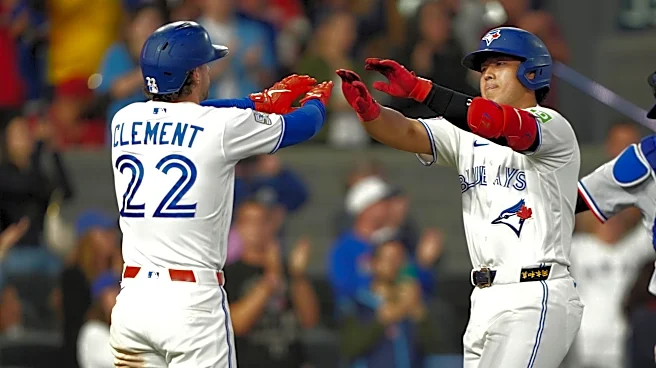
Vladimir Guerrero Jr. has had a really rough (and frankly head-scratching) start to his season. He finds himself entering play today with just for our homes to his name while slashing .268/.348/.349 with a 96 wRC+ in 80 games. The power outage has really befuddled talking heads across the league and has put a damper on Toronto’s season thus far. Kazuma Okamoto, who hasn’t quite gotten as much press as Munetaka Murakami, has ultimately had a really strong start to his career in America, slashing .238/.318/.466 with a team-high 19 home runs and 53 runs batted in. He also leads the club with a 118 wRC+ and a 1.9 fWAR while playing a team-high 82 games. Ernie Clement, who was the leading vote-getter in All-Star balloting and punched his ticket into the Midsummer Classic as a result, is hitting .299/.319/.441 with seven home runs, 28 runs batted in, 37 runs scored, a 110 wRC+, and a 1.2 fWAR in 81 games played.
Monday, June 29: Sean Manaea vs. Trey Yesavage, 7:07 PM EDT on SNY
Manaea (2026): 57.1 IP, 60 K, 20 BB, 6 HR, 4.87 ERA, 3.68 FIP, 121 ERA-
Manaea made his second start since rejoining the rotation and it did not go as well as his first one, though his defense did him no favors. He needed 86 pitches to navigate three-plus innings, allowing four runs (three earned) on six hits over his outing. He struck out four and walked two, but the team’s error-filled performance really did not give him much of a shot to succeed.
Yesavage (2026): 60.2 IP, 58 K, 30 BB, 5 HR, 3.56 ERA, 3.80 FIP, 85 ERA-
Yesavage burst onto the scene in 2025 and dominated in the postseason, becoming one of the game’s biggest young stars. Injuries put a dent in his 2026 campaign early on, as he landed on the injured list with a shoulder impingement in March and did not debut until April 28. Since his return, he’s been up-and-down, showing the exceptional talent that made him a star last year while also enduring some bumps in the road along the way, not unlike Nolan McLean. His last two starts have been solid (7 1/3 innings, three earned runs against the Red Sox; 5 2/3 innings, one earned run against the Astros). Prior to those two outings, he had given up at least five earned runs in three of his previous four starts.
Tuesday, June 30: Nolan McLean vs. Kevin Gausman, 7:07 PM EDT on SNY
McLean (2026): 89.1 IP, 106 K, 34 BB, 10 HR, 4.03 ERA, 3.70 FIP, 100 ERA-
After taking a major step forward against the Reds (seven innings, one unearned run, three hits, nine strikeouts) he took another step back against the Cubs, allowing six earned runs on seven hits over six innings. He struck out nine for the second straight start, which is a positive sign, but he gave up two home runs after going four starts without surrendering a long ball. He clearly looked gassed in his final inning, but Carlos Mendoza let him go, and he surrendered a three-run home run with the score tied at three. It was the most runs he has given up in a game since giving up seven against the Reds back on May 25.
Gausman (2026): 95.0 IP, 93 K, 22 BB, 14 HR, 4.36 ERA, 3.79 FIP, 104 ERA-
Gausman entered this season having posted a sub-4 ERA in every season dating back to 2020, he enters play with an ERA north of four after two rough outings. His last time out, he was tagged for six earned runs on ten hits over six innings, similar to McLean’s final line. He was tattooed for three homers in that loss, a season high. Before that, he pitched a season-low two innings and was crushed for seven earned runs on seven hits in defeat. It is the only start this year in which he did not complete at least five innings.
Wednesday, July 1: Freddy Peralta vs. Patrick Corbin, 3:07 PM EDT on SNY
Peralta (2026): 91.1 IP, 88 K, 35 BB, 12 HR, 4.53 ERA, 4.17 FIP, 113 ERA-
Peralta, like McLean, was victimized by the Mets’ poor defense. He allowed three runs, though none of them were earned, over 5 2/3 innings. He gave up give hits, struck out five, and walked one as he settled for a no decision in an eventual loss. It was, overall, a fine rebound after he gave up a career-worst ten earned runs on ten hits over 2 2/3 innings in his previous start against the Phillies. Peralta is likely to be the team’s biggest trade chip before the deadline, so his performance this month, if it won’t help the team claw its way back into contention, could determine how much value the club recoups following the offseason trade that brought him here.
Corbin (2026): 69.0 IP, 52 K, 24 BB, 9 HR, 5.09 ERA, 4.60 FIP, 121 ERA-
The Mets are no strangers to Corbin, whom they saw for many years when he suited up for the Nationals. He got off to a strong start, posting a 3.65 ERA through May, but he has hit a rough patch in June. Across five starts this month, he has an unsightly 8.69 ERA and a 5.95 FIP in 19 2/3 innings. He’s allowed 19 earned runs in these five appearances while striking out 16 and walking 10. He’s averaged just under four innings after averaging closer to five in his first ten starts.