
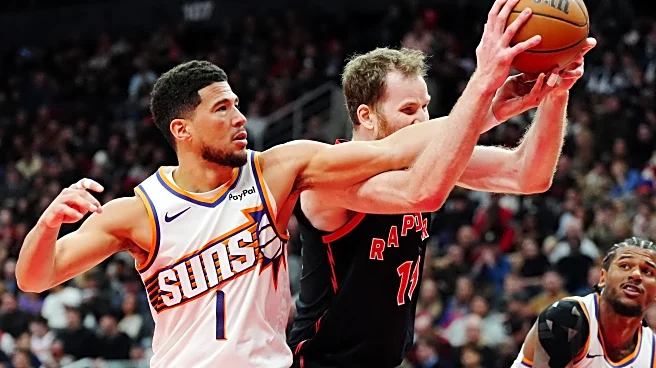
Patience is the word I have used most when talking about the Phoenix Suns this season. With an influx of youth, patience must exist if proper development is going to happen. That process takes time if the goal is to produce real results. Productive NBA players. Reliable rotation pieces. If everything breaks right, maybe even a star.
Every player walks a different road through development. There is no clean formula. It is difficult to quantify exactly what turns a young prospect into a successful NBA
player. Part of it falls into the ‘nature versus nurture’ conversation. Some players arrive with so much talent that failure rarely enters the equation. Others need the right environment. They need time to learn habits, sharpen skills, and grow into winning basketball. Development does not travel in a straight line.
With all of that said, I find myself questioning my own patience lately. The season has reached a strange intersection where development and opportunity are crossing paths.
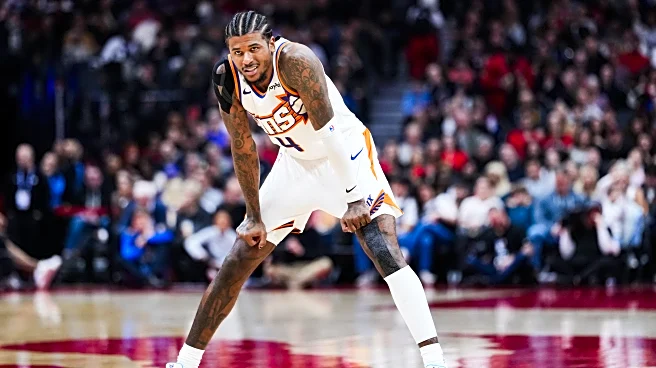
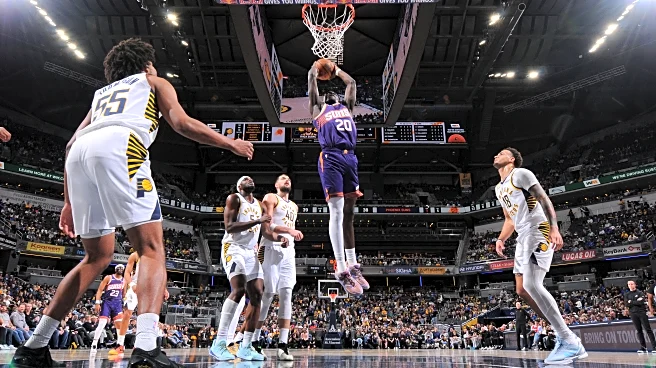
We are starting to see flashes from Rasheer Fleming. He is getting real minutes in the rotation, and he looks comfortable out there. Comfortable and productive. Those minutes have come at the expense of players like Ryan Dunn and Isaiah Livers during this stretch of the season, but so be it. He’s earned his minutes.
That is how this process works.
Coaches experiment with combinations. Players receive opportunities. The ones who produce tend to stay on the floor. Right now, Fleming is taking advantage of the time given to him. How much of this transfers to the long term remains to be seen. In the short term it has been a lot of fun to watch.
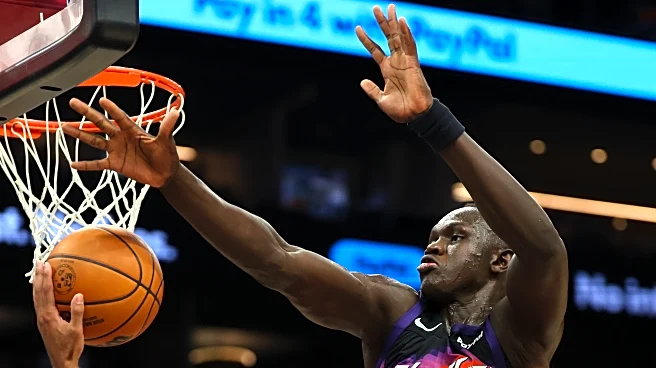
And then there is Khaman Maluach.
The tenth pick out of Duke brings something to the roster that nobody else truly possesses. Size. Real size. That is where my patience begins to wear a little thin.
I am not pounding the table, saying Khaman Maluach needs 30 minutes a night. I understand the reality of the situation. A 19-year-old big man in the NBA has a lot to process, especially at that position. Opposing teams will test that quickly. You saw a glimpse of that in the game against the Milwaukee Bucks. Maluach came into the game and found himself matched up with Myles Turner. Turner stepped out behind the three-point line and began launching from deep. Suddenly, the advantage Maluach brings around the rim was pulled away from the paint.
That is the challenge modern big men face. Stretch centers change the geometry of the floor. They force defenders to step out into space, which removes the rim protection that makes players like Maluach valuable. It is something he will see many times throughout his career.
It is also where the development opportunity lives. Learning the footwork. Understanding the angles. Figuring out how to contest on the perimeter without giving up the drive behind you. Those are lessons that only come with time and repetition.
But then there is the other side of the coin.
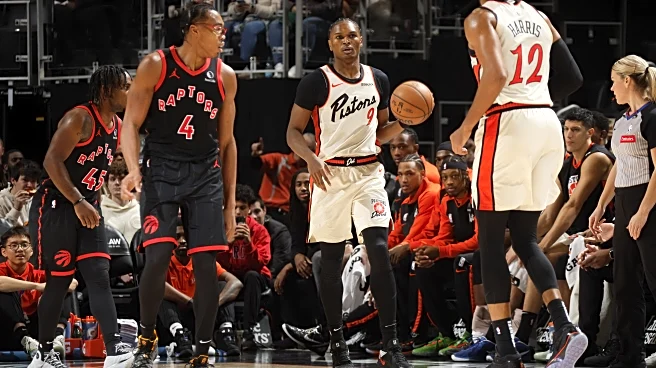
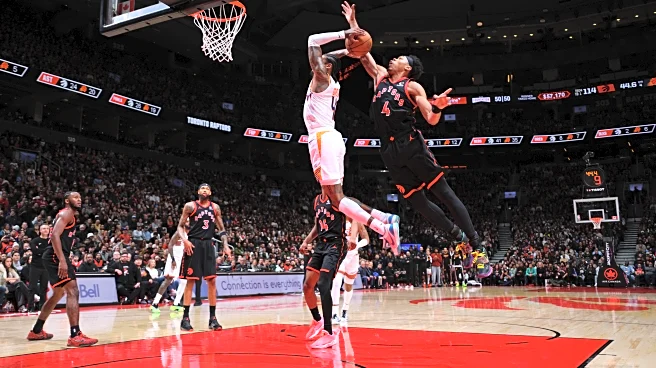
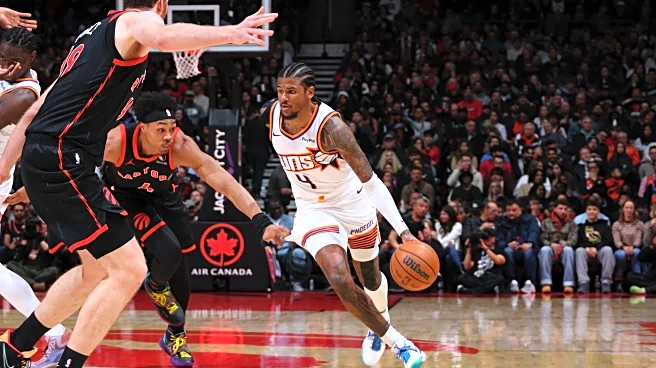
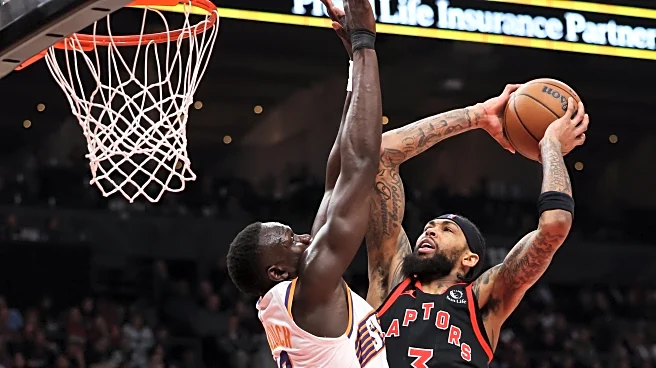
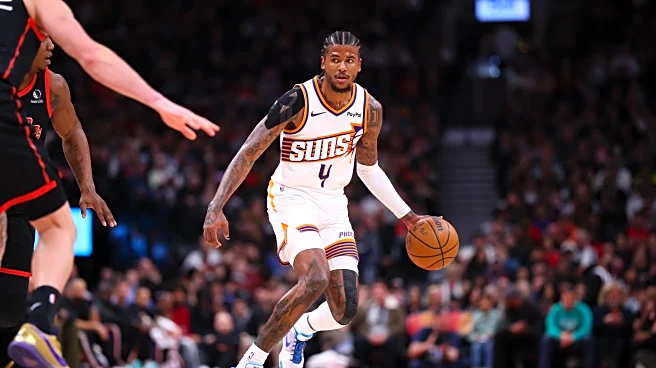
Against the Toronto Raptors, Jordan Ott went small in the fourth quarter. Too small, as it turned out. Because once the Suns removed size from the floor, the paint opened like a freeway at midnight. Toronto attacked it without hesitation. The Raptors scored 36 points in the quarter, 20 of those coming in the paint, and suddenly a comfortable lead turned into a slow bleed.
That is where the value of Khaman Maluach enters the conversation.
Toronto is not a dangerous three-point shooting team. They rank 25th in the NBA from beyond the arc. The math tells you where the risk lives. If you are protecting a 10-point lead in the fourth quarter, the equation says pack the paint, live with the outside shots, and trust the percentages to do their thing. Let them launch. Let them hope. Let them live in that uncomfortable space where the jumper has to bail them out.
Instead, once the Suns rolled out the small lineup, the Raptors smelled blood and went hunting at the rim.
That is where someone like Maluach could have mattered, even for a short stretch. Five minutes of size. Five minutes of length standing between the Raptors and the basket. Sometimes the presence alone changes decisions. Drivers hesitate. Lanes close. The geometry of the floor shifts.
And the numbers quietly back that up. Over the past 10 games, Maluach owns a 109.3 defensive rating. His net rating sits at +5.3, which ranks fifth best on the team during that span.
Now look, I know what this is. This is the classic “disease of the what if” game. Fans play it after losses. Writers play it after losses. You replay possessions in your mind, move one chess piece to a different square, and suddenly the ending looks different. I have done it plenty of times, and I’m doing it right now.
You can come up with ten different paths where the Suns walk out of Toronto with a win. Different rotations. Different lineups. Different adjustments. But in the end, the scoreboard does not care about the alternate timelines. The Suns lost the game.
But in the same breath, it reinforces a feeling that has been growing for me lately. At some point during this final stretch, the Suns should take the training wheels off Khaman Maluach.
Why? Because Mark Williams is still out. Because the reality of the standings is starting to settle in. I do not know if the sixth seed is truly attainable. The schedule tightens for Phoenix, and every night the teams above them keep rotating wins and losses like they are stuck in the same traffic loop. The Suns cannot gain ground. They are essentially locked into the Play-In unless something truly strange happens over the final weeks.
And that creates a rare window.
You are playing meaningful basketball. The games matter. The standings matter. The pressure exists. At the same time, you have an opportunity to develop your young center in real NBA situations. To give Maluach real run. Let him feel the pressure. Let him play fourth-quarter minutes that actually matter. Put those possessions on film. Study them later. Break them down over the summer. That is where growth happens. Not in empty minutes during a 20-point blowout, but in the moments when the building gets loud, and every possession feels heavy.
Look at what he has done recently.
Over the past 10 games, Maluach is averaging 12.7 minutes per night. In that time, he is producing 4.6 points, 4.2 rebounds, and 0.9 blocks while shooting 63.6% from the field. If you per-36 that out, it’s 13.0 points, 11.9 rebounds, and 2.6 blocks. That alone is solid for a young center learning the speed of the league.
But the impact goes a little deeper than the box score.
Across those 10 games, he has logged 127 total minutes and sits at +20, which is tied for fourth best on the team during that span. In the fourth quarter minutes he has played, 26 total minutes, the Suns are a +6. Those are small samples, sure. Nobody is pretending otherwise.
But they are also signals. Signals that the size, the length, and the presence he brings can matter in real basketball situations. And if this team is already preparing itself mentally for a Play-In path, there is real value in seeing what your young 7’1” center looks like when the lights are bright and the stakes feel real.
So yes, patience still matters. Maluach is a young player, and confidence is a fragile thing, especially for a 19-year-old big man learning the pace and complexity of the NBA game. You do not want to throw him into situations that bury him mentally. At the same time, iron sharpens iron. There comes a point where development requires friction, requires pressure, requires real minutes that matter.
Maybe I am a little impatient, but I am ready to see the training wheels come off Khaman Maluach. Who knows what it could unlock?
There are lineup combinations sitting there waiting to be explored. One that continues to intrigue me is pairing Oso Ighodaro with Maluach. Oso does not space the floor, that much is known. Maluach, however, might eventually be able to. The shot is still very much a work in progress. He is 2-of-11 from deep this season, good for 18.2%, which is not scaring anybody right now. But repetition becomes retention, and repetition only happens when opportunity exists.
The Ighodaro/Maluach pairing has logged five total minutes together this season. Five. In that tiny window, the lineup is a +1, which does not tell you much statistically, but it is enough to make you curious about what it could look like with a real run.
My guess is the Suns stick to the plan. They will continue to manage Maluach carefully and limit his exposure as the season closes. That approach has been consistent all year.
Maybe it is the recent success of Rasheer Fleming that has me itching to see more from last year’s lottery pick. When you see a young player grab opportunity and run with it, the natural instinct is to wonder what the other young pieces might look like with the same runway.
Yet I arrive at the same destination I have returned to all season. Patience. That has been the theme of the year in Phoenix, and it is probably how this story continues to unfold. Still, I will admit it. I am ready to see more.