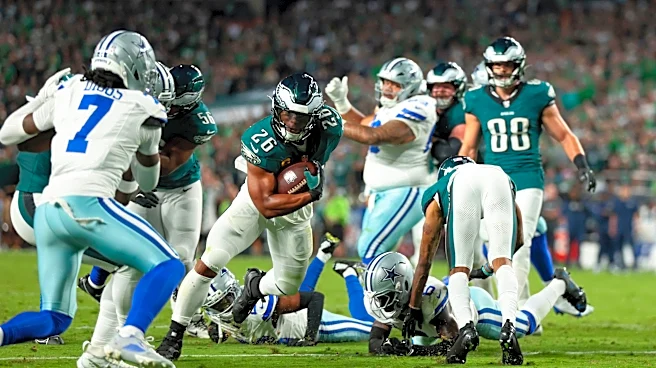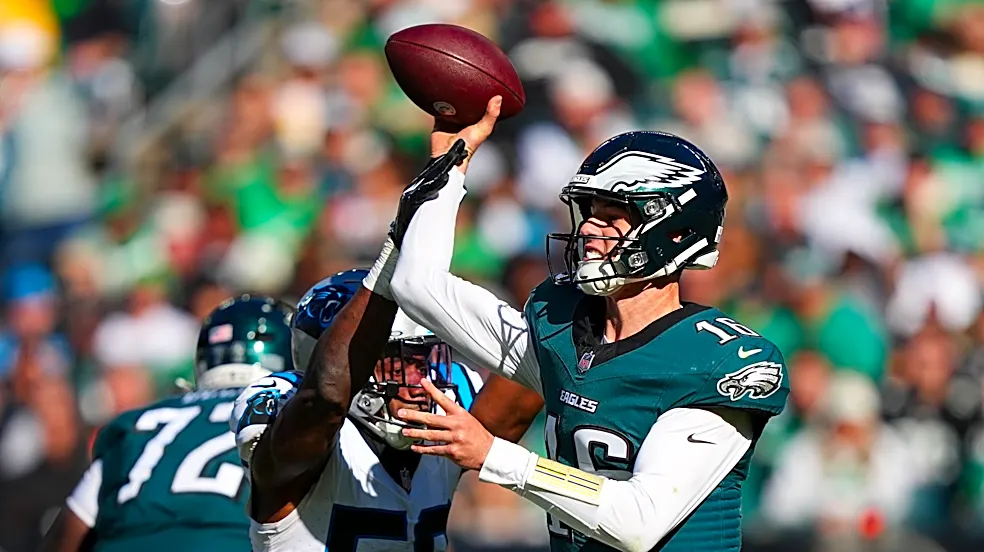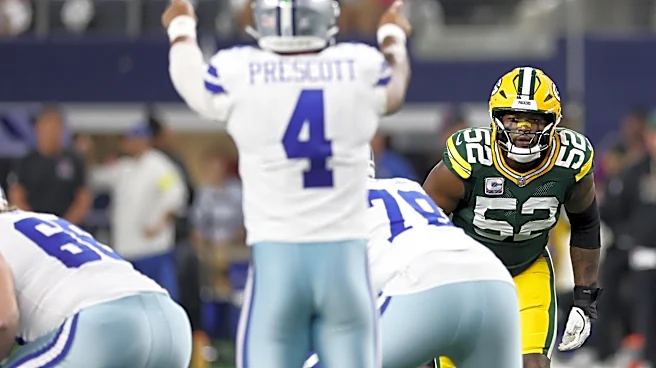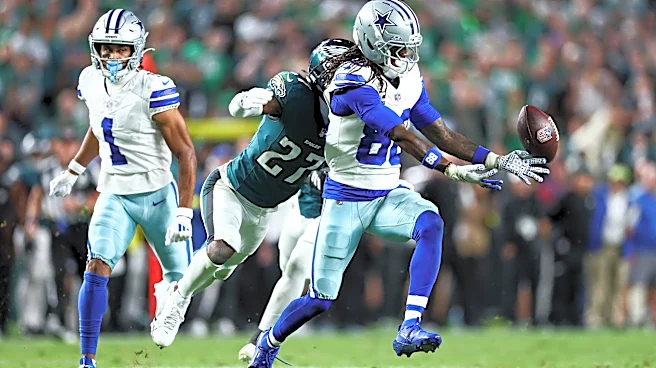


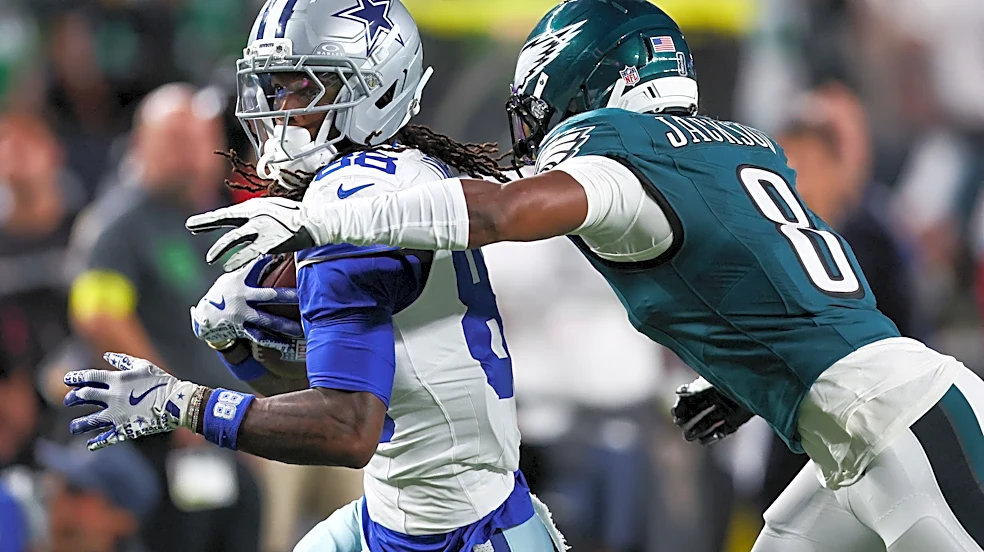

Each week, I’ll publish two film-room previews: one focusing on the offense and one on the defense. These are primarily film-based, focusing on the schemes, tendencies, and matchups that could shape Sunday’s game, with all statistics coming from the Fantasy Points Data Suite. I also record a video version for Patreon, where I break down the plays in greater detail and where you can further support my work.
The Cowboys were a surprisingly difficult offense to break down this week. I watched the Texans
game and saw an offense that could protect its quarterback and find plenty of ways to get the ball to its best players. Then I watched the Packers game and wondered where all of that had gone. This is still a talented offense, and I can’t shake the feeling that it will come together at some point. However, I thought the Cowboys were more creative last year, and their coaching staff isn’t getting enough from this group right now. With everything going on with the Eagles’ offense, the defense needs to play well if this team has any chance. There are opportunities to disrupt the Cowboys, but there is also enough talent here to make this a very uncomfortable matchup.
Pass Game
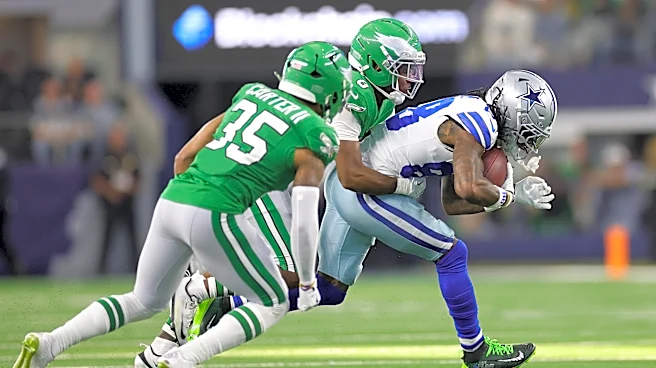
Everything starts with CeeDee Lamb. He remains an outstanding receiver, and the Cowboys are using him outside more frequently this season. He has aligned outside on approximately 61% of passing snaps, but that doesn’t mean he stays in one spot or runs a limited selection of routes. Against the Texans, Lamb caught 17 of his 21 targets (!) for 189 yards and a touchdown, with 72 yards coming after the catch. His targeted routes included outs, hitches, screens, crossers, a corner, a post, and several other concepts. They found him underneath, across the field, and at intermediate depth. That version of this offense is difficult to defend because Lamb can win in so many different ways.
The Eagles cannot treat him as the responsibility of one cornerback. Some snaps will have him outside against an Eagles corner, while others will have him move inside and test the communication between the nickel, linebackers, and safeties. After some of the communication problems we have seen from the Eagles recently, that worries me. Lamb is too good at finding space to give him free releases into areas nobody has properly accounted for.
The Cowboys are a true 11-personnel shotgun offense. In some ways, watching them feels like going back five years, before seemingly every offense started building around condensed formations, constant motion, and an extensive under-center package. They use 11 personnel on 73.3% of their snaps, the third-highest rate in the league, and they want to spread the defense out and let Dak Prescott distribute the football. Their pass rate over expectation leads the league, and they throw on approximately 68% of first-and-10 situations. This passing game is the foundation of the offense.
Their route combinations have a strong vertical element, even though much of Prescott’s production comes on shorter throws. They want receivers to push defenders downfield, create space underneath, and force the secondary to communicate. Lamb’s presence can also open opportunities for others. In the example below, the attention he receives helps Jake Ferguson escape downfield on a wheel route. Ferguson hasn’t produced much yardage this season, but the Eagles still need to account for him when their attention shifts toward the receivers.
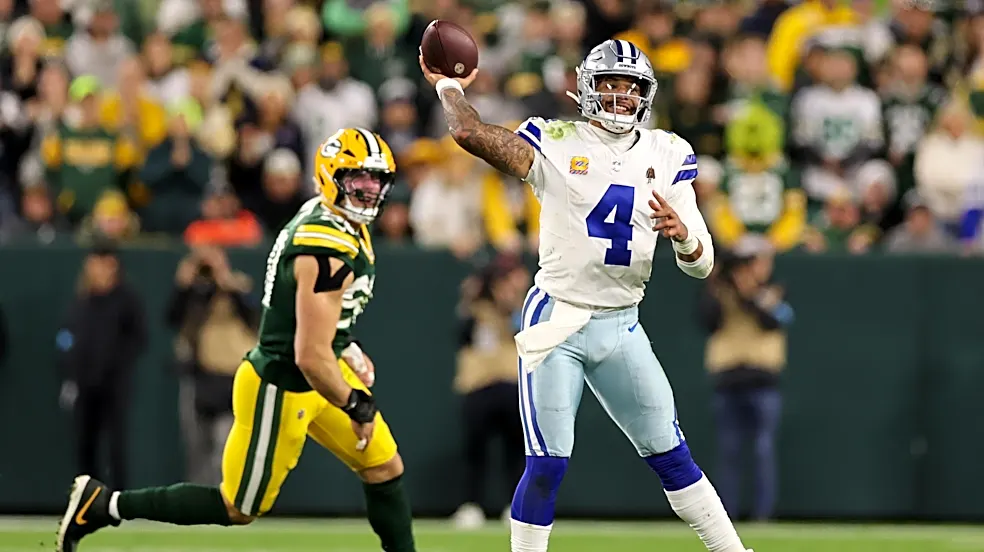
Prescott hasn’t played particularly well over the past two weeks, but I still think he is a very good quarterback. His understanding of the position shows up in the small details. He can identify favorable matchups before the snap, manipulate underneath defenders, and create throwing windows with his eyes and body position. If the Eagles show him exactly what they intend to play, he is capable of picking them apart.
The empty formation example below is excellent. Prescott shapes his body as though he is throwing the short route to the flat, draws the cornerback forward, and then hits the corner route behind him. George Pickens finishes the play by showing his ability to elevate and attack the football. Pickens hasn’t been at his very best this season, but he is an outstanding second receiver who can win vertically even when the coverage is competitive. He has aligned outside on approximately 93% of passing snaps, and in the film I watched, he usually lined up to the left. The Eagles have to respect his ability to finish at the catch point when deciding how much coverage to send toward Lamb.
How aggressively should Vic Fangio pressure Prescott? This is where the contrast between the games becomes fascinating. The Packers had considerable success attacking the Cowboys’ protections, but their season-long numbers still suggest caution. The Cowboys rank eighth in EPA against the blitz at +0.13 per play. Prescott usually understands where his answers are and gets the football out quickly enough to punish defenses for removing players from coverage.
Personally, I would be selective. If Fangio brings pressure, the disguise needs to be convincing, and the rush needs to arrive quickly. I wouldn’t want linebackers starting from depth and announcing a delayed pressure that Prescott has time to recognize. The Eagles need to threaten the protection, make him uncertain about who is coming, and close off the immediate answer. Simply sending an extra defender and hoping for the best could leave Lamb or Pickens with a very favorable opportunity.
The Packers showed that Prescott can still be caught out by coverage rotation. Jonathan Gannon, of all people, did an excellent job disguising the picture and getting Prescott to throw into coverage he hadn’t properly confirmed. On the interception below, the weak safety drops into the throwing window, but Prescott commits to the post without accounting for him. It is a good defensive disguise and a poor decision by the quarterback.
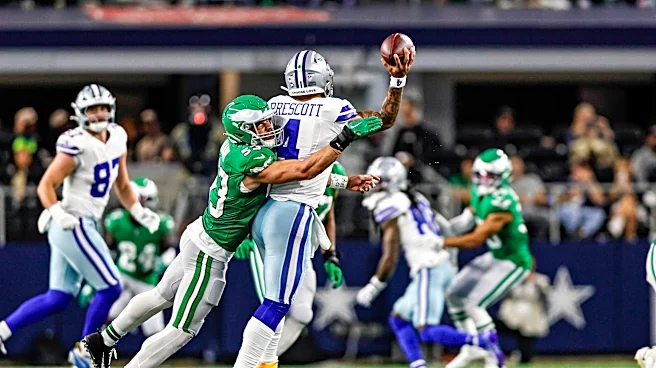
That is the balance with Prescott. He is experienced and technically excellent, but he will still attempt difficult throws over the middle and give defenders opportunities to make plays. His completion percentage falls from 75% when kept clean to 47.4% under pressure, while his yards per attempt drops from 7.6 to 4.6. That’s a much bigger difference than in recent years. The Eagles need to combine pressure with coverage that makes him hesitate. Making him move his feet while changing the picture downfield is how they can turn a difficult throw into a turnover opportunity.
The Cowboys’ answers to pressure against the Packers were also surprisingly poor. Hey, the Eagles aren’t the only team struggling against overloads! The example below features four rushers coming from one side, and the offense doesn’t provide a convincing solution. Prescott ends up trying to give a receiver a chance downfield while the pressure destroys the timing. Unfortunately, that looked familiar.
What surprised me most was how little the design helped. There were too many standard dropback concepts, too little movement, and too many plays where the receivers were asked to win difficult matchups without much assistance. Against the Texans, extra protection supported productive downfield combinations. Against the Packers, there were examples of additional blockers leaving only a couple of receivers covered by a defense with plenty of bodies available. The talent means those calls can still produce completions, but I don’t think Brian Schottenheimer is consistently making life easy enough for his quarterback.
Terence Steele is the obvious individual weakness in protection. His technique has been all over the place at times over the past two weeks. In the example below, his stance gets extremely wide, and he opens up the inside of his frame, giving the rusher a clear route to attack. Tyler Guyton can also be vulnerable at left tackle, although I thought he showed some impressive physicality against the Texans. The interior is stronger individually, but the Packers exposed problems passing off movement and exchanging assignments.
The Eagles need their edge rushers to take advantage of this matchup. If Jonathan Greenard is healthy enough to contribute effectively, I would like to see him against Steele. I would even consider giving Jalen Carter some opportunities outside against him. That could create a favorable individual matchup while forcing the Cowboys to adjust their protection. Winning those snaps without constantly committing extra rushers would let Fangio keep more help for Lamb and Pickens.
Run Game
The running game feels like an add-on. Javonte Williams remains a tough runner, but I don’t get the impression they are building an offense where the run and pass consistently support each other. They are happy to put the game in Prescott’s hands, and the rushing attack can disappear for long stretches.
The main concepts are inside zone, outside zone, and duo, with relatively little production from their counter and power packages. Williams looks most comfortable getting downhill quickly behind the interior offensive line, particularly when the Cowboys create movement through the A or B gap. Against the Texans, there were examples of strong combination blocks and physical finishes that showed what this group can do. However, Williams is averaging approximately 3.7 yards per carry, and the consistent production hasn’t matched those better individual plays.
The under-center package also felt predictable. When Prescott goes under center, the defense can anticipate the run more confidently, and I thought the Cowboys’ shotgun runs looked better because defenders had more to account for.
The lack of explosive runs is striking. The Cowboys have produced only seven runs of 10 or more yards through six games, with five coming from under center and two from shotgun. Only seven explosive runs overall tells you how rarely this rushing attack creates a meaningful chunk gain. For the Eagles, the task is to handle the interior combinations, tackle Williams properly, and avoid turning a modest running game into the thing that suddenly makes the entire offense easier to operate.
I don’t really know why, but the Cowboys’ interior offensive line just isn’t getting much push in the run game. They have talented interior linemen, but they just aren’t getting much movement up front. Tyler Smith returned from IR against the Bucs, but weirdly, he hasn’t made a huge different either.
Final Thoughts
I still think this offense has the talent to be very good. Lamb is exceptional, and Prescott can punish a defense that makes its intentions obvious. Watching the Texans game, it was easy to see how those pieces could come together. They destroyed that defense. Watching the Packers game, it was equally easy to question why the coaching staff was making things so difficult.
I would expect Fangio to challenge the tackles, disguise his coverage, and pick his moments to attack the protection. The Eagles cannot assume that copying the Packers’ pressure calls will automatically produce the same outcome. Prescott has handled blitzes well for much of the season, and the coverage behind those pressures has to be disciplined. Above all, the Eagles need to communicate properly around Lamb and make the Cowboys earn their completions. Communication in the secondary, especially on crossing routes, is vital this week.
I can’t help feeling that the Cowboys will put this together at some point. Their coaches need to do a better job connecting the pieces, but there is too much talent to dismiss them based on one poor performance. Given the Eagles’ offensive problems, another uneven defensive showing could decide this game. Fangio’s group needs to make the Cowboys look like the offense that struggled against the Packers, because the version that showed up against the Texans would be a serious problem.
Thank you for reading! I’d love to hear your thoughts, so feel free to comment below and ask any questions. If you would like to support me further, please check out my Patreon here!