




Last week, the NHL announced the tiers for offer sheet salary thresholds
and the corresponding draft pick compensation.When I sit down to write my offseason preview articles, I normally don’t like going down the “why don’t the Devils just sign (Player X) to an offer sheet” for a variety of reasons. The NHL has historically been an old boys network where GMs don’t use every tool at their disposal, the Devils have publicly shown zero desire to going down that road for years, and we’re talking about
a league where there has been FOUR offer sheets in the last decade. Most players ultimately work out a deal with their current team, and rarely does the player actually SIGN the offer sheet, which I think is something fans forget. It’s not enough to just offer someone the offer sheet….they have to take it.
The Blues wrestling away Philip Broberg and Dylan Holloway from the cap-strapped Oilers a few years ago was fun for what it was, but the bottom line is this….you’re probably more likely to get hit by a bus tomorrow than you are to see a team trying to pilfer a player from another team via the fabled offer sheet.
With all that out of the way, the offer sheet is a tool in the proverbial toolbox available for all GMs, including Sunny Mehta. And while this is an environment where the salary cap continues to rise, making it all the more likely teams match any offer, its probably worth taking a look and making sure nothing slips between the cracks.
Let’s dive into the Devils situation, how previous moves have already hamstrung Mehta to some extent should he choose to go down this road, and if there are any candidates around the league where if the Devils tried to offer sheet someone, they might be able to actually get the player.
Looking at the Devils situation
It’s important to keep in mind that for free agents this summer, the Devils would need to surrender draft picks in the 2027 draft if they successfully sign a player to an offer sheet.
It’s also important to remember that they have to give up THEIR OWN draft picks if they sign a player to a successful offer sheet. They can’t, for example, acquire an additional first round pick via trade and then use that pick for this. It has to be their own pick.
Why does this matter? Well, the Devils don’t have their 2027 third round pick. So as of this writing, they are ineligible to sign anyone in the $1.575M-$2.387M AAV tier or any of their tiers between $4.775M and $11.939M unless they reacquire that pick. That covers almost all of the tiers.
The Devils don’t have that particular pick as a result of the Cody Glass trade. This isn’t a judgment of whether or not that trade has been worth it or commentary on whether or not Cody Glass has been a good player for the Devils. But it is the situation the Devils have put themselves in. The Penguins control that draft pick as a result of that trade, and its unlikely the Devils consider any offer sheets for anyone unless they were to somehow get that pick back.
Now, its certainly possible the Devils could reacquire that draft pick if they have any desire to go down the offer sheet road. The Blues did something similar when they reacquired their second round pick, ironically enough from the Penguins, before they did the Broberg offer sheet. Basically, the Blues gave up a third and the following year’s second round pick to get the second round pick back that they needed to do the offer sheet. So it is something that’s doable.
That said, the Penguins and Blues aren’t divisional rivals. The Penguins and Devils are. And random trades like this involving draft picks for the following year’s draft in the middle of August when the entire league is at “the cottage” should raise some internal alarm bells as to the motivations behind it. Is Kyle Dubas going to be a willing partner to what the Devils might want to do if the Devils propose this?
Now, maybe he would be if its worth the Penguins’ while. The Penguins have been playing the long game since Dubas took over, accumulating futures and stockpiling assets. The Penguins and Devils also have a recent history of making trades despite being divisional rivals….Glass and John Marino (who was traded under former GM Ron Hextall) being two examples of that.
But for the sake of this article, let’s assume the Devils and Penguins agree to some deal where New Jersey gets their third round pick back. Maybe the Penguins, a team that struggled to defend this past year, want another defensemen and a 3rd is the asking price for one year of Brenden Dillon. Or they want a depth forward and that’s the price for a Stefan Noesen. Regardless, this would be a short article if the Devils don’t get that pick back so let’s assume they do.
What Makes For a Successful Offer Sheet?
When the Montreal Canadiens signed Sebastian Aho to an offer sheet years ago, the Carolina Hurricanes and their social media team spent the better part of the next week that they had to match it dunking on the Habs at every opportunity before finally getting around to matching it. As it turns out, all the Habs accomplished with the Aho offer sheet was dictating the terms for a Carolina team with mountains of cap space that was all too eager to match.
If you’re going to pick a fight against another team by trying to poach one of their young RFAs, picking a fight against a team with far more ammunition than you have isn’t a smart idea. On a related note, there’s a reason why this article isn’t suggesting targeting players like Connor Bedard, Cutter Gauthier or Leo Carlsson. Those teams that have those players have plenty of cap space to match and all you’d be accomplishing is setting yourself up for public embarrassment when the offer sheet fails.
If the offer sheet is to be successful, you have to target teams that would be hard pressed to match. Much like Carolina did a year later to the Habs when they signed Jesperi Kotkaniemi. Or more recently, the Oilers not having the cap space available when they had to worry about next contracts for Leon Draisaitl, Evan Bouchard, and Connor McDavid.
But it wasn’t just the looming big contracts for those key core pieces. It was also the Oilers setting themselves up for this possibility when they went nuts a month prior on July 1 by signing and re-signing many depth pieces. Victor Arvidsson, Adam Henrique, Connor Brown, Mattias Janmark, Josh Brown, Jeff Skinner, Troy Stecher, and Corey Perry wound up signing or re-signing with the Oilers, and those millions of dollars add up between all of them. Most NHL teams are smart enough to leave enough space to cover their pending RFAs without having to make a trade later to become cap-compliant. The Oilers were not, and they lost two younger players that they almost certainly would prefer to have now.
Now, we won’t have a better idea of who has put themselves in a precarious position until closer to July 1st. Teams will spend money resigning their own in the lead up to free agency frenzy, and teams will go nuts signing UFAs on July 1 if they have money burning a hole in their pocket. But if you want your offer sheet to be successful, targeting a team that might be hard pressed to match is the way to go.
Looking at Salary Cap Situations Across The League
In order, the ten teams projected to have the least amount of cap space available for the 2026-27 season are the Avalanche, Golden Knights, Canadiens, Stars, Devils, Hurricanes, Islanders, Sabres, Lightning, and Wild.
Now, some might look at those teams and are already mentally picturing Jason Robertson or Pavel Dorofeyev as a Devil. They’d be on the higher end tier of what we’re talking about. Robertson, who is projected by AFP Analytics for a comically low $11.9M over 8 years, is probably getting more than that in a league where Kirill Kaprizov just signed for $17M less than a year ago. On a related note, any team that signed Robertson to an offer sheet in that range is surrendering four first round draft picks if successful. That is not happening.
Dorofeyev, projected for 6x$8.987M AAV by AFP analytics on a long-term deal, might be more reasonable to target. But keep in mind Vegas’ situation in general. Vegas is in the conference final, they contend every season, and its a warm weather, tax-friendly city. If you’re going to convince him to leave that for New Jersey, it’s gonna have to be worth his while, and its gonna have to be a big enough number where Vegas considers not matching. So maybe we are talking double digits in the AAV and a number closer to that four first round pick threshold without going over. Just because Vegas might not match an $11.8M AAV doesn’t mean the Devils are going to be willing to surrender the two firsts, a second, and a third.
I don’t think Robertson or Dorofeyev are changing teams this summer. I said as much in last week’s article talking about trade candidates. So what’s left?
Who Could Be An Offer Sheet (or Trade) Candidate?
Mavrik Bourque
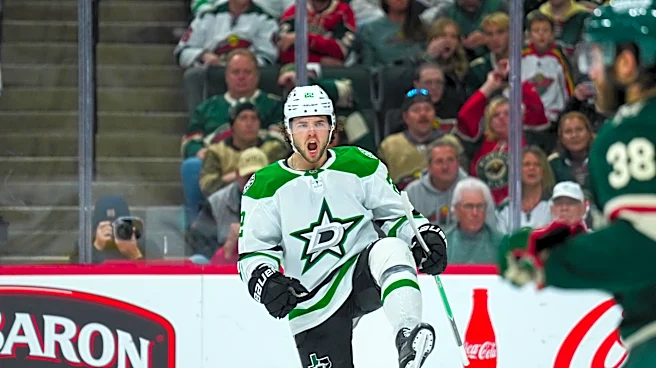
A former first round pick, Bourque enjoyed a breakout season for the Stars with 20 goals and 21 assists across 82 games. He had a quiet postseason with just one goal in Dallas’ first round playoff exit to the Minnesota Wild. He’s a good two-way player who has primarily contributed at even strength (19 of his 20 goals were at even strength).
Bourque is a right handed “center” who is probably more of a winger who can play center out of necessity, much like Dawson Mercer. AFP Analytics is projecting his next deal at 2x$2.964M AAV, which seems reasonable for a player who is now establishing himself as an NHL regular.
We’ve talked about the Stars cap situation and how they’ll be hard pressed to keep Robertson. Dallas currently has just under $11M in cap space for next season with Robertson and Bourque unsigned, plus Jamie Benn and Michael Bunting among their pending UFAs. Dallas could, and probably should, trade Ilya Lyubushkin to free up some cap space, and perhaps that’s where the money for Bourque comes from, but they don’t have a lot of big ticket players without trade protection to look at otherwise.
Teams with mountains of cap space could, and probably should, consider offering Bourque something in the $2.387-$4.775M tier where the compensation is a 2027 second round pick. Which means if the Devils were interested, and Dallas was interested in making a move, they might be better off agreeing to a trade.
Zach Benson | Peyton Krebs
I have serious doubts that Buffalo is going to let Benson get away after a postseason where his abrasive style of play drew comparisons to Brad Marchand. But that is the age range and skill set of the type of forward the Devils should be looking to target if they went the offer sheet route.
Benson, who just turned 21 a few weeks ago, just finished his ELC. He had 13 goals and 30 assists in 65 games for the Sabres while chipping in another 5 goals and 4 assists in 13 playoff games. His projected salary via AFP Analytics is either 7x$6.975M on a long-term deal or 2x$4.196M on a bridge.
As for Krebs, he much like most of the Sabres enjoyed a breakout campaign in 2025-26 with 12 goals and 27 assists in 39 games. Krebs also showed a lot of versatility with his ability to play up and down in the lineup where needed, bouncing between center and wing. Krebs will be entering his age 26 season, so perhaps he’s a bit of a late bloomer, but its not outlandish to think maybe he has a swiss army knife toolkit where he just fits regardless of where he is in the lineup. His projected salary is $3.5M AAV for three years.
Buffalo is projected to have just under $13M in cap space next season, and aside from their big ticket pending UFA in Alex Tuch, they have decisions to make on pending UFAs Beck Malenstyn, Luke Schenn, and Logan Stanley. They could also wind up trading Jason Zucker or Jordan Greenway if they need to create cap space in a hurry, as both veteran wingers have light trade protection.
Whether or not Buffalo is susceptible to an offer sheet is probably going to be determined by whether or not they can keep Tuch and if they can find a taker for one of their aforementioned veteran forwards. I don’t see any scenario where they allow Benson to leave, and I think Krebs is probably safe due to his versatility. If Tuch leaves on July 1, I’d go as far as to say its a certainty that Buffalo will do what they need to do to keep Benson and Krebs.
Zach Bolduc
Bolduc, who came over in the trade for Logan Mailloux with the Blues, is finishing up his ELC and is due a new deal.
Bolduc had 12 goals and 18 assists in 78 games for the Habs this season. He’s also contributed for them here and there throughout their playoff run despite playing further down in the lineup. According to AFP, he is projected at just over $6M AAV for a long-term seven year deal or $3.6M AAV on a two-year bridge.
Montreal has just over $9M in cap space for next season, but they don’t have a lot of pending UFAs (just Patrik Laine). They do have three notable pending RFAs in Bolduc, Kirby Dach, and Arber Xhekaj. They also have ways they could free up cap space in a hurry, whether its trading or buying out Sam Montembeault or Brendan Gallagher, neither of who has factored much into Montreal’s postseason run.
Much like Zach Benson, I think its unlikely Montreal lets Bolduc get away.
Jack Drury
Drury would be an interesting target for the Devils, a team that could use a longer-term option when it comes to a good bottom six center.
Drury is finishing his first full season with the Avalanche after coming over last year from Carolina as part of the Mikko Rantanen trade. He finished with 10 goals and 17 assists in 82 games and has contributed during Colorado’s playoff run as well. Even though he’s about to enter his age 26 season, he’s on the short list for consideration for best fourth-line center in the NHL. AFP has him at $2.866M AAV for three years.
Colorado has just under $3M in available cap space for next season, and while they don’t have much to do this offseason in terms of heavy lifting, they do have a few pending UFAs and roster spots that need to be filled. They also have to keep in mind that Cale Makar is eligible for an extension on July 1st and that deal is likely to reset the market for defensemen. As important as center depth is, Drury might be a luxury they can’t afford.
Final Thoughts
I’m aware that I’m skipping over players like Trevor Zegras and Adam Fantilli who are also pending RFAs this summer, but like I said before, I think its really only worth looking at teams tight against the salary cap for this exercise. Looking at teams like the Ducks who will have no problem allocating funds to keeping good young players, even with Pat Verbeek being a shrewd negotiator, is a fruitless endeavor.
Of the players I mentioned, I think the most “gettable” is probably Mavrik Bourque. I don’t think they let Robertson leave, and barring some LTIR shenanigans with Tyler Sequin or some other player, I don’t know that I see a path to them keeping both Robertson and Bourque. I look at a Stars roster that doesn’t have a ton of moveable pieces either.
But that’s also a situation where a trade probably makes more sense than an offer sheet, but I’m not sure what that trade would even look like that’s good enough to bypass the threat of an offer sheet. I don’t think Simon Nemec is necessarily a great fit for them despite their RHD need simply because you’re trading one problematic future contract for another. Dawson Mercer straight up for Bourque is probably fair value given their ages and production to this point, but I don’t know that Dallas can afford Mercer at $4M.
I do think its worth it for Sunny Mehta to explore the possibility of an offer sheet. I also think that he’ll likely come to the same conclusion that I’m coming to writing this…..there’s not a whole heck of a lot out there that’s worth pursuing that has a realistic chance of going through.