




A key strategy for building a successful NFL roster is to have a replacement ready a year before you plan to move on from a veteran.
That was the idea a year ago when Cleveland Browns general manager Andrew Berry selected tight end Harold Fannin Jr. in the third round of the 2025 NFL Draft. Incumbent tight end David Njoku was heading into the final year of his contract, and with Berry navigating the final years of Deshaun Watson’s contract, it seemed clear that Njoku’s tenure in Cleveland was coming
to an end.
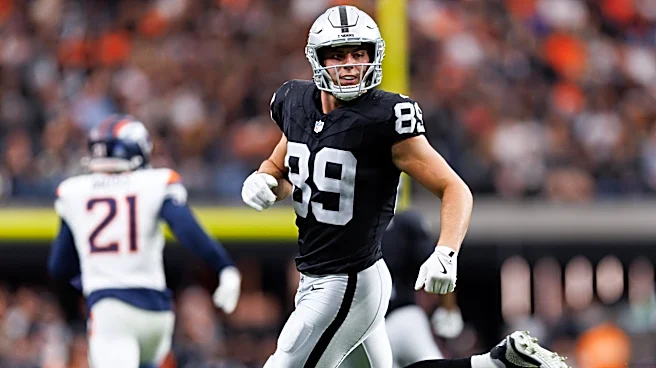
The move turned out even better than expected as Fannin set franchise records for most receptions by a rookie (72) and most receiving yards by a rookie tight end (731), while leading the squad in touchdown receptions (6).
Njoku is now in Los Angeles after signing a one-year contract with the Chargers, which sets up Fannin as the No. 1 tight end and positions him to build off his rookie season.
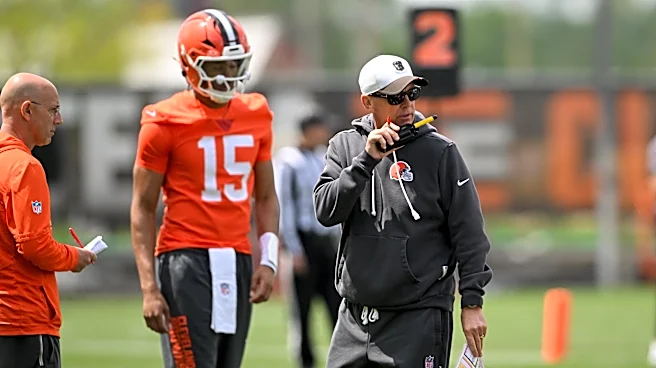
But the revamped tight end group is not the only change in Cleveland this year, as the offense will look different under new head coach Todd Monken than it did under former head coach Kevin Stefanski, who enjoyed using multiple tight ends.
That has not been Monken’s preferred plan of attack, however, so what could that mean for Fannin?
ESPN’s Ben Solak addressed that in his latest column about some key second-year players. When looking at Monken’s track record as an NFL offensive coordinator, the most productive season by a tight end came in 2024, when Mark Andrews had 55 receptions for 673 yards for the Baltimore Ravens, numbers that Fannin surpassed as a rookie.
So does that mean Fannin is due to see a drop off in his production? Not necessarily, as Monken does know something about talented tight ends from his time as offensive coordinator at Georgia, as Solak points out:
Monken tends to run a wideout-dominant passing game — at least, he has in the pros. But Monken had a stint with the Georgia Bulldogs between his NFL gigs, and he coached Brock Bowers there. Monken compared Fannin to Bowers last month, saying, “He’s a little like Brock Bowers in the fact that his body type is more of an H and F, run after the catch … more than length, more as a C-gap blocking Y. So, you love his athleticism, you like his ability to run after the catch, his ball skills like Brock … very similar in that regard.”
Comparing anyone to Bowers is a bad idea, but I see Monken’s point. Both are simply far quicker than typical tight ends. They don’t lumber or lag, but rather spring off the ground and create a ton of extra yardage on heavy-footed linebackers or sleeping safeties. As receivers, they’re preternaturally comfortable.
Monken rightfully built his Georgia systems around Bowers. Does Fannin demand that level of heliocentrism? Not yet. Bowers has a rugged toughness that serves him well downfield, and I’m not all the way there on Fannin as a three-level threat. But Fannin has everything that elite receiving tight ends need to have in the modern NFL. As long as he clears the manageable bar of “functional blocking,” he’ll become a household name as one of the league’s most dangerous tight ends.
The offense is going to look different with Monken in charge, but that does not change the fact that the Browns still need to get the ball into the hands of their playmakers, and Fannin appears to fall into that category.
And if Monken is as good with an offense as advertised, he should have no trouble in finding ways to get Fannin the ball this season.