




A 2-0 victory over Parma maintains a perfect start to Juventus’ Serie A campaign, but the scoreline tells a far more comfortable story than what actually unfolded on the pitch. At first glance, three points and a clean sheet signal a routine home win at the Allianz Stadium. However, stripping away the surface-level result reveals an attacking blueprint that spent nearly an hour grinding to a halt against a compact, deep-lying opponent.
The underlying problem stems from a structural void in central
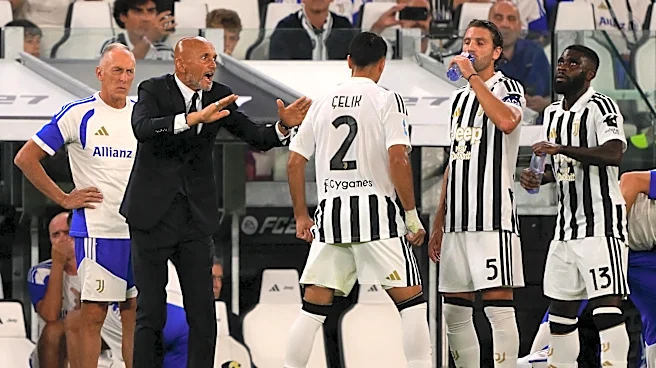
progression. With Kenan Yildiz sidelined, Juve manager Luciano Spalletti was forced to re-engineer his attacking mechanics to find creative solutions between the lines. While second-half substitutions ultimately unknotted the match, Juve’s initial system struggled to generate high-margin chances from open play — exposing lingering habits from last season that continue to resurface when facing deep-lying defenses.
Ultimately, this match served as a dual evaluation of Spalletti’s setup: a masterclass in midgame tactical intervention, paired with a clear warning sign regarding defensive vulnerabilities and offensive stagnation. Standard metrics will mark this down as total control, but a closer look at spatial risks, squad construction, and individual structural roles tells a far more nuanced story.
The metric illusion
Standard box scores paint a picture of total defensive control, but traditional event data completely fails to capture Parma’s most dangerous moment of the afternoon. Early in open play, a rare lapse from Manuel Locatelli in midfield exposed a section of the backline that should have been covered, forcing the rest of the defense into pure recovery mode. Parma sliced through the remaining cover, isolating Simone Lontani deep inside the left side of the six-yard box while Guglielmo Vicario was stranded on the opposite post.

Lontani was presented with a clear, high-margin scoring opportunity toward the near two-thirds of the open net. Yet, instead of pulling the trigger, he made the unforced decision to square an unnecessary pass across the face of goal into coverage, allowing a recovering Juve defense to clear the threat.
This is similar to what I mentioned after the season-opening victory against Frosinone: results are more than what’s in the stats. Event level data doesn’t tell you the counterfactuals. It doesn’t tell you what could or should have happened given the opportunities; it only tells you what did.
By the data, Juve’s stat sheet looks clean — zero shots allowed on that play, no dangerous moments registered. But on the pitch, it was a complete structural collapse that they only survived because their opponent panicked and passed. A better team shoots — and more than likely scores — with that opportunity. You can get away with mistakes against teams projected for relegation battles, but you’ll have a much harder time surviving those same mistakes against better opponents.

Parma wasn’t attacking in great numbers, nor were they particularly accurate with their passing when they attempted to transition. Yet, on the few occasions they pushed forward, they generated quality looks out of moments that shouldn’t have been dangerous. Even after Juve took a 1-0 lead, Vicario was forced into high-quality saves to keep the clean sheet — including a well-struck, long-range effort that carried far more intrinsic threat than underlying numbers suggest. While Gleison Bremer and Jhon Lucumí both put in solid individual performances when called upon, relying on a clean sheet hides structural vulnerabilities that more clinical opposition will punish.
Solving the low block
Much like last year, we saw the team continue to struggle to figure out how to break down a committed low block. In the build-up, Spalletti adapted to Parma’s 4-4-2 setup. Shifting away from the 2-3 foundation used against Frosinone, Locatelli dropped between Bremer and Lucumí to form a three-man backline. Douglas Luiz held the central pivot zone, flanked by fullbacks Pierre Kalulu and Zeki Çelik to establish a 3-3 base.

The 3-3 layout ensured numerical balance at 6-v-6 while providing angles to ensure each piece had multiple outlets against Parma’s initial lines of pressure, allowing Juventus to navigate the first block with ease. To try to pull Parma’s low block apart, Spalletti kept both wingers hugging the touchlines and put numbers in the box by replacing the injured Weston McKennie with Jonathan David.
Once the ball got into the final third, Douglas Luiz often pushed up higher with Locatelli moving up and reshaping into a 2-3-5. Juve crammed three to five men into the penalty box while holding wide overloads with Jeremie Boga and Francisco Conceição. Overloading the box condensed the passing lanes, making life harder on a midfield duo that already struggles to break lines with their passing. Additionally, the team lacks an aerial threat to beat the low block over the top.

The midgame pivot
Recognizing that the 2-3-5 blueprint had hit a wall, Spalletti executed a decisive double substitution in the 57th minute, withdrawing Boga and David for Kerim Alajbegović and Nico González.
While Alajbegović had a quiet 10-touch debut sticking to the touchline, he displayed a calm confidence — happily opting for simple, clean actions that kept possession moving. The game-changing spark came from Nico. Where David had interpreted the No. 10 role as more of a second striker — occupying the same central spaces as Randal Kolo Muani and inadvertently clogging the box — Nico played as a traditional attacking midfielder.
Nico’s willingness to operate deeper in the right half-space got him immediately involved, logging more touches in fewer minutes than David. Dropping deeper also gave him space to test Parma from range. After firing a dangerous long-range warning shot in the 61st minute, his confidence to take another led directly to Juve’s opening goal off a deflection.

Nico’s shots from distance dragged Parma’s defensive line out of its low block to close down space, while the opening goal also forced Parma to push bodies forward in search of an equalizer. Together, Parma’s structure loosened and gave the Bianconeri space they had lacked all evening — allowing Juventus to generate nearly the same underlying quality from just five shots with the lead as they had managed from sixteen while level.
Square pegs, tactical roles
The structural shift and the game state transformation in the second half provide the essential backdrop for judging individual displays. When a match changes character so drastically, analyzing player performances isn’t just about tallying passes or running effort; it’s about understanding how Spalletti’s setup either elevated a player’s natural strengths or forced them to fight against their own profile.
Evaluating Locatelli’s performance comes down precisely to this matter of context. The game script actively played to his weaknesses while hiding his strengths. Locatelli remains an elite defensive presence and an exceptional passer when granted time and space to survey the pitch, which made dropping between the center-backs in early build-up a natural fit. However, asking him to make quick, line-breaking decisions in tight, crowded central spaces demands a profile he simply does not possess. His performance was mediocre not because of a lack of effort, but because the structure forced him to play against his natural instincts.

Up front, the pairing of David and Kolo Muani offered a glimpse into a work-in-progress dynamic. Operating as two natural central forwards, both players currently share similar profiles and lack refined chemistry. Still, you can see the vision behind Spalletti’s setup: using a hard-working attacker behind a true focal point lets Juve hold central presence without pulling wide wingers out of position. David may have struggled to connect play in a crowded center, but he put in plenty of thankless work — tracking back, pressing intelligently, and doing the dirty work that attackers in his role often skip. With his track record at Lille and that kind of team-first attitude, there’s plenty of reason to believe the chemistry will come with time, regardless of the constant transfer noise surrounding his status.
González, meanwhile, demonstrated the value of positional flexibility in a game like this. By interpreting his role deeper as a true attacking midfielder rather than sticking strictly to the front line, he gave Juve the exact half-space connection they lacked for the first hour. His willingness to demand the ball in intermediate zones not only sparked the breakthrough but also served as a blueprint for how this squad can manipulate deep blocks moving forward.

Ultimately, this victory highlights a squad in the messy middle of a tactical transition. What stands out most isn’t just the tactical adjustments, but the unselfish willingness of the players on the pitch to put in the work required to execute Spalletti’s vision — even when forced into uncomfortable roles. That collective buy-in is the foundation you need when trying to rewire a team’s attacking DNA.
Still, the structural flaws are impossible to ignore. Figuring out how to consistently break down a committed low block without relying on a deflected shot from distance or waiting for the game state to fracture will be the defining challenge of this campaign. Doing it without a natural central connector like Yildiz only amplifies the difficulty. The 3-3 build-up and 2-3-5 final-third shape showed promise, but until the squad construction aligns perfectly with those systemic demands, there will be growing pains.
The three points are safely banked, and the clean sheet looks great on paper. But as we saw with the unpunished spatial collapse in the first half, the underlying process still needs tightening before they face more clinical opposition. Building that consistency won’t happen overnight. For now, the best path forward is acknowledging the flaws, appreciating the midgame solutions, and preaching patience as this group learns to win ugly while trying to play beautifully.