





Now that the 2026 NFL Draft is done, it’s time for some film rooms on the Philadelphia Eagles’ rookie class. Over the coming weeks, I’ll be publishing individual film breakdowns on the Eagles’ 2026 draft class here at Bleeding Green Nation. My pre-draft rankings and position previews are still up if you want to cross-reference. A quick note on the film: I can’t share All-22 footage here without risking content strikes, so I’ll use clips from other accounts below. However, I’ll have full All-22 breakdowns available
on my Patreon, which you can check out and support if you want to see full games of All-22. Let’s go!
PREVIOUSLY IN THIS SERIES: Makai Lemon
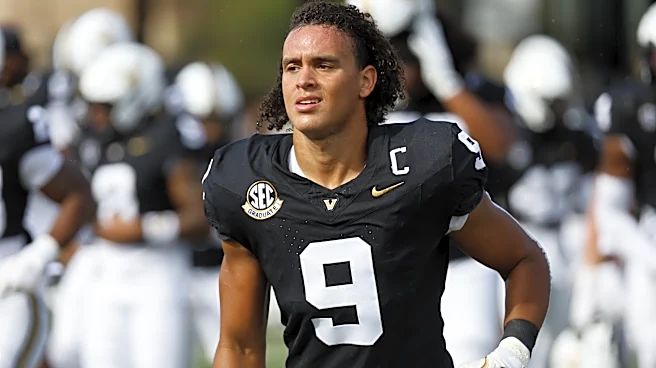
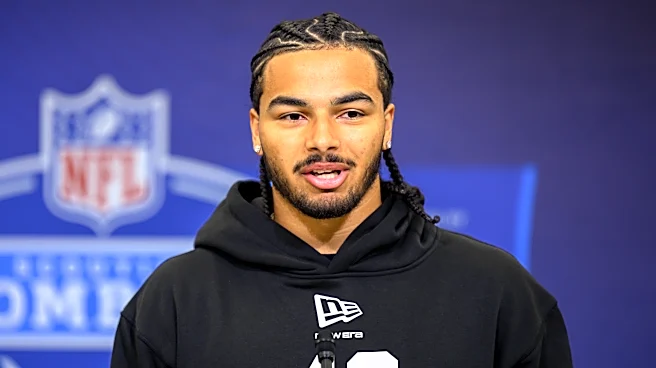
Eli Stowers
I had Stowers as my TE2 pre-draft (Round 2 grade), but I told myself I did not want a tight end who could not hold up inline. I get it. We are obsessed with blocking tight ends after last year. But you can’t watch Stowers film and not be excited about what he could be. Not every tight end has to be a great blocker. You can scheme around tight ends with blocking limitations, but the issue last year was that the Eagles didn’t even try to scheme around it. Hopefully, that changes this year.
Stowers is not a traditional tight end. He is not yet, anyway. At 239 pounds with blocking limitations, he profiles as a move tight end, rather than someone who can play inline. What most people picture when they think about the position. But framing this pick purely through the lens of what Stowers cannot do misses something important about what he actually is and what this Eagles offense might be able to do with him.
Stowers arrived at Texas A&M as a highly touted quarterback recruit. He transitioned positions, eventually transferred to Vanderbilt, and rebuilt his career as a pass-catcher. I think this is a big part of his game!
Strengths
Ball Skills and Body Control
This is where Stowers separates himself, and it is immediately obvious on film. For a player who has only been catching passes professionally for a few years, his natural feel for the football is extraordinary. He contorts his body on poorly thrown balls in a way that bails out his quarterback. He makes acrobatic, away-from-the-frame catches with a regularity that you simply do not see from players at this developmental stage at the position. His career drop rate of 3.9% doesn’t surprise me at all. His hands are reliable, his concentration through contact is excellent, and his catch radius is wide enough to give Jalen Hurts a big target. I think Hurts is going to love throwing to Stowers. Both Stowers and Makai Lemon are very QB-friendly targets.
That catch radius matters specifically for Hurts. He likes targets with strong body control who can adjust to throws that are not perfectly placed, and Stowers is one of the better adjusters in this entire class. We will get into this later, but if I evaluated Stowers as a wide receiver rather than a tight end, he would rank comfortably as a top 10 receiver for me in this class.
The Quarterback Background
This is the part of the Stowers profile I find the most interesting. He has quarterback-level football IQ, a specific and rare asset at the tight end position. There’s a great clip I saw the other day in which Derek Carr talked about how much he enjoyed playing with Taysom Hill. If you don’t want to view the video as it’s TikTok (I don’t blame you), here is what he said…
“This is the advantage of having a Taysom Hill, who I think is the greatest football player we’ve ever seen, right? It’s him understanding the exact same thing that I see.
He’s supposed to be running this vertical route, but he sees the same thing — the WILL linebacker didn’t bump over to him.
So he thinks, ‘I’m going to slip this guy — Derek, please throw it.’
And this is just two guys being on the same page, understanding football.”
Stowers reads zone coverage the way a quarterback reads it, because that is what he trained to do for years. He identifies voids and windows in coverage structures instinctively, settles into the right spot, and processes defensive leverage at a level that most young tight ends can’t do.
This matters enormously for an offense that wants to attack the middle of the field more aggressively this year. Stowers will immediately understand why a particular zone concept creates space in a given area. Both Stowers and Lemon are outstanding at this, and I imagine it’s a huge reason why they appealed to the Eagles.
Vertical Threat Down the Seam
His 4.51 forty is more build-up speed rather than explosive burst off the line, but once Stowers gets going, he is dangerous attacking down the seam. He is fluid enough to sink and cut, and he attacks the ball in the air rather than waiting for it to arrive, which is important when getting vertical down the seam. He has the frame and movement to be an intermediary and vertical threat in two-tight-end sets.
As well as getting vertical, he’s just a very fluid and smooth athlete. Stowers displays impressive movement mechanics, acceleration, and the ability to create space. He’s more of a fluid route runner than sharp in and out of his breaks, but he uses his size well to create throwing windows and box out defenders. The main word that comes to mind when watching him is smooth.
Weaknesses
Blocking
Stowers’ blocking is the primary reason this pick comes with some pretty big reservations, and it will determine whether he ever truly functions as a complete tight end. At 239 pounds, he gets eaten alive by defensive ends, linebackers, and even safeties at the point of attack. Right now, he is a “zero” as an inline blocker. Only 21 percent of his snaps came inline at Vanderbilt, and that number reflects a staff that knew what they had. Even when he was inline, the team would run away from him. You will struggle to find any impressive blocking reps in his film.
The question for the Eagles is whether this is a permanent limitation or a developmental one. His frame is broad-shouldered with room to add mass. He doesn’t look unsuited to carrying more weight, but you have to wonder why he hasn’t done it yet. Is he the same athlete with extra weight?
For now, the Eagles will have to use him as a move blocker on split-zone and bootleg runs, keep him away from the situations where he will get exposed, and let the scheme help him out. That requires a coaching staff willing to be creative and a player willing to do the hard physical work of adding functional mass.
Importantly, the trio of Dallas Goedert, Johnny Mundt, and Stowers should be sufficient for the run game even with Stowers’ limitations. You do not need three inline blockers in a tight end room. Hopefully, Goedert can get back to being a good blocker, so he can function as a complete tight end. Mundt provides the specialist blocking value, and Stowers fills the receiving role. That should work.
Route Nuance
His route-running is a work in progress, as I mentioned a little bit earlier. He can create separation in college because he is a great athlete, but he relies too heavily on arm-shoves to create separation at the top of his routes rather than using his eyes and footwork to manipulate defenders. This is probably a natural consequence of having played the position for a relatively short time. His selling of routes stems needs development. These are fixable issues, and the foundation of athleticism and movement skills suggests that he should be able to improve them. He’s still able to get open with how he plays. I just think he can get even better, which is good!
The Film
Overall Assessment and Fit With the Eagles
The floor on Eli Stowers is a good football player. As a big receiver or a tight end. I think he’s going to be valuable, in whatever way he ends up. Even if his blocking development stalls completely, he has the athletic profile and receiving ability to trim down and function as a highly effective slot receiver. He should be a mismatch because of his size and movement skills, wherever he plays. I think he will immediately contribute as a receiver, wherever he lines up on the field. I expanded a little bit here about why I think he is a great fit for Jalen Hurts.
But the priority for me has to be developing him at tight end. The receiving talent is legitimate enough that keeping him at 239 pounds and asking him to add functional blocking strength could produce something special. He is never going to be a traditional inline blocker, but a move tight end who can split the seam, hurt you in zone coverage, and contribute on bootlegs and split-zone concepts without being a liability is worthy of a 2nd round pick. The scheme can carry some of the weight that his body currently cannot, provided the coaching staff is smart about it and willing to be creative rather than asking him to do things that expose him. AKA, don’t do what this team did last year with Grant Calcaterra.
I’ve seen comments about the fit with Makai Lemon as both players operate in similar areas of the field. That overlap could seem redundant, but I think it signals that his offense wants to change. Jalen Hurts has historically avoided the middle of the field as the offense has not made it a priority. Surrounding him with two players who are specifically excellent in that area is a deliberate answer to a weakness. The Eagles are not accidentally doubling up in the same zone. I think they are making a statement about where they want this offense to go.
Overall, I think Stowers will just end up being a very good football player. No matter where he ends up playing.
Thank you for reading! I’d love to hear your thoughts, so feel free to comment below and ask any questions. If you enjoyed this piece, you can find more of my work and podcast here. If you would like to support me further, please check out my Patreon here!