




A new month brings a new top prospects list, and with a handful of top prospects on the shelf, it wasn’t a particularly exciting month in the Twins system, but it also put more focus on some of the under-the-radar prospects who have begun to look like MLB-caliber talents. We saw a bunch of big promotions including SS Marek Houston heading to Double-A as well as Kyler Fedko and Marco Raya making their major league debuts! You can find my June rankings here if you’d like to compare. Once again, but hopefully
not too many more times, we begin the list with the one and only…
1. OF Walker Jenkins (AAA)
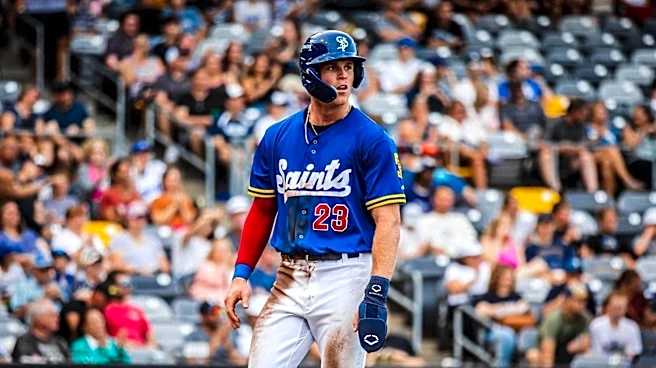
Now back with the Saints after missing over a month with a shoulder sprain, Walker Jenkins’ long-awaited MLB debut seems to be approaching, which I recently wrote about here. He’s a franchise cornerstone who projects to be a star player for the Twins for years to come.
It’s pretty hard to find a weakness in his game. Offensively, he is an extremely mature hitter at just 21 years old. Excellent patience and spin recognition have led to high walk rates at every level. His hit tool is borderline plus, consistently running high contact rates while batting over .280 in every season of his pro career. His raw power is already above average and has potential for further growth. His line drive swing may never produce eye-popping home run numbers, but he can hit 15-20 while spraying doubles all over the field and getting on base at a high rate.
Defensively, he has a plus arm with solid range. Has a chance to stick in center, but projects very well in a corner. Not an aggressive base-stealer, but a good runner that can provide value with his legs. Just a complete player who I cannot wait to see in a Twins uniform.
2. OF Emmanuel Rodriguez (AAA)
There’s not much left to say about Emmanuel Rodriguez at this point. When he’s healthy, he’s a power-hitting phenom, possessing some of the best raw power in the world with a max EV of 118.3 mph. His contact skills leave some room for concern, but his excellent swing decisions have helped him walk over 20% of the time in his minor league career. He’s an above-average runner who plays a good center field, but may end up in a corner with the Twins.
He’s slashing .247/.417/.506 for a 138 wRC+ with 6 homers in 25 games with the Saints this season. The recovery timeline from his thumb surgery in May is unknown, but Rodriguez is ready for a new challenge and should be in the big leagues soon after returning from injury.
3. SS Kaelen Culpepper (AAA)
Kaelen Culpepper’s bat has been highly impressive ever since he was drafted in the first round in 2024. He has a beautiful swing that holds a good mix of borderline plus contact skills and solid functional power. The big development in 2026 has been a new approach. Culpepper has historically been a free swinger that runs high chase rates, but this season he has cut back his swing rates significantly. He now has a walk rate over 12% in Triple-A this season, up from his 9.7% clip last year.
He’s a good runner who tallied 25 stolen bags in 2025 and has remained aggressive and successful this season. Defensively, he doesn’t have the elite twitchy actions of a gold glove shortstop, but he’s a good athlete with a good arm who has been a reliable defender this year. Unless Ryan Kreidler can continue his breakout, Culpepper is likely the Twins best option at shortstop. Either way, he projects as a valuable defender anywhere in the infield.
4. C Eduardo Tait (A+)
It was a great month of June for the Twins’ top catching prospect as he continued to pile up homers but also started running into more contact. Tait batted .250 on the month with a 18.8% strikeout rate. His monstrous power combined with an average hit tool could make him one of the top offensive catchers in MLB in just a couple of years. His chase-heavy approach remains a major concern, but the bat is talented enough to overcome it.
Defensively, his plus arm is already a major asset behind the dish while the technical side of the position continues to develop. Tait has a good chance to develop into a solid catcher. At just 19 years old, the Twins have an exceptionally talented hitter with superstar potential.
5. RHP Charlee Soto (A+)
Soto returned briefly from injury before suffering a setback on his forearm injury, but the 20-year-old’s stuff remains incredibly exciting. He’s built like a linebacker and is a great athlete on the mound. The fastball is sitting upper 90s with sinking action, and he complements it with some excellent secondaries. He has a natural changeup feel and gets 17+ inches of run on the pitch in the 88-91 range. His slider sits in the upper 80s with sharp break. Both pitches grade out as plus big league pitches while the fastball has overwhelming velocity and generates strong ground ball rates.
Injuries remain a concern, but he has the build to support high velocity. Soto can fill up the strike zone while still racking up whiffs and ground contact, a profile that has frontline starter potential.
6. LHP Kendry Rojas (MLB)
At 23 years old, Kendry Rojas has lacked consistency this year, but his stuff and intriguing potential have been on full display. The 6’2” lefty has shown off a good blend of stuff and command this year after adding a tick to his fastball.
His fastball is firm, sitting in the 95-97 range, playing up with good extension and some ride at the top of the zone. We have also seen encouraging development with the slider this year. Rojas is getting more two-plane movement on the pitch while throwing it harder in the upper 80s. It is a borderline plus pitch now, generating elite whiff rates and soft contact. His changeup also sits in the upper 80s and plays off the fastball extremely well.
Rojas has been nibbling at the zone in his first handful of innings at the major league level this season, but his pitches have generally been located in the right areas. Once he gains the confidence to fire the ball in the zone, Rojas has the makings of a mid-rotation starter or high leverage bullpen arm.
7. SS Marek Houston (AA)
Now about one year removed from his draft day, Marek Houston’s path through the minor leagues has looked almost identical to that of Kaelen Culpepper so far. Now in Double-A, Houston’s bat is getting a tougher test than he’s ever seen before.
He caught fire in late May, earning the promotion to Wichita on June 22nd. In his last 16 games with the Kernels, he batted .450 with a 22.2% walk rate and 9.9% strikeout rate. He is a very skilled hitter, possessing an extremely patient approach with above average contact skills. While the lack of power limits his offensive ceiling, I’m getting strong Austin Martin vibes from his bat.
On the defensive side, Houston will almost certainly stick at shortstop. He has spectacular range and fluidity for someone who is 6’3”. A sound, yet flashy defender with a good arm. Also a plus runner who is racking up stolen bags this year. He has a chance to transform a Twins infield that desperately needs some impactful defenders as early as next season.
8. RHP Riley Quick (A+)
In his first year as a pro, Riley Quick has displayed electric stuff with elite strikeout rates in the lower levels of the minor leagues. Walks have caused him to get into some trouble in High-A, but his zone and strike metrics suggest that more success is coming.
He leads with a mid 90s sinker that generates lots of ground contact. His slider is pushing 2800 RPMs and gets sharp two-plane movement in the mid 80s, while hit cutter in the low 90s complements the sinker well. Quick also has a changeup with elite depth in the upper 80s, projecting as an excellent putaway pitch against lefties.
Riley Quick has a diverse arsenal with four distinct shapes and velocities. The sinker and cutter will fill up the zone while the slider and changeup have the makings of plus putaway pitches. It’s an exciting starter profile if he can throw enough strikes.
9. RHP Andrew Morris (MLB)
Just a couple innings shy of the 40 mark, Andrew Morris cracks the top 10 in what will be his final month as a prospect. After 62 starts across 3+ years in the minors, he has shifted nicely into the Twins bullpen this year. With a 3.12 xERA and 2.89 FIP, the underlying numbers view Morris as a great back-end arm.
His fastball is firm in the 95-98 range, occasionally flashing some 99s with a bit of ride. The heater generates strikes and he has a pair of distinct breaking balls, a cutter and a sweeper, that have plus potential as putaway pitches. One of the biggest developments with Morris this year is him altering his sweeper, taking some velo off and letting it fly away from righties in the low 80s. He’s still gaining a feel for command with the pitch, but it grades out as an absolutely elite offering. The upper 80s changeup is his preferred secondary against lefties and is also a quality pitch, getting some nice fade with strong velo separation.
Andrew Morris has already established himself as a rock in the Twins bullpen for years to come. Still, if he can hone in the command on his sweeper and push his fastball velo closer to triple digits, we could be looking at a truly elite closer blossoming in Minnesota.
10. LHP Dasan Hill (A+)
It continues to be a frustrating season for 20-year-old Dasan Hill, who is showing off electric stuff with some of the best strikeout numbers in the system but continues to struggle with control. The big lefty has a 6.14 ERA in 36.2 innings, striking out a whopping 61 batters but also walking 33.
Hill’s fastball gets good armside run and has pushed into the upper 90s this year. His slider is a whiff machine, getting excellent two-plane movement in the low-to-mid 80s. He also has confidence in his mid 80s changeup that doesn’t get particularly impressive movement, but works off the fastball very well. Also mixes in a loopy curveball around 80. It is a really fun repertoire from the left side with high-end stuff, but his complete lack of command is a major area of concern. He looks destined for a high-leverage bullpen role, where the fastball has the potential to work into triple digits with a couple of intriguing secondaries.
11. RHP Adrian Bohorquez (A+)
A forearm strain cost Adrian Bohorquez most of the first half of the season, but he is back in Cedar Rapids now and his stuff is looking as good as ever. The fastball is sitting 96-99 with some carry, overwhelming hitters at the top of the zone. The upper 80s slider and curveball around 80 are plus offerings with sharp break and flashy spin rates, generating elite whiff rates in the lower levels. He also has a power changeup in the low 90s with developing shape, but at least adds another element to get hitters off the fastball. Freshly 21 years old with exciting stuff, Bohorquez is one of the highest upside pitchers in the system and has a chance to make some real noise in the second half of the season.
12. OF Hendry Mendez (AAA)
It appears that a nagging injury may have sapped his power in early June and eventually put him on the shelf for a couple weeks, but Hendry Mendez is back in action now and could realistically get the call-up at any moment now. His patient approach limits chase and stimulates high walk rates. His swing is flat and violent from the left side, limiting his game power but maximizing contact. He’s a below average athlete and has limited defensive value as a LF/DH. Still, he possesses an interesting offensive profile that could push the .300 AVG/.400 OBP marks.
13. OF Yasser Mercedes (A+)
Outside of a 4-hit game on June 13th, the month was one big slump for Yasser Mercedes after a hot start to the year. Patience and high walk rates in the spring have given way to extreme chase and more strikeouts in June. He becomes Rule 5 eligible in December and his production remains largely unconvincing. Still, I can’t stop believing in Mercedes, who holds elite raw power and plus speed while showing flashes of good swing decisions and a playable hit tool. He has all the physical tools at just 21 years old, just waiting for him to put it all together.
14. RHP Marco Raya (MLB)
Marco Raya surrendered a 2-run homer and a couple of walks in his long-awaited MLB debut, but he was one of Triple-A’s best pitchers from early May until the call-up and will hopefully gain some good major league experience over the next few months. His mid 90s fastball isn’t much of a whiff pitch due to poor shape, but Raya has found success with the pitch, using it to get ahead early in counts. His sweeper and curveball are plus whiff pitches with vastly differing shapes in the upper 80s, but have been barreled often in the zone. A power changeup in the low 90s has been an effective tertiary pitch against lefties. I don’t know what is in the cards for Marco Raya’s future, but he has the stuff to be an electric back-end reliever if he can execute his pitches as well as we saw from him with the Saints in May and June.
15. RHP Ryan Gallagher (AAA)
The transition to Triple-A continues to be tough on Ryan Gallagher, but I’m still intrigued by the profile as one of the few true starter-type arms in the upper levels of the Twins system. He pounded the strike zone in High-A and Double-A, but has elevated his walk rate to 13% in Triple-A. With a low 90s fastball, a slow changeup around 80, and a trio of solid breaking balls, it’s a diverse repertoire that has generated good whiff rates, but barrels and walks have been major problems. We’re banking on enhanced execution and fastball improvements to give Gallagher a real chance to stick in a major league rotation where he can eat innings as a quality back-end arm. In year two as a pro, he is firmly ahead of schedule, but it’s unclear how much room is left for him to grow.
16. 3B/OF Brandon Winokur (A+)
It has been a frustrating year for Brandon Winokur, who has plus raw power and runs well at 21 years old, but has struggled to make contact and hasn’t been able to convert his power into convincing production. He limits chase while being aggressive in the strike zone, but just hasn’t been able to connect with the ball consistently. I remain fairly high on Winokur because his impressive range and plus arm at 6’5” give him a good chance to be a valuable defender, and he has looked increasingly comfortable at 3B and CF. Even if he’s a low average hitter who produced 25 homers a season, his value on defense could make that profile flourish.
17. RHP John Klein (MLB)
All too often, Triple-A brings young pitchers to a brutal reality. For John Klein, his exciting 2025 breakout in Double-A has turned into a rough start to his tenure in St. Paul. The Twins haven’t made anything easy for him this year, as a hybrid long-relief role and two brief MLB call-ups haven’t allowed Klein to develop any consistency. Poor shape has limited the effectiveness of Klein’s mid 90s fastball. His changeup sits mid 80s with excellent depth, working as his second pitch. He mixes in a cutter, curveball, and sweeper, all grading out average. If the fastball can play up in short relief, Klein projects nicely as a strike-throwing flamethrower with a diverse group of secondaries.
18. OF/1B Gabriel Gonzalez (MLB)
The month of June gave us the version of Gabby Gonzalez that we saw last year. He slashed .333/.400/.533 while playing a mix of 1B, DH, and corner outfield. His contact skills looked elite, posting a zone contact rate north of 95%, but the extreme aggressiveness continues to lead to lots of chase and an average strikeout rate. His raw power is average but has limited function due to high ground ball rates. It’s a spray and pray offensive profile, much like Brooks Lee and Jose Miranda. He’s a below-average athlete who is a fringy defense in the corner outfield and first base. He is crushing lefties this year, and of nothing else, he could fit into a short-side platoon role and provide some offense off the bench.
19. RHP James Ellwanger (A)
June was a brutal month for the Twins’ 3rd round pick, who didn’t pitch at all, but was diagnosed with a torn UCL and underwent Tommy John surgery with an internal brace. Now out for the rest of the season and likely a portion of the 2027 season, Ellwanger will return to action as a 23-year-old with just 11 innings of Single-A action under his belt. He was already a likely bullpen candidate and will now almost surely be pushed into that role. Still, the upside is immense for Ellwanger. Leads with a mid 90s fastball and has a pair of impressive offspeed pitches in a low 80s curveball and a newly added low 90s power changeup.
20. C/1B Enrique Jimenez (A+)
Recently called up to High-A at age 20, Enrique Jimenez has a well-rounded skillset at the catcher position and has been highly productive at the plate since the Twins acquired him at last year’s deadline. He’s a short and stocky catcher with average raw power and a lofty swing that has some whiff, but has produced some impressive power production. Also a very patient hitter who racks up walks, Jimenez doesn’t have an elite ceiling but is a well-rounded hitter currently trending up. Defensively, he has promising receiving and an average arm. Projects nicely as a backup with potential to produce on both sides of the ball.
21. C/OF Khadim Diaw (AA)
After a scorching hot first half of June, Khadim Diaw got the call to Double-A, where his intriguing utility profile will get its toughest challenge yet. He has limited power, but with borderline plus contact skills and a mature approach, there is plenty of reason to believe Diaw can be a major league hitter. Defensively, he has split time between catcher and center field. He is a good athlete with a solid arm, possessing the potential to be a valuable defender behind the dish and across the outfield. While he lacks an elite ceiling on either side of the ball, Diaw covering multiple defensive spots in a bench role while providing some production with his bat would certainly make him worthy of a roster spot.
22. OF Jhomnardo Reyes (FCL)
Jhomnardo Reyes possesses easy plus power potential, running exit velocities over 110 mph at just 18 years old. Meanwhile his hit tool and plate discipline have looked much improved in his second year as a pro. He is a good athlete with a strong arm. Should fit nicely as a corner outfielder when his body fully matures. In terms of physical ability, this is one of the most impressive players in the Twins system, and the staggering improvements that we have already seen as a baseball player make him an incredibly exciting projection.
23. SS/3B Quentin Young (A)
Quentin Young continues to post monstrous strikeout and whiff numbers, and the swing decisions have deteriorated in June. Still, Young is barreling up baseballs more often than any other player in the Florida State League at just 19 years old and has elite power potential. He’s a raw defender splitting time between shortstop and third base, but has the physical tools to develop nicely as a third baseman. Who knows where his career will go, but for now I’m just going to enjoy the homeruns and flashy exit velocities.
24. OF Kala’i Rosario (AAA)
After an even 250 games in Double-A, Kala’i Rosario finally got the callup to Triple-A towards the end of June. While he runs high whiff and strikeout rates, a patient approach and plus power have allowed him to overcome the lack of a hit tool so far. Triple-A will be a big challenge, but with some of the best raw power in the system and a feel for pulling fly balls, there is plenty of hope for Rosario. He is a fringy corner outfielder with a good arm, but he has worked to improve his speed, stealing 32 bags last year and continuing to produce on the bases in 2026. There is always potential for value in a slugging corner outfielder.
25. OF Eduardo Beltre (A)
It is a lost season for Eduardo Beltre, who suffered a season-ending knee injury after just 16 games at Single-A. Still, there is a lot to be excited about as the 19-year-old has posted a max EV just shy of 110 while contact and swing decisions have been good enough to let the power play. Beltre is a solid athlete with a good arm and projects well as a corner outfielder.
26. RHP Alejandro Hidalgo (AAA)
Alejandro Hidalgo has had a major breakout in his first year working as a true reliever. At 23 years old, the righty has posted huge strikeout numbers albeit struggling with walks and homers. His mid 90s fastball has good specs, but has been crushed in Triple-A this summer. His changeup and cutter are both quality big league pitches and have been largely untouchable this year. Hidalgo is Rule 5 eligible this offseason, so it may be beneficial to give him a chance down the stretch given the current state of this bullpen. He is still so young with exciting bullpen potential if he can find success with the fastball.
27. SS/2B Kyle DeBarge (AA)
Kyle DeBarge has struggled to adjust to Double-A, but remains an intriguing utility infielder. DeBarge has plus speed and great defensive actions, playing excellent middle-infield defense and providing value on the bases. He has limited raw power and has struggled to make contact this year, but is a mature hitter that limits chase. With significant defensive value, the bat just needs to be playable for DeBarge to find himself on a major league roster.
28. RHP C.J. Culpepper (AAA)
C.J. Culpepper has been the most reliable bullpen arm for the Saints this year and has a good chance to join the Twins bullpen at some point this summer. His cutterish fastball and sinker combo in the mid 90s generates tons of soft ground contact while his slider and sweeper grade out as solid putaway pitches. With his lower arm slot, Culpepper misses barrels and keeps the ball out of the air with east-west movement. He reminds me of Kody Funderburk in this way, and maybe there is more whiff in the tank if he can add a tick or two of velocity.
29. 1B/3B Billy Amick (AA)
Billy Amick has fully leaned into the true outcome approach this year, posting extreme fly ball rates and leading all Twins minor-leaguers in homers while running a strikeout rate over 30%. He has plus power potential and has shown off excellent swing decisions throughout his time as a pro, but the hit tool will always be a major concern. Amick is developing nicely as a corner infielder and while he likely fits better at first base, he can be passable at the hot corner.
30. UTIL Ben Ross (AAA)
Much of Ben Ross’ value comes on defense, where he is a true utility player that has the athleticism and actions to play across the infield and outfield at a high level. He is also hitting the ball well in Triple-A, where his excellent swing decisions and feel for pulling fly balls has led to excellent power production despite well below-average raw power. The hit tool is fringy, but if he can be a playable hitter, Ross is an excellent profile to have on the bench.
31. RHP Jose Olivares (AA)
June might have been the worst month yet in a rough year for Jose Olivares, who begins July with a 7.41 ERA with more walks than strikeouts. Still, he has shown plenty of promise as a 23-year-old with a live arm. He has elite fastball characteristics in the mid 90s with a sharp cutter in the upper 80s and a changeup that gets nice two-plane fade. Much of the struggles have been due to completely erratic command. Olivares moved to the Wichita bullpen in mid June, and if he can tighten up his command in this new role, his fastball gives him lights-out potential in the bullpen.
32. 2B/OF Bruin Agbayani (A)
Since being drafted out of high school in the 6th round last year Bruin Agbayani has only played 15 games in the Twins’ system due to a couple of injuries, but he has already shown off intriguing tools at 19 years old. His contact skills are looking impressive, posting zone contact rates over 90%. He has an extremely patient approach, and has an incredible 16 walks to 6 strikeouts so far in Single-A. He has shown very little pop, but at 6’2”, there is reason to believe he could grow into some playable power. He’s an above-average runner with solid actions defensively, but likely ends up at second base or left field due to his below average arm. There is still a lot to learn about Agbayani, but phase one is to finally get him on the field for an extended period of time.
33. RHP Matt Barr (FCL)
Matt Barr spent the month of June starting games in the FCL, where he’s been slow to hit his stride as he recovers from a broken arm. At just 20 years old, the Twins 5th round pick out of JuCo gets elite spin on his two breaking balls and runs a developing fastball up to 97 mph. He’s 6’6” with a thin frame. Very much a development project at this point, but one with exciting potential.
34. OF Teilon Serrano (FCL)
Teilon Serrano just turned 18 in May and is combining enticing physical tools with excellent production in rookie ball. He has plus power potential, running a max exit velocity over 109 mph. There are some hit tool concerns, but he has a very mature and patient approach, drawing a ridiculous walk rate near 30% with more walks than strikeouts. He is a good runner who has split time between all three outfield positions. There is a long way to go, but the potential is through the roof and Serrano is already producing at a very young age.
35. INF/OF Luis Fragoza (A)
June was another excellent month for 19-year-old Luis Fragoza, who continues to show off plus power potential with a 110 mph max EV and 6 homers in June. His big swing comes with questionable swing decisions and fringy contact skills, but there is plenty of potential with the bat. He is a solid athlete who is playing a mix of corner infield and outfield, showing potential to at least be a passable defender at multiple positions. Lots of potential, a few concerns, and lots of production from Fragoza in his first taste of Single-A.
36. RHP Ruddy Gomez (AA)
It has been a wild ride to Wichita for right-hander Ruddy Gomez (pronounced like Rudy). He began his collegiate career at DII Saint Leo, where he spent two years before transferring to Hillsborough Community College in 2021. He broke out at HCC, posting a 3.67 ERA with 77 strikeouts in 61.1 innings and earning an offer from Central Florida. He spent his last two years at UCF where after a nice 2022 season out of the bullpen, he earned a spot in the Knights rotation for his 5th and final college season. Gomez finished with a 5.25 ERA in 15 starts, posting good strikeout numbers and leading a solid UCF team in innings.
When the MLB didn’t call in the summer of 2023, he turned to indy ball. He spent 2024 in the Frontier League, posting a 4.24 ERA in 70 innings of work. Finally in April 2025, the Minnesota Twins were looking for some pitching depth in the lower levels and decided to give Ruddy a chance. Well… something clicked. Gomez started the season in rookie ball and finished it in High-A. He ended with a 1.58 ERA with 57 strikeouts in 45.1 innings, a monumental season that turned an indy baller into a legitimate MLB prospect.
At age 26, he began this season in Double-A. While an injury cost him two months, Gomez is back in action in Wichita and looking better than ever. His fastball sits in the 92-95 range with poor characteristics, but he morphs it into a sinker and locates it well to steal strikes and generate some ground contact. The bulk of his success comes from the mid 80s slider that has devastating two-plane break. Excellent shape paired with good command have led to elite whiff and chase rates on the slider.
Gomez is looking like a solid major league bullpen arm, and fastball improvements could push the ceiling even higher. The fact that Ruddy Gomez has made it this far is an incredible story, but the story is truly just beginning.
37. RHP Reed Moring (A)
Reed Moring was on the shelf for most of June, but has worked his way back and looks good going into July. Of all the 2025 draftees pitching in Fort Myers right now, Reed Moring is the one that intrigues me the most. Moring never really pitched in length at UC-Santa Barbara, but is working 3-5 inning stints at Single-A now and is showing off a deep arsenal of quality pitches. He leads with a low 90s fastball with good carry. His mid 80s slider is sharp and has posted solid whiff rates despite being thrown in the zone a lot. Mid 80s changeup gets excellent depth and plays off the fastball very well. Mixes in a curveball and a cutter. Moring is struggling to find the balance between too many strikes and not enough strikes right now, but he’s 21 with promising stuff. If the fastball can sneak up into the mid 90s, then we’re really looking at a mid-rotation arsenal.
38. OF Kyler Fedko (MLB)
After mashing for the first couple months of the season in Triple-A, Kyler Fedko got the call to the majors and has been filling a bench role for the Twins. The story with Fedko is playable power. He doesn’t put up flashy exit velocities, but is an aggressive swinger with a great feel for pulling fly balls, allowing him to maximize his power output. The hit tool is fringy and he’s an average athlete who can play solid defense across the outfield. If the power plays at the major league level, Fedko can be a nice platoon outfielder, hitting lefties while providing some outfield versatility.
39. RHP Santiago Castellanos (FCL)
Santiago Castellanos is a young rookie-baller who is out for the season after just a couple appearances in the FCL in June. He carved up the DSL at just 16 years old last year, posting a 2.79 ERA and 29.8% strikeout rate in 29.0 innings. He leads with a low 90s fastball with good carry and some armside run. He has the makings of some good breaking balls, featuring a sweeper in the upper 70s and a harder slider in the mid 80s. Also already has a good feel for his mid 80s changeup. Albeit undersized at 5’10”, a good feel for command and a strong four-pitch mix are making 17-year-old Castellanos an intriguing starting pitching prospect.
40. C Miguel Caraballo (FCL)
For the last spot on the list, I was debating between the young and unproven Miguel Caraballo vs a couple of older relief pitching prospects, but settled on the upside pick. Coming over from San Francisco in a trade this offseason, Caraballo is yet to turn 18 but is a switch-hitter producing in the FCL with impressive power. He’s an athletic catcher, possessing intriguing potential behind the dish, although he could likely fit into the outfield if he doesn’t work out at catcher. There are hit tool concerns, but the raw power mixed with potential for defensive value is exciting, and he is already producing at a very young age.