


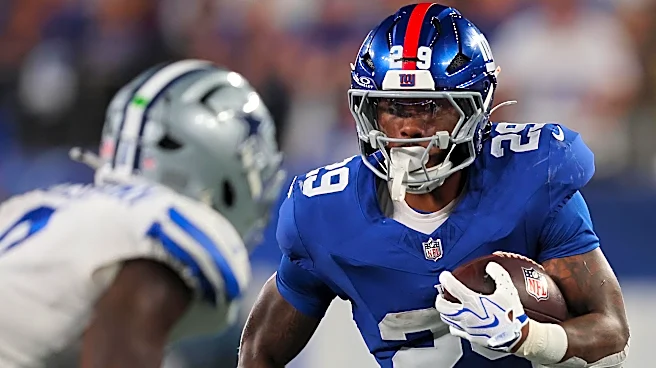
The Dallas Cowboys’ defense on Sunday night was an absolute sieve. It was especially disappointing, considering the elevated expectations we placed on this new group from the multitude of big changes the team made over the last several months. The New York Giants made this unit look silly as the defense failed to do the simplest of things. It’s one thing to lose, but how it all went down has created doubt about just how effective the 2026 “new and improved” defensive group can be this year.
For a
better sense of what went wrong, we’re going to take a closer look at this defensive apocalypse and examine what mistakes are fixable and what are legitimate concerns.
Read option readiness
The problem: Edge defenders took the bait and completely abandoned their lane responsibilities
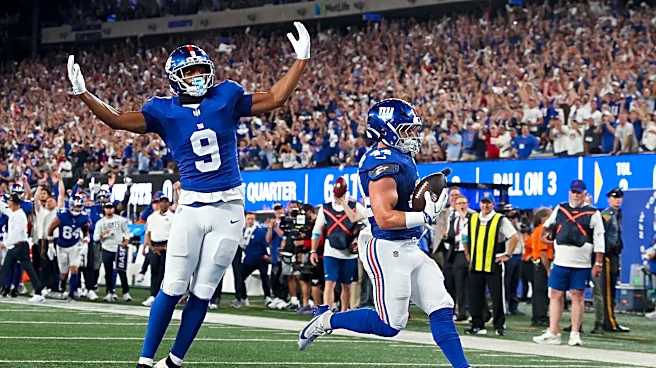
Offensive coordinator Matt Nagy didn’t need to be sneaky, as the Cowboys defense wasn’t fooled by masked intentions. Instead, it was just sheer overaggressiveness and their inability to control themselves.
Again and again, the Cowboys edge rushers crashed inside, attacking a ball-less Cam Skattebo, while Giants quarterback Jaxson Dart took off in another direction. By the time the defense figured out what happened, Dart was already several yards downfield. The linebackers were slow to scrape over, turning basic option runs into continuous chunk yardage plays.
Fixability: Easy
The good news is this isn’t a physical limitation. The defense just needs better discipline. The coaches must instill the importance of holding their assignment and stop trying to be the hero on every play. It’s concerning that so many got caught and hints that the group as a whole is too amped up, but it’s totally correctable.
Coming up flat on the flat
The problem: Complete lack of spatial awareness and closing speed on underneath routes
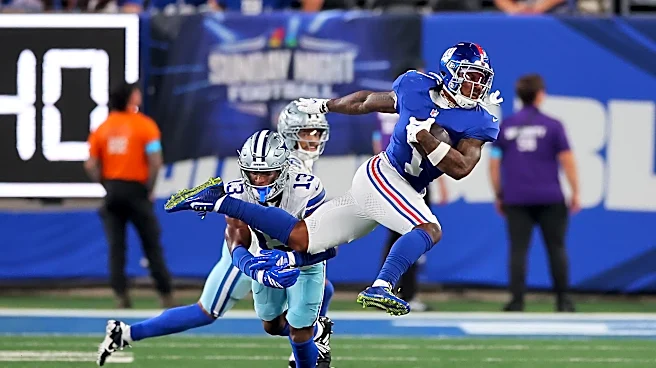
The flat turned out to be the safe zone for the Giants offense, especially down the stretch. The Cowboys’ linebackers and safeties were so focused on managing traffic over the middle that they were hanging too far back and couldn’t react quickly enough to make plays in the flat. Swing passes that should have been minimal gains turned into chunkier plays because the nearest reactor had too far to go.
Fixability: Moderate
While the read-option problem is a player discipline issue, defending the flat is shared by the player and coaches. It requires a schematic adjustment to stop conceding the underneath so easily, but it also requires quicker reaction from defenders to get on the move before the ball leaves the quarterback’s hand. The players have the quickness, so the limiter isn’t athleticism, but more cerebral.
Soft coverage
The problem: Allowing receivers to sneak into soft spots in coverage
Far too often, the Giants’ pass-catchers were left unattended in the secondary with no defender anywhere close. It almost seemed effortless for receivers to sneak behind the linebackers and find space.
Again, the Cowboys were more concerned about giving up the big play, to the point where they allowed too much cushion on short and intermediate stuff. The soft zone coverage had too many holes, and it really wasn’t all that difficult for Dart to lob throws to his targets.
Fixability: Moderate
Better communication and quicker reaction can tighten up some of these creases, but there’s a fine line between trusting the players to make the changes and considering adjusting the scheme. The Cowboys must figure out which is more pertinent because if they stubbornly employ a coverage scheme that isn’t working, it will be a slow death this year compared to the fast one last year, but a death no less.
Free chances
The problem: Too many penalties at the worst possible time
In a game where possessions were scarce, the Cowboys could ill afford to give the Giants freebies, but that’s exactly what they did. The penalties in this game came in many forms and on both sides of the ball.
They had two offside penalties from anxious defenders, both coming on short-yardage plays. They had a late hit out of bounds and a facemask penalty from players caught in the heat of the moment.
And there was the taunting penalty, where a player was showboating late in the game despite being down two scores. All these infractions gave the Giants free yards and extra chances.
Fixability: Hard
Penalties usually stem from poor technique from desperate players in recovery mode, while others are just mental miscues. The Cowboys’ penalties fall into the latter category, and while those are easier to correct, Brian Schottenheimer’s track record with the team isn’t inspiring. Last year, the Cowboys had 133 accepted penalties, the most in the NFL. Showing such a lack of discipline right out of the gate suggests more of these mistakes are coming.
The Cowboys’ performance Sunday night has fans backpedaling their excitement for the season, and that’s fair. But it would be more concerning if the root cause is a lack of talent rather than things that can be corrected. The coaching staff has their work cut out for them and must help the players carry out their plan. If they can’t bridge the gap quickly, they could dig themselves an early hole that they might not be able to crawl out of.