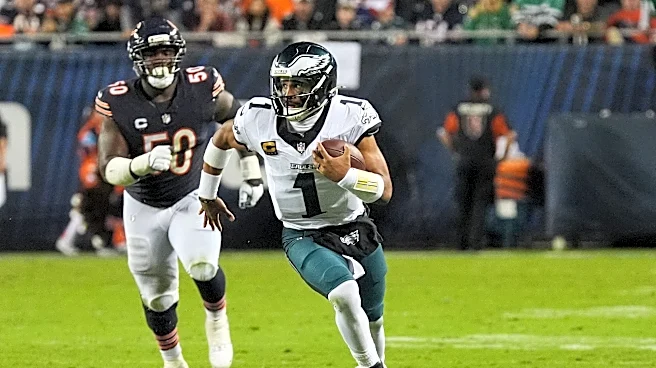





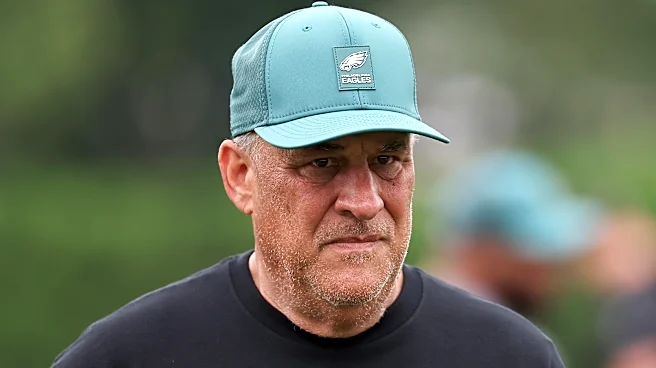
Bears third-stringer Case Keenum had a standout game against the Eagles on Monday, so there’s reason to believe LA Rams quarterback Matthew Stafford can do the same in Week 4.
Keenum, who was on the verge of retirement entering this season, started his first game in three years in a 27-7 win on Monday Night Football. The veteran completed just over 70% of his passes and had three total touchdowns. It was one of the best performances of his career, and it was certainly jaw-dropping to watch unfold
in real time.
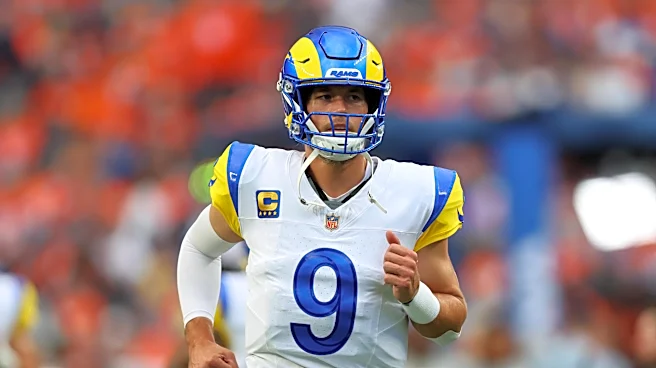
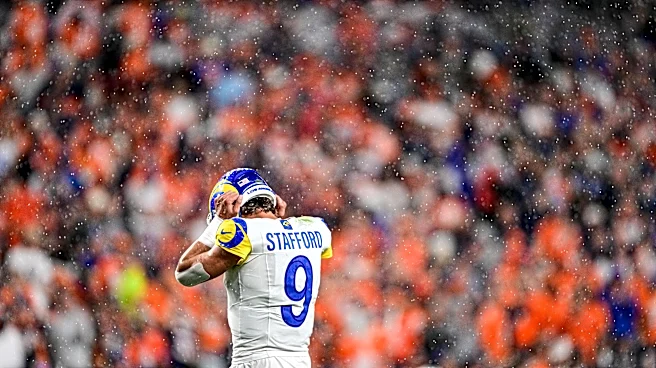
So I’m going to ask again: Why not Stafford? The 38-year-old Rams QB and reigning MVP has the experience and ability to exploit the same weaknesses the 38-year-old Keenum did in front of a national audience.
Part of Keenum’s success against the Eagles came from getting the ball out of his hands quickly. His average time to throw, 2.41 seconds, was the quickest of all quarterbacks this season with at least 30 passing attempts. It certainly helped that Ben Johnson didn’t scheme up long developing plays or rollouts for him. Instead, Johnson cooked up a variety of quick passes that Keenum and the offense feasted on all game.
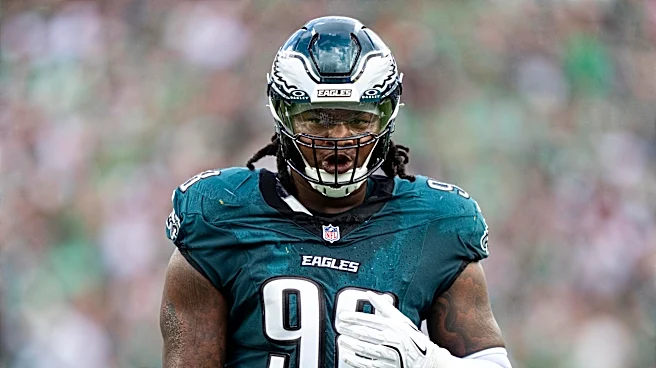
Per Next Gen Stats, Keenum’s passes were largely in the 10- to 15-yard range throughout the game. Those short passing plays were effective, as the Eagles struggled to defend them. This should at least give Sean McVay a blueprint for how to take on Philly’s defense. McVay and Stafford don’t need to completely copy Chicago’s gameplan, but adding more quick-play concepts to the playbook can help keep Philadelphia’s pass rush off-balance.
Plus, Stafford’s average time to throw this season isn’t too far off from Keenum’s. According to Pro Football Focus, the Rams QB averages 2.67 seconds to throw, which ranks 28th in the NFL among 36 qualified passers. While that may seem concerning, PFF noted that Stafford has gradually taken longer in the pocket to get the throw out throughout his time in LA.

The increase in his average time to throw is thanks to improvements along the Rams’ offensive line in that span. Stafford has used that extra time to target receivers downfield, as shown by his willingness to throw beyond the sticks and by increasing his average depth of target, highlighted by a mark of 10.1 during his 2025 MVP campaign.
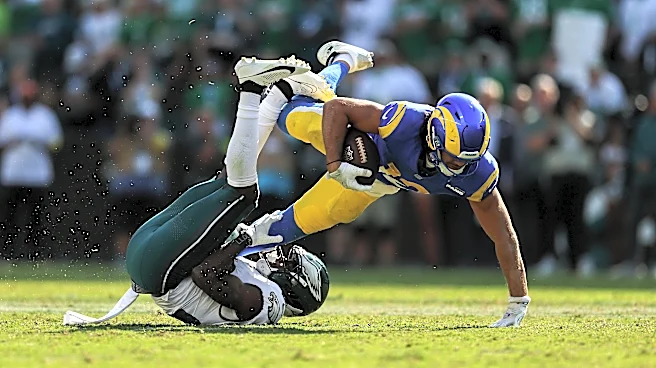
That’s where Stafford differs from Keenum. A short passing game has proven to do the trick against the Eagles, but Stafford and the Rams have been able to successfully move the ball on Vic Fangio’s defense with their downfield attack in the past. In three meetings since 2024, Stafford has a 6-to-1 touchdown-to-interception ratio against Fangio’s defense, averaging two touchdown passes per game:
Week 12, 2024: 24-of-36 for 243 yards and two touchdowns; 104.5 passer rating
Divisional Round, 2024 season: 26-of-44 for 324 yards and two touchdowns; 97.2 passer rating
Week 3, 2025: 19-of-33 for 196 yards, two touchdowns and one interception; 82.4 passer rating
While Stafford’s stats are solid on paper, he was sacked 11 times in those three games, including a combined 10 times during both 2024 meetings. That can be the crutch of relying so much on a downfield passing scheme. Stafford’s been productive against Fangio’s unit, but in return, LA has allowed the pass rush to make a sizable impact.
The Rams don’t have to entirely switch up their gameplan or completely abandon the downfield passing attack that has served them well in the McVay era. McVay and LA’s offense would benefit from adding more quick-play passes to get Stafford into a rhythm and, most importantly, take the Eagles’ pass rush out of the game.
Finding a mix between the Rams’ usual offensive scheme and the Bears’ gameplan Monday night could serve Los Angeles better this weekend. Stafford has had success against this team and defense before. Only this time, a healthy diet of passing plays should keep the Eagles on their toes and force them to defend the entire field.