


Brad Lidge is an archaeologist in real life. The following, however, does not take place in real life. It takes place in the year 3026, when the Phillies, and the sport they played, have been forgotten by all. All that is, except for the archaeologists who study the distant, dusty past. Among them is a scholar by the name of Brad Lidge the 35th, who is only now beginning to discover the grand drama of which his ancestor was a part. It is an imaginary story… aren’t they all?
Scene: A conference room
at the annual meeting of the Worldwide Society of Archaeologists. The year, 3026. BRAD LIDGE THE 35TH, a young, talented scholar, bright-eyed, eager, is on stage, presenting his research.
LIDGE:
…, the Phillies were thought by our field to be a myth, characters in tales told by the ancient Philadelphians to teach their children valuable lessons in how to persevere through failure. That is, of course, until the discovery of the Complaint Tablet to WIP-Nāsir, which conclusively proved their existence as actual historical figures. Though we know little of the game they played, we are aware that it was called “baseball”, that it took place in various public forums, and that it involved a village elder dressing up as a mysterious creature known as the Phanatic, whose rhythmic dances were possibly part of a Philadelphian fertility ritual.
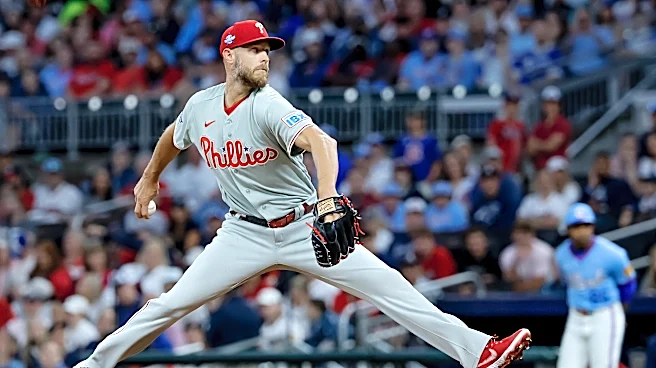
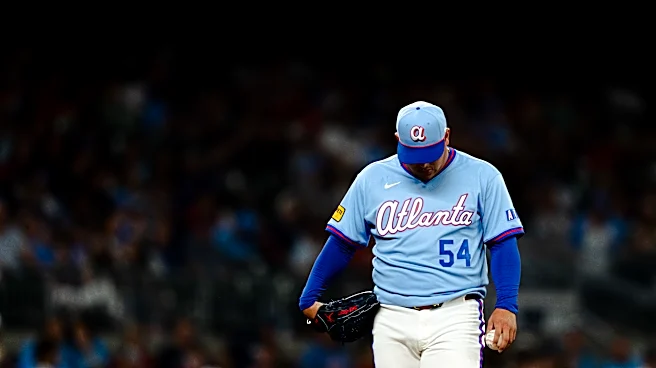
We also know that the Phillies apparently never won. Our colleagues have identified hundreds of fragments of parchment, uncovered from various sites around the Philadelphia region, each of which reads something like “Braves triumph over Phillies” or “Phillies fall to Cubs”. Like the even-more ancient gladiators of ancient Rome, these Phillies appeared to be tasked with battling both humans and animals. Unlike their Roman counterparts, the Phillies did not appear to taste the glory of victory on any occasion. None of the extant fragments, dating all the way back to April 14, 2026, detail a Phillies win. The standard view, as you all know, is that the Phillies did not really play baseball, but instead took part in a highly choreographed ritual in which they always played the part of the losing team, likely as part of diplomatic tributes to rival societies in Atlanta and New York. That interpretation can explain all of the known evidence.
But it can’t explain this.
Lidge presses a button on his computer, and a photo fills the screen behind him. It depicts a battered parchment, torn in places, reading …“edelphia Inqui… PHI…IES DEF..T MARL..NS…”
A gasp goes through the room.
LIDGE:
This fragmentary parchment was found lining an ancient storage vessel in the Philadelphian settlement once known as Fishtown. Though the text is partially lost, it clearly states that the Phillies won a baseball game over a team most likely known as the Marlins. Perhaps the settlement took its name in celebration of this victory over their aquatic foes—
PROFESSOR METZ, a bitter, sarcastic archaeologist, snorts and removes his glasses in a condescending fashion.
METZ:
Doctor Lidge, you cannot expect us to believe this. We have documentation of ten consecutive losses for the Phillies. It is simply not plausible that a team could lose to that extent if they were actually taking part in genuine competition.
LIDGE:
Then how do you explain this fragment?
METZ:
Perhaps it is like the Sumerian bar joke: we have the words, but not the context to understand them. It had meaning, once, but the meaning is lost to us.
LIDGE:
The meaning is clear. The Phillies did once win a game. Perhaps even more than once—
METZ:
Sure, sure! What’s next— you’ve uncovered a potsherd with proof that the Phillies roster carried a proper cleanup hitter?
The room erupts into laughter. LIDGE, humiliated, walks off stage, muttering to himself.
LIDGE:
Let them laugh— I’ll prove it to them!
SCENE: Days later, LIDGE, a torch in one hand, slumps against a wall in the dark, dusty ruins of what was once Citizens Bank Park. Though he began his expedition with enthusiasm, regret has begun to set in. Sweat pools on his brow. Fatigue fills his very being.
LIDGE:
Cubs 10, Phillies 4. Braves 9, Phillies 0. Diamondbacks 4, Phillies 3. Days and days spent here, and all I’ve found is records of Phillies losses. Maybe they’re right. Maybe the Phillies never did win a game.
LIDGE leans back against the wall in despair. Suddenly, a single green feather floats down, landing on his face. He picks it up, lifts it, holds it to the light, awestruck.
LIDGE:
My god. This is the genuine article, not part of a costume…The Phanatic was real. What if… what if all of it was real? Not myth, not performance… Could Bedlam at the Bank have been an actual historical event? Could the Ovation of Turner have really happened? Could the god of merriment known only as “Kruk” have been a real man?
A bright light fills the room. LIDGE shields his eyes. When he dares to look, before him stands the ghostly figure of THE PHANATIC.
LIDGE:
It is said in the ancient texts that you appear to Philadelphians true of spirit in their time of greatest need, and also in the seventh inning. I beg you, Phanatic: show me the way.
THE PHANATIC points towards a loose brick in the wall behind LIDGE. LIDGE reaches for the brick, presses it. A rumbling, a cloud of dust. A secret passage opens in the wall opposite. THE PHANATIC nods, then vanishes. LIDGE walks through the passage, finding himself in a room packed with newspapers, pennants, bobbleheads, memorabilia of all kinds.
LIDGE:
This… this can’t be. This says… Phillies National League East Champions, 2025… Phillies National League Champions 2022…
He sees a bobblehead on a pillar at the center of the room. He picks it up. It depicts the Phanatic waving a pennant that reads…
LIDGE:
“Phillies World Champions 2008”! The Phillies won! They won more than a game! They were champions. They were champions!
Suddenly, a rumbling, bigger than before, sets everything in the room shaking. A massive boulder, painted with red lines and stitches, bursts through the wall, crushing everything in its path. LIDGE runs for his life, clinging to the bobblehead. As he sprints, he comes to a chasm. Certain death on one side, safety on the other. With no choice but to dare, he leaps, barely catching the ledge. The boulder drops into the depths below. But the danger is not over. As LIDGE struggles to hoist himself up, he realizes that he cannot do so with one hand. He will have to drop the bobblehead, or die.
LIDGE:
No. No! But there’s no other way…
LIDGE, sorrow filling his features, drops the bobblehead. It falls into the darkness, lost forever. He pulls himself up, catches his breath.
LIDGE:
I was so close. So close!
LIDGE drops to his knees and raises his fists to the heavens. But in a despairing sort of way, not a “just got the last out of the World Series” sort of way.
LIDGE:
I know, Phillies. I know that you won games. But how can I ever prove it?
A scrap of paper drops from above, fluttering gently into his hands, as if directed by an external force. Lidge holds it up, reads the text by the light filtering through a crack in the ceiling.
LIDGE:
“April 25th, 2026: Phillies 8, Braves 5”!
LIDGE pumps his fist triumphantly. The Indiana Jones theme plays, which is fine, because this is 3026 and the copyright has expired. He strides forward, out of the ruins, back into the world of the living, as the sun filters into the ancient ballpark, filling the home of Rollins, Utley, Howard, and yes, Brad Lidge, with daylight…
THE END