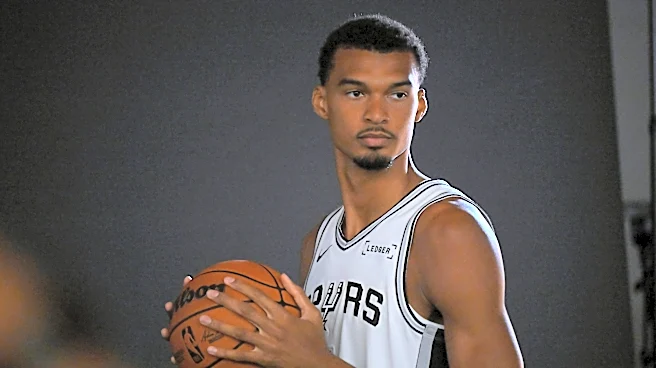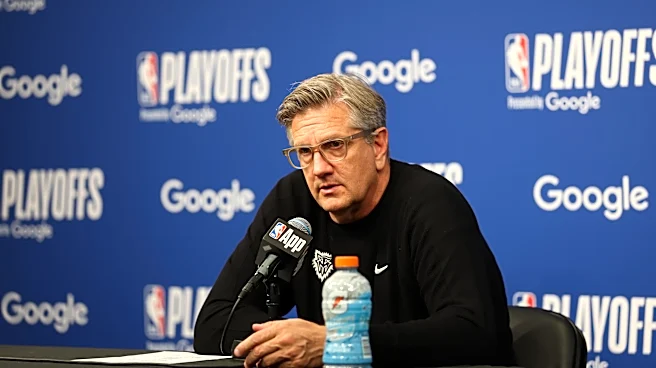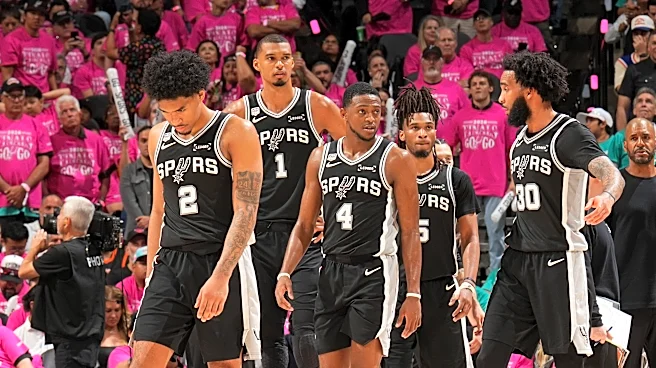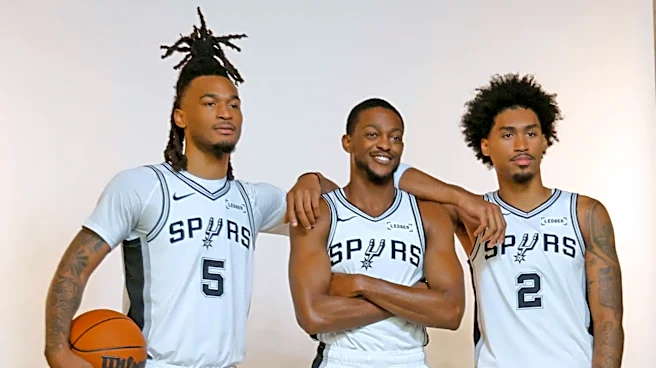


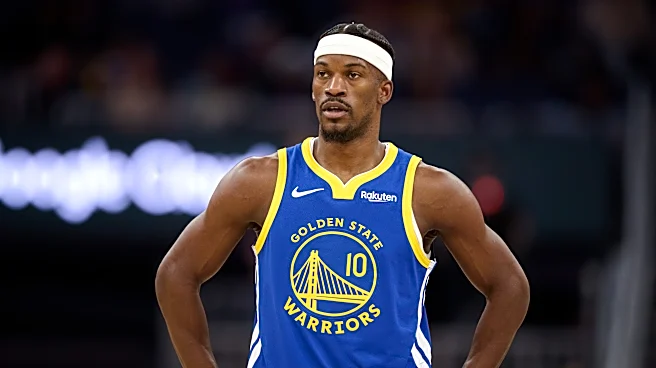
The Spurs held Media Day on Monday and, as expected, one question that kept coming up was how the guard rotation would shake up. When asked about it, Johnson said that it would be the only way for them to build chemistry, and he expects to have them on the floor more than last season.
The potential issues with playing Fox, Castle, and Harper are not hard to imagine. Bad spacing, diminishing returns due to overlapping skills, and being too small on defense and the boards are among the more concerning
ones. Because of those reasons, it wouldn’t be surprising to see Johnson give them more playing time together while not actually starting the trio or even having them share the floor every night.
If he does decide to go for it and gives it a real chance, there are ways it could work out and it would definitely be worth a try.
There should be no ego issues as long as the wins keep coming
San Antonio is lucky to have such talented guards. The problem is, their strengths overlap. It’s probably the reason why Johnson split their playing time in the first place. The trio only logged 25 minutes together in 18 games in the regular season and 44 minutes in 14 games in the postseason, where Harper’s stellar play and the ineffectiveness of other bench pieces almost forced the coach’s hand. The Spurs were outscored by big margins (21 points in the regular season, 26 points in the playoffs) with the three on the floor.
It’s no shock that players who are not used to sharing the floor couldn’t be more than the sum of their parts, but, as Johnson said, they should be able to build the necessary chemistry with more time, as long as they are willing to sacrifice their numbers.
Hugely important for the success of the potential experiment is that the young guards have said they have no ego issues with their roles, and Fox has been a consummate professional as a Spur. If everyone, including Wemby and whoever else fills the role of floor spacer, doesn’t care about their stats on any given night, the trio could take turns torturing defenses as main initiators or secondary ball handlers based on whoever is feeling it in any specific matchup.
The success of the enterprise is not going to be dictated solely by how willing the guards are to sacrifice, but the fact that they truly seem eager to play together helps massively.
If the young guard’s shooting improvement is real, the fit is not that awkward
Stephon Castle emerged as one of the best perimeter defenders in the league last season, and still has room to grow as he becomes more disciplined. Harper surprised on that end as a rookie. They both have the size to defend big guards and even wings. Fox is smaller but has quick hands and plays with energy. Defensively, it’s not a terrible fit, as long as everyone is willing to help out on the glass.
On offense, it’s another story. Even if the guards have no egos and are happy to go with the hot hand while waiting for their turn to take over, they are just not great off-ball players, mainly because of their questionable shooting. All three shot under 35 percent from three last season, and the young guys did it in small volume. Opponents left Castle and Harper open by design, and it worked often.
The good news is that Harper and Castle ended the regular season on a tear from outside and had some good stretches in the playoffs. Fox had a down year as a jump shooter, especially in the postseason, but shot 38.7 percent on catch-and-shoot threes in the regular season. Defenses will continue to ignore them until they prove they can hit shots consistently, but if the improvement from late regular season from the young guards is real, the fit won’t be as awkward.
It should be easy to stagger the trio’s minutes
There’s a reason why Johnson didn’t commit to saying he would play them “a lot more” and just said that he expects to do it more than last regular season: he might need them split to help other units and to get the most out of them.
As we saw last season, as long as at least one or two of them are on the floor, even a simple offense can thrive because they can get to the rim and make the defense collapse. While adding a third ball handler could potentially work to supercharge some units, the Spurs will still need to make sure other groups, especially those that don’t feature Wembanyama, have an engine.
Fortunately, it shouldn’t be too hard to stagger the guards’ minutes so that at least one of them is on the floor at all times. Playing them together more doesn’t mean playing them together exclusively. Starting them all seems like too radical a step, but finding pockets to have all three out there while not neglecting other units and while giving them turns to be the main guy seems easy enough, since Johnson has the blueprint from last season.
The potential problems are real, but it’s better to experiment early
The Spurs had great results playing only two of their three talented guards together last season, for the most part. Why change things to start a new year in which they’ll face expectations and will have a target on their backs after reaching the Finals last season?
The answer is simple: they need to at least figure out if it’s at all viable to have three of their best players on the floor at the same time, because Fox is unlikely to go anywhere for at least a year and Harper showed that he’s ready for a bigger role. They were forced to play the three in the postseason, and it didn’t go well. They need to find out as early as possible if there is a way to make the offense work with those three out there so that if there isn’t, they can either adjust the system or correct course with enough time to stabilize the rotation.
The likely pitfalls of going all in with all three starting or, more likely, playing heavy minutes should be acknowledged, but it’s better to give it a real try as soon as possible and scrap it if it doesn’t work than being forced to use it when things go awry. If all they get out of the experiment is a conclusive answer that the three can’t share the floor, it will still be worth it.