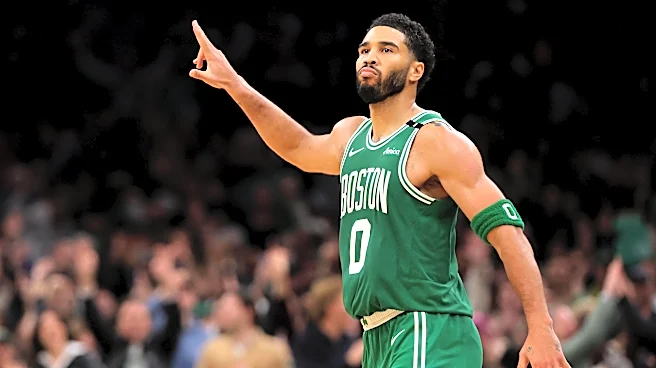

BOSTON — Joe Mazzulla is always in pursuit of becoming more efficient and effective as a coach. So, as the use of artificial intelligence tools has proliferated, Mazzulla has found ways to incorporate them into his workflow and challenge his thinking.
“Every offseason, really this offseason, it’s like, okay, let’s test all of our processes,” Mazzulla explained at Celtics shootaround on Friday morning. “Is our pregame film process the right way? Is our halftime film process the right way? Is our film room
set up for learning the right way? How should our film room look?”
Mazzulla has used AI to get feedback on those questions in order to improve as a coach in his fifth season.
“You always ask — where are we getting better?” Mazzulla said. “I think the best way for coaches to get better is in the processes of how they go about doing stuff — are they the most efficient way?”
Mazzulla explained that he’s not using AI to get definitive answers.
“It’s more just helping organize, helping become more efficient, helping understanding,” he said. “You really use it for just conversation and riffs on, like — okay, here’s what I’m wrestling with. What does this look like from a psychological perspective? What is the research and the data? You quickly get just so much research and data on things.”
Mazzulla shared one example of how he’s leveraged artificial intelligence. He is famously passionate about watching soccer, and it’s also been well-chronicled that he’s incorporated handball into the Celtics’ practices. But he wanted to run a more comparative analysis of how the three sports intersect, and he used AI to do that.
“I was able to just say, ‘Okay, tell me the similarities between soccer, handball, and basketball, what that looks like. What elements of play are involved in all three of those things, and how can that work under a five-on-five setting?” he said. “And so, to me, it just tests your processes; it tests your efficiency; it tests what you think you may know and how you can do it better.”
One of Mazzulla’s main purposes for AI is to brainstorm more effective ways to communicate, whether that’s during the team’s practice, 15-minute halftime, or other limited chunks of time.
“It really helps you test your processes that you think are efficient,” he said. “Like our halftime process, is that really the most efficient way to watch film and ready for the second half? Is our pregame process the most efficient way to make sure our guys have retention of the game plan, and what we’re needing to do, and they’re in the right space mentally and psychologically?”
His goal is to constantly challenge his thinking and avoid becoming complacent.
“As a coach, you develop these processes, and you develop these rituals and these things that you think give you the best chance to win,” he said. “And I think a platform like that tests your efficiency on: is this really the best? Like, how we watch film on a practice day — is the way we watch film, is the template of each clip, does that represent the best opportunity to build retention and build understanding? What does it look like to have the most efficient film session that you can? What type of questions are you asking when you’re going through film? Do I ask the right questions to check for understanding to build retention? It just really tests your processes.”
“You may think that you’re doing something the right way, but there’s definitely a more scientific, a more efficient way of going about how to do things.”