





Welcome to our Phoenix Suns Season in Review series, where we revisit every player who suited up during the 2025–26 campaign through the lens of expectation, reality, and what it ultimately meant.
Player Snapshot
- Position: C
- Age: 19
- 2026-27 Contract Status: $6.3 million
- SunsRank (Preseason): 12
- SunsRank (Postseason): 12
*SunsRank is based on Bright Side writers’ ranking.
Season in One Sentence
The process is underway, and it’s doing its job thanks to a clear evolution in his game.
By the Numbers
The Expectation
Before the season started, Khaman Maluach was viewed as one of the highest‑upside prospects in the 2025 draft. Mainly thanks to an extremely rare profile: lateral mobility
for his size, rim deterrence, huge potential in drop coverage, and offensive flashes that hinted at a possible stretch‑five outcome in the medium term.
But unlike other more “NBA‑ready” rookies, nobody really expected him to be immediately productive. Phoenix knew they were getting a raw prospect — a player who still had to learn a ton about NBA pace, defensive reads, and the physical impact required at the highest level. The idea behind drafting him was mostly long‑term: develop a modern center capable of protecting the rim in Jordan Ott’s system while eventually bringing real verticality on offense.
The Reality
Reality ended up matching those initial expectations pretty closely. Maluach almost never had a stable role in Phoenix’s rotation this season, finishing with only 46 games played and under 9 minutes per game. And yet… we saw the flashes, especially on defense, where as the season went on, Khaman slowly climbed toward the top of certain metrics.
Because even in an ultra‑limited role, he showed exactly why Phoenix believes in him so much. His physical presence immediately changes the geometry of the floor: rim contests, verticality, rebounding, massive defensive coverage despite his age, a real pick‑and‑roll threat, and a shooting touch that suggests he could stretch the floor.
The problem is that everything else was still under construction. His defensive positioning was inconsistent, his offensive game was heavily dependent on others, and his lack of experience was obvious at times against NBA centers who were smarter physically and tactically. But honestly, that was expected.
What It Means
I think Phoenix will continue with exactly the same development plan: lots of G League reps, lots of film work, and gradually bigger NBA sequences over time. And honestly, that’s probably the best thing for him. Because at only 19 years old, Maluach is still one of the youngest players in the league and surely one of the least experienced in this entire draft class.
Defensively, he needs to become more disciplined in his help rotations, better understand NBA timing, and learn to defend without relying on his size as a miracle solution. Offensively, he needs to develop his short roll game, improve his hands in traffic, and keep working on that outside shot that intrigues the organization so much.
I genuinely think that in 2–3 years, he can become a modern Rudy Gobert with a more varied and lethal offensive bag, or a more explosive but less stretch‑oriented version of Jay Huff.
Defining Moment
I’d like to talk about his performance against Dallas in April — not the most impressive offensively, sure. But he delivered an incredible defensive game, both in energy and reads — while being a major factor in the team’s success (14 rebounds and 3 blocks) — and it was also the first and only time he played more than 30 minutes.
Grade: B
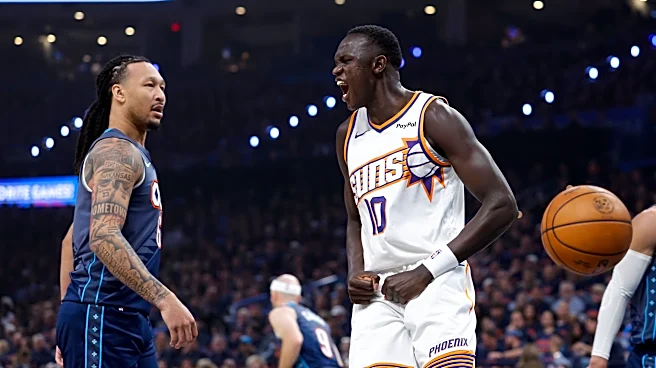
I’d give him a B for his season, first because of his huge G League performances with completely insane numbers: around 18 points, 13 rebounds, and 3 blocks per game. On the NBA side, it’s less flashy, sure, but his on‑court impact through rim deterrence was noticeable. A strong performance against OKC late in the season capped off his first year in the big league.