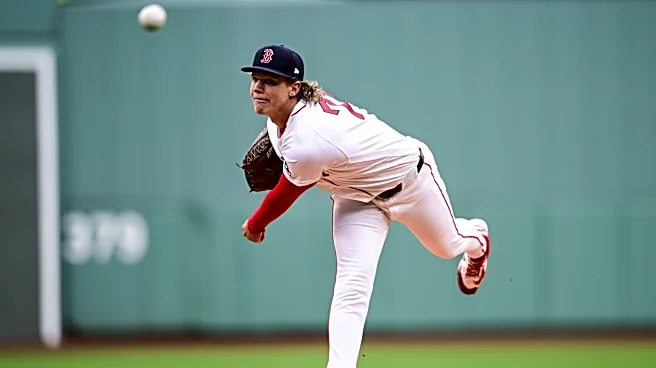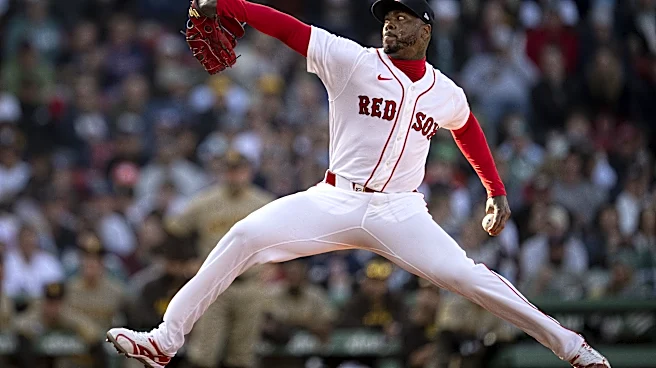




Aroldis Chapman has been nearly perfect over his Red Sox tenure. He’s converted 35 of 37 save opportunities, registering a 1.22 ERA in that span. But Father Time is undefeated, Chapman has been prone to meltdowns, and I’m generally distrustful, so I’m waiting for the wheels to fall off.
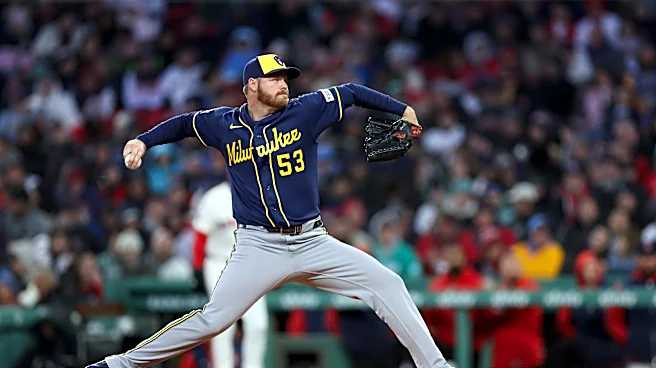
Last week, against the Brewers, Chapman threw the slowest fastball of his Red Sox career at 90.8 mph. Since 2010, he’s thrown over 10,000 fastballs, earning a reputation as the premier flamethrower in baseball. The
pitch last week was so much slower than his average fastball that it might have even functioned as a changeup, inducing a game-ending double play.
Chapman has been in the league since 2010. There aren’t many players left who debuted in 2010. At 38 years old, it’s fair to see 90 mph and wonder if he’s over the hill. I did some digging, some Excel work, consulted an oracle, and asked a Magic 8-Ball to determine what to look for to predict Chapman’s decline.
Pitcher’s arms are like weapons. Google “Aroldis Chapman gun” to learn more. In all seriousness, Chapman saves his bullets. Part of being healthy and effective for so long is knowing when to push it and when to take your foot off the gas. To use another metaphor, look at Lionel Messi. He spends a large portion of games walking, conserving energy, and surveying the field. When he needs to, he gets up to full speed in an instant and makes everyone else look like they’re playing a different game. While a pitcher can’t entirely take pitches off, they can pull back a bit when needed, especially early in the count.

Dating back to 2024, we saw a jump of about two miles per hour with his fastball when he gets to two strikes. He’s much more likely to see a swing with two strikes, and brings out his best stuff in those counts. That’s been the case throughout his career, but the magnitude of the effect has increased with age. Similarly, we can see his relative effort change with the score as well.

The effect here isn’t as significant, but it does exist. In a one-run game, Chapman throws his fastballs significantly harder than in a three-run game or when trailing. There isn’t much of a difference between tie games and two-run games, but if the winning or tying run is at least in the on-deck circle, Chapman brings it.
There’s more to it than just effort, as well. At least, it appears that way.

It typically takes Chapman about four pitches before he appears to be warm. When he throws a fastball for his first or second pitch of the outing, it averages about 97 mph. By the time he gets to his seventh pitch, the average velocity is up to 99 mph. As someone who owns a bachelor’s degree that includes a minor in applied math and statistics, I’ll admit this isn’t a 100% sound way to draw conclusions, but the correlation is there.
One potential issue is that the first and second pitches of an outing can never be a two-strike count, and we already saw that he turns it up with two strikes. By the time we’re five or so pitches into an at-bat, though, it could be virtually any count, given that the average plate appearance lasts about four pitches.
Regardless of how Chapman conserves his bullets, the velocity is going to fall off. Nobody can throw 100 mph forever. In actuality, if he does fall off a cliff, he’ll be very hurt. If his performance falls off a cliff, it’s likely due to his control.

There’s a pretty clear correlation here. When Chapman walks guys, things get ugly. When he’s in the zone, as he was last season when he posted a career low walk rate, he’s nearly unhittable.

Last season, he was in the zone about 54% of the time, his highest rate since 2016. In a small sample this season, he’s at a 52% zone rate. He allegedly got under control by learning to aim, which is such a hilarious revelation for a pitcher who’s been in the majors for 15 years that I have a hard time believing it. No matter what the reason for his improved control, a year and then some consistently is enough for me to believe it’s here to stay.
As I said, Father Time is undefeated, and nobody can throw 100 mph forever. Still, when looking at Chapman, pay more attention to the high-leverage, two-strike pitches to see if the top-end velocity is still there. If he needs an out and he’s only throwing 95 mph, it might be cause for concern. As for the 90 mph fastball, he said he was having trouble because of the cold. You probably already knew that, so if you’re still here, I appreciate you. Unless there’s an injury at play, and there doesn’t appear to be, the dip in velocity was likely just a blip. If you start to get worried about Chapman this season, make sure to give him a few pitches to warm up, and pay close attention to his control before you deem the sky falling.