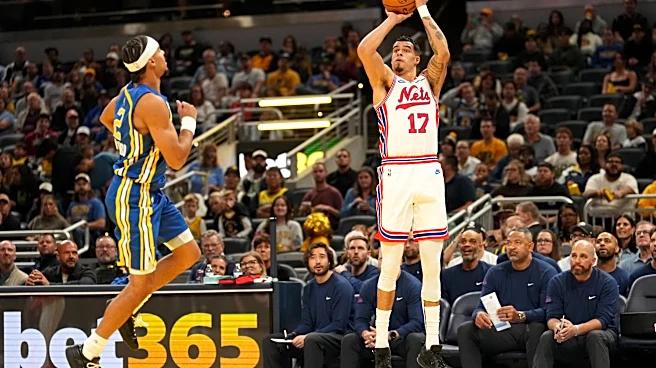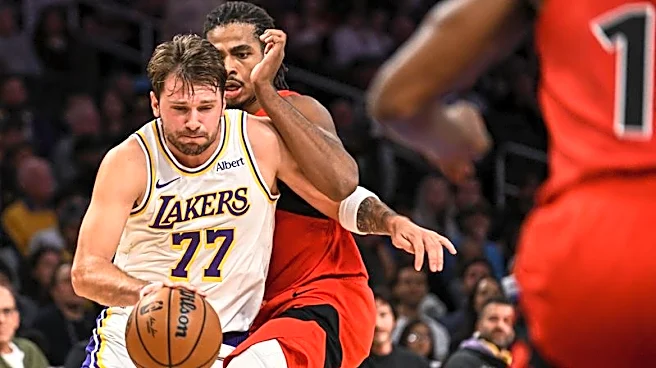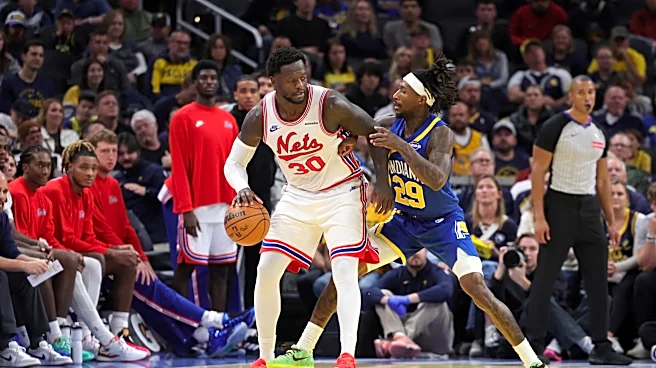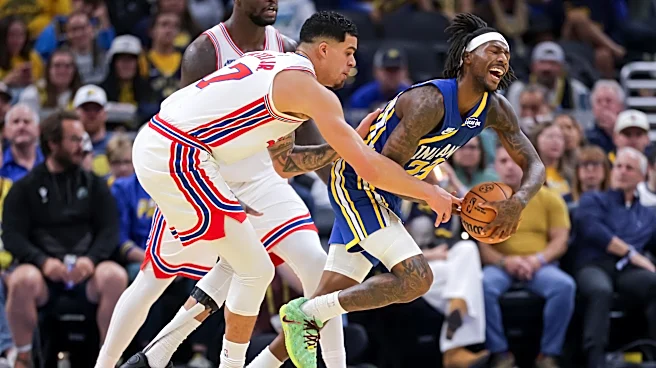

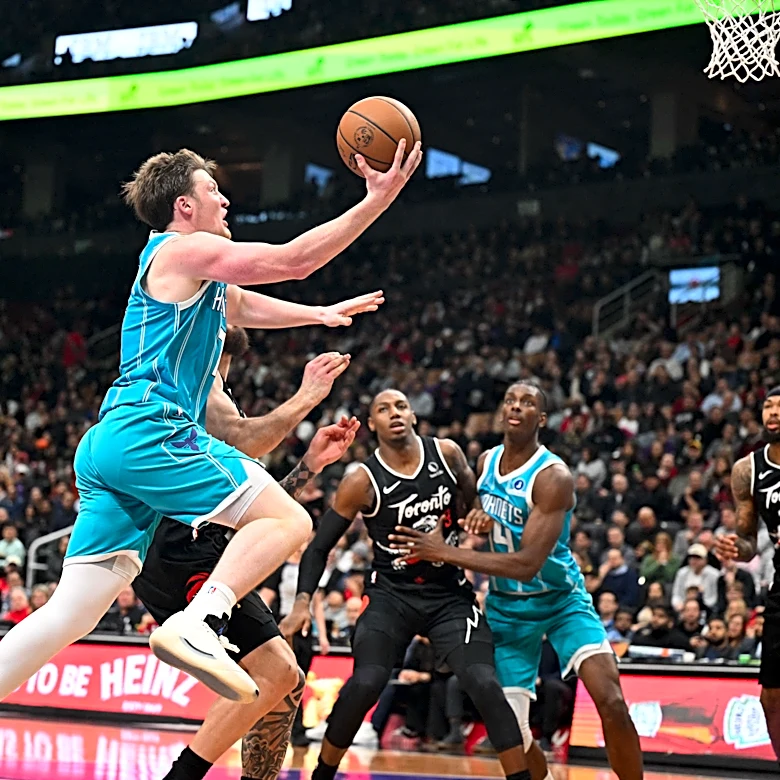




The Nets rebuild can probably be traced back to June 25, 2024 when Brooklyn made two trades within minutes of each other that signals half steps were over. One sent Mikal Bridges to New York for five first rounders, a first round swap and a second rounder; the other an exchange of firsts with the Rockets that brought back a first rounder and a first round swap they had originally sent Houston in the first James Harden trade.
The second step was the two-year-long tank that helped the Nets get two high
— although not as high as they had hoped — firsts in Egor Demin and Mikel Brown Jr. as well as five other late firsts. The hope, at least among fans, was that the losing or at least the deliberate losing would be over. Not yet, apparently, as Brooklyn is off to a 1-6 start and the two rookies have shared the court for only a few minutes. For the second straight year, the Nets are also the youngest team in the league, not a recipe for contention.
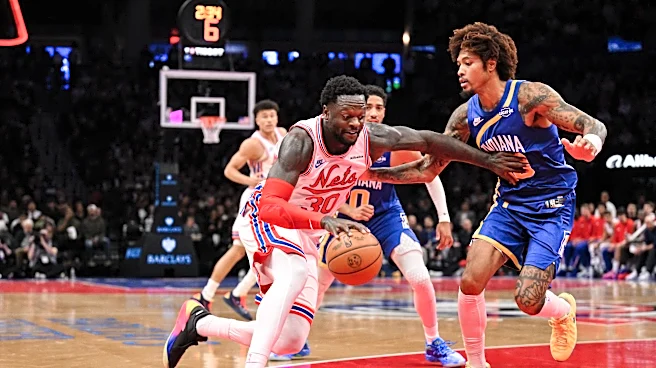
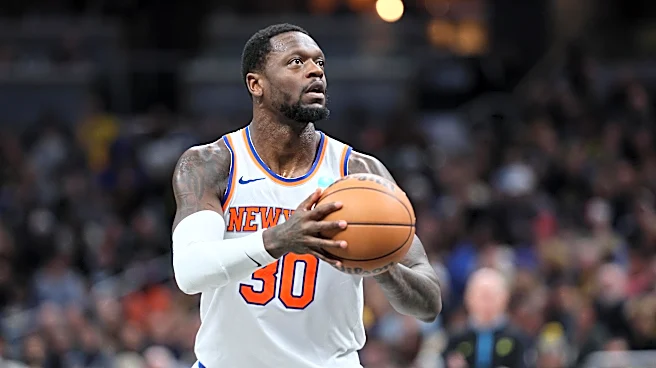
Now, into the fan caldron of disappointment, Jake Fischer seemingly dropped some knowledge that would seemingly ensure a longer rebuild. Speaking to Yahoo! Sports, the writer suggested that the next step could be trying to move veterans Michael Porter Jr and/or Julius Randle presumably at the February trade deadline, presumably to a contender, for more assets, presumably more picks or maybe other assets. Scoring, already an issue, and wins would be sacrificed.
“Brooklyn, I would still categorize as a team that is in more of a sell situation. I believe that Brooklyn will hope that a Julius Randle, a Michael Porter Jr. could still potentially draw some real returns,” Fischer said.
“The Nets, they don’t have their draft pick this year and they’re looking to be better and compete in the Eastern Conference, take some strides forward in the East.
“I don’t think they’re going to be a full sell job right now, but I do think that they are still in a position to solicit trade offers for their veterans to get draft capital, potentially young pieces back in return.”
Reading carefully, rather than scanning aggregators’ headlines, reveals that Fischer isn’t making predictions that the Nets will push hard to move both. He talks about “a Julius Randle,” “a Michael Porter Jr.” not both. Nor does he specifically mention the trade deadline. Nor does he gauge interest levels on the other side.
Adding to the Nets’ cache of assets, of course, does make sense from a number of aspects. If, as Sean Marks has said, the ultimate goal is a player or players who will “automatically and absolutely change the trajectory of the franchise.” then the accumulation of assets makes sense, particularly in an era where trades, not free agency, is the route to acquiring stars and superstars. Look at all the stars who moved this summer. Only LeBron James signed as a free agent and that of course was an oddity.
Either of the two players would seem to be the ideal final piece for teams hoping to make a final run at a title. Randle and MPJ can put up big numbers and have. Porter Jr. also has a ring. Yeah sure, both have baggage, but their ability to get buckets is undisputed. As Basket News noted,
Porter Jr. is averaging 20.7 points, 7.0 rebounds, 1.4 assists and 1.6 steals, shooting 38.1% from the three-point line.
In the meantime, Randle holds the averages of 20.9 points, 7.7 rebounds and 4.9 assists.
Their contracts also militate for moves unless the Nets see them as part of their future. MPJ will be an unrestricted free agent come July. If the Nets don’t plan on extending him — and there’s no indication at this point that they do, then trading him for assets in the interim would be imperative. Similarly, Randle has a player option at the end of this season and he too can leave in July if Sean Marks & co. decide not to make him an offer or an offer he believes fair. (MPJ earns $40.8 million, Randle $33.3 million with an option of $35.8 million.)
Of the two, Porter Jr. would seem to be the more likely to return assets. He’s nearly four years younger than Randle, although Randle is closer to iron man status, having averaged 68 games a year over the last eight. He also has proven that he can be a leader during his time at Flatbush and Atlantic.
It should also be noted that any trade is unlikely to produce the automatic and absolute game-changer Marks has spoken about. More likely, it’d be the big trade before the bigger trade which might happen in the summer of 2027.
One of the most intriguing but also less than concrete suggestions in Fischer’s comment is that the Nets might move away from accumulating draft picks to seeking “potentially young pieces” — that is, undervalued players on rookie deals. After all, they do have 13 firsts and 19 seconds over the next seven years. That strategy has been a key element in a number of recent rebuilds, most notably OKC’s acquisition of a young Shai Gilgeous-Alexander, in the trade of Paul George to the Clippers back in June 2019. That one trade got Sam Presti one building block after another from SGA to Aday Mara. We should be so lucky.
Of course the trade deadline — 3:00 p.m. ET on February 11 — is three months away and there are few trades in the first couple of months of any season. The unofficial start of trade season is December 15 for two reasons. It’s roughly 20 games into the season when teams understand what their needs are going forward as well as the first day that players signed or resigned during the off-season can be dealt. That expands the pool of players who are available by dozens. That’s especially relevant putting together complicated, multi-team deals. Perhaps the spate of early season injuries will move things up, but it’s unlikely.
So, we wait.