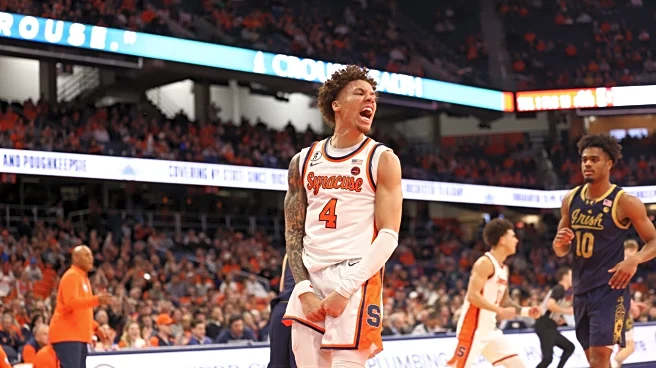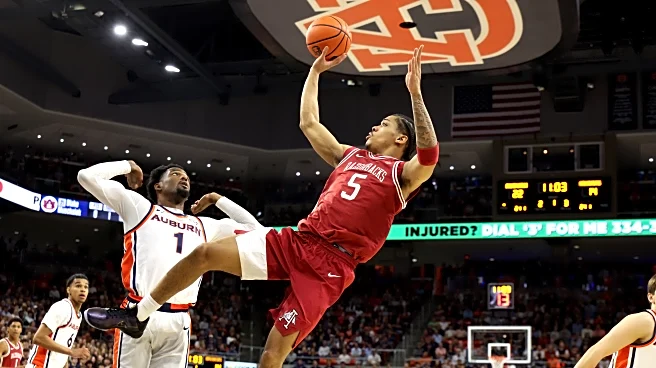

Darius Acuff is an interesting case study in this draft. There are not a ton of success stories in the NBA for guys that are his size with a below average rim rate, free throw rate, and poor defensive
metrics. However, when you watch him play it is hard to not fall in love with the shot making prowess and a steadily improving passing game.
With that in mind, this is a good time to ask about your process. What do you look for in a player that is either a green flag or a red flag? Is it certain measurables? Advanced stats? The good, old fashioned eye test? What is your process and where do you draw the proverbial line on some of these guys?
Tyler: The first thing I always rely on is watching the games. Nothing replaces the eye test. How does a player impact the game? If he isn’t shooting well, does he still affect the game? Does he make teammates better? Those are things you won’t fully get from a box score or even advanced metrics.
That said, measurables and what I call “prerequisite hype” still matter in my evaluations. It’s part of why I’ve been slower to buy in on guys like Acuff and Keaton Wagler. Acuff’s size is tough to overlook, given he’s on the shorter side for guards. Wagler, on the other hand, didn’t have much early buzz, with only two high-major offers in Illinois and Minnesota.
For guards, I focus on four advanced stats: finishing at the rim and assist rate offensively, plus steal and rebounding rates defensively. Those numbers help answer key questions. Can he get to the rim and create good looks for teammates? On defense, are his hands active? Is he willing to chase down long rebounds? Those indicators point to effort and overall activity.
It all has to work together, as there’s no single metric that tells the whole story. That balance is what makes evaluating these prospects so interesting.
Michael: I could probably talk myself in circles on this topic, so I’ll do my best to keep it simple here. Primarily, I lean toward the things that can’t be taught.Height, wing span, natural physical gifts in general, and natural mental aptitude for the game.
Specifically in respect of point guards, if you’re 6’0″ or under, I have major reservations. I’ve been watching the NBA for a long time and also exposed myself to the generation that came right before I started really earnestly watching, and the only 6’0″ guard I can think of in the ‘modern era’ that was truly next level/HOF across the board is Allen Iverson. That’s one clear cut small guard in what we’ll call 40-odd years. Sure there are guys like Jalen Brunson and a number of others, but Iverson is the only one who was lethal on offense and had high defensive prowess despite his size. If you’re that, ok, but given how few and far between those players are, I’m more inclined to look for that guy who is at least 6’3″ and who has some of the pre-built physical tools to not be a total defensive liability. If you’re 6’5″ or taller and have PG skills, thats even better.
For point guards, the deeper stats are certainly important as well. Assist rates and assist-to-turnover stats are key for that position and speak to the aforementioned mental aptitude for the game. Not everyone is going to be a Doncic, Nash, Kidd, Stockton, etc., but knowing the game and how to find teammates is critical and those stats help parse that out.
Finally, the eye test brings it all together. Seeing the actual performance and witnessing the intangibles is obviously important. The game is played on the floor and not on a piece of paper. The stats are certainly important, but the full picture is necessary.
If the Mavs are targeting a PG in the upcoming draft (I personally am not fully convinced they are), I’m hoping it’s a guy with the physical tools and solid numbers to back up their PG prowess. Respectfully, please let’s not no go with an undersized guy.
Bryan: My process is very simple: I check for HS and international priors and superlatives, I watch games where I can, I try to follow basic stats/certain advanced numbers where I can, and then I ask myself a few simple questions about a prospect.
- Can they (insert skill: touch paint, shoot threes, pass, etc)?
- How often/easily? (Rim frequency, 3pr, Ftr)
- what’s their proficiency with this skill? (Rim finishing, C&S/PU 3P%, FT%)
- do the opponents care when they do?
- Does their team rely on them to do this?
I go through a player’s skill tree if you will and start asking myself these questions about their best skills and try to catch what I can to answer them all.
I typically look for ball-handling under duress, playmaking, rim frequency and shooting indicators for guards. I prioritize shooting, basic playmaking, point of attack defense, and basic ballhandling for wings. The smaller the wing, the more I prioritize the latter two. Forwards have to defend either up or down the lineup. Ideally, both, but either is fine depending on the roster around them. They have to rebound, especially on the defensive glass, be an effective help defender at the rim, have some talent as a finisher, and either project to be a solid shooter or be able to make quick decisions with the ball. I’m talking corner catch, defender closing out, 6 seconds left on the shot clock, you have two dribbles or less to create a clean look for yourself or a teammate. Bigs are simpler despite having the hardest job. You have to rebound, affect shots at the rim, have at least one PNR coverage you can execute satisfactorily (ideally multiple), hit wide-open teammates as a short roller, and score with touch in/around the paint. If you can also hit a 3-pointer consistently or handle the ball and make quick decisions, all the better. In short, you have to be able to process information quickly to survive, quick twitch reflexes to react in time to what you see, and the athleticism to give yourself margin for error to cover ground when you or your teammates slip.
There are stats and metrics to help track most of these things, but I have to watch the players no matter what. I watch games, Iwatch highlights, I get my hands on every bit of info I can if a player intrigues me. I likely won’t watch it all, but if I conclude a prospect, I’ll at least know it’s based on something.
Joe: My process is easy. Post January is obviously the eye test. I will watch as much college basketball as the next normal adult does and try to evaluate how much talent and impact each highly touted prospect has. I love it when a player can affect the game without shooting well. As crucial as sure-shotting is for a prospect, I tend to lean toward stronger or athletic wings who may not be as good a shooter but are elite everywhere else. Cooper Flagg is honestly the perfect example of the type of prospect I like. A player with undeniable size and athleticism who possesses that much raw talent in every facet of the game, regardless of some poor shooting, is the type of prospect I personally like.
But obviously, every prospect is different, and you have to judge each differently. For guards, I tend to lean toward bigger playmakers who can see the floor and handle themselves defensively, rather than small, twitchy shooters. There is a place for the twitchy shooters, but only when their efficiency is off the charts, like a Tre Johnson or Darius Acuff.
For wings, they must be able to shoot in some form. Wings with no shot-making upside are very tough sells to me. If you cannot generate your own offense, go downhill around the rim, or generate some sort of offense that positively impacts your team, I find it hard to see you translate. With that, the more offensive upside and skill, the better.
Bigs are difficult as they are the hardest to evaluate. I tend to hesitate with high-skilled bigs, as they are the toughest to plug into a system with already talented players, which is the case in almost any NBA system.
Altogether, it’s genuinely the eye test and how impactful a player is on the basketball floor. There isn’t a stat or metric that I love. I like watching these guys make plays before they reach their highest level. The more they can affect the game the higher they are on the board to me. Its so easy to see the impact in college.
David: I tend to keep my scouting simple. I use the eye test more than box score watching.
Finally and probably most importantly I look at the intangibles: Leadership, Defensive IQ, Vision, Effort, Coachable, and Problem Solving.
Eye Test: I like to start by watching a film on guys in high school against high-level talent. I watch high school tape, because you should be able to see them pop off the screen. I see how prospects do against elite matchups. Then start with early-season college basketball games. The non-conference games give you a good feel about how they do again, talent that is more physically developed, but likely less skilled. Then, when conference play starts, I look at how they perform against pro talent that has had a chance to scout the prospect.
Next Level Indicators: I look for elite skills. What skills does the player have that separate them from other players, transferable skills, and production?
Then I look at size, speed, athleticism, and agility. So many times, production and box scores are misleading you only get part of the story. So you have to dive deeper to see if the player has the physical tools to be elite.
Finally and probably most importantly I look at the intangibles: Leadership, Defensive IQ, Vision, Effort, Coachable, and Problem Solving.