





The Suns took a heavy loss on Sunday against a very strong Thunder team (which makes sense, they’re the champions…), and even though Phoenix got outclassed in many areas (again, nothing surprising…), I felt there were some good things throughout the game. And before that, I thought the staff actually prepared the matchup correctly, especially with the intention of limiting Shai Gilgeous-Alexander’s scoring impact as much as possible. So I’m proposing we analyze a few sequences together to better
understand all of this.
Already, a quick statistical note: Shai finishes with a nice line: 25 points, 7 assists, and 0 turnovers. But behind that, you’ll find a rough 5-for-18 shooting night (including 0-for-4 from three) and a 96.2 PSA. Numerically, both in terms of volume and efficiency (you have to go back to Game 7 of the NBA Finals to find another SGA game under 30% shooting), this is his 5th-worst scoring performance of the season. Sure, he didn’t need to force anything, sure he got the win, but for the Suns, that’s respectable.
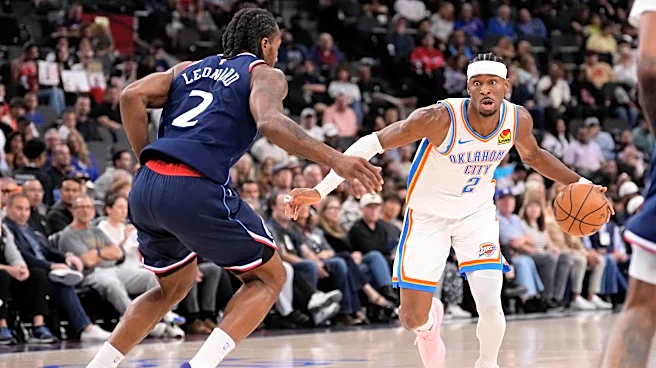
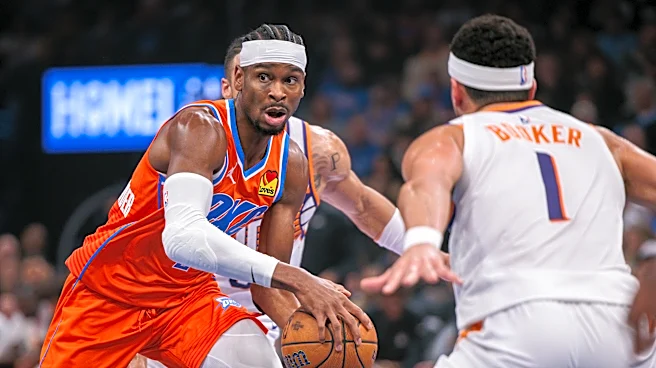
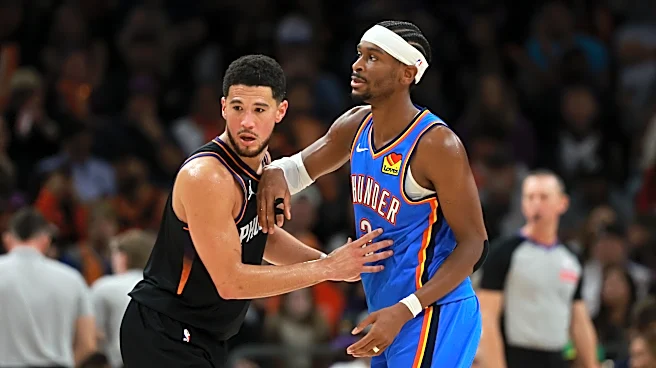
I think the best way to understand a tactical approach is to look at what happens during the first 4–5 minutes of a game. Before any adjustments are made or fatigue/pace come into play. And the game plan on Shai during this Game 1 was clear: the guards are placed on him one by one with the objective of being aggressive and forcing him into tough midrange shots. But they’re also asked to help and fill the paint as much as possible to contain him.
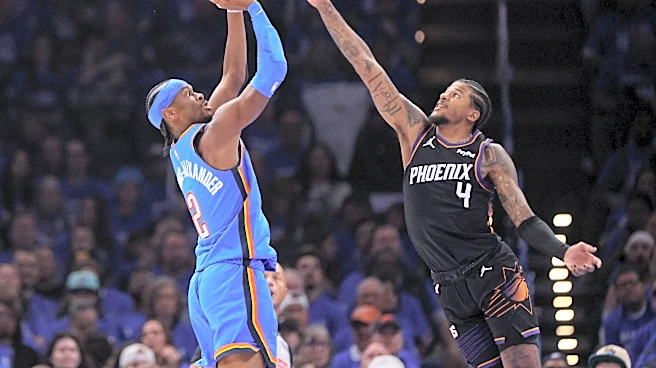
On this play, for example, Shai gets by Goodwin with his first step, but he has no driving lane because all five Suns players have a foot or more in the paint: Booker and Goodwin pressure him together, Ighodaro is in second-layer help, Brooks and Green are in the third layer. SGA is forced to pass to Lu Dort in the corner.
Unfortunately, despite a very good closeout from Brooks, the three still goes in.
Another situation, this time it’s Brooks who’s on him, very high, it almost looks like a (1-2-2) zone defense set up by the Suns. Dillon fights through the screen and you’ll notice that Oso prioritizes Shai over Hartenstein, the Thunder guard draws four Suns players: Booker is watching, waiting and ready to act (as we see at the end); Oso is still there as the low man; and Green comes to help to stop the drive, Brooks (even if a bit late) manages to bother the shot.
Basically, this same defensive pattern was repeated several times in this first quarter: high defensive activity to force him to drive left, then help to stop the drive and force a contested midrange shot. SGA goes back to the bench with 8 points on 2-for-6 shooting — the plan to limit his scoring worked, maybe even too well, because the team forgot that the Thunder are overflowing with offensive talent, starting with the lack of response to Chet Holmgren’s performance (13 points).
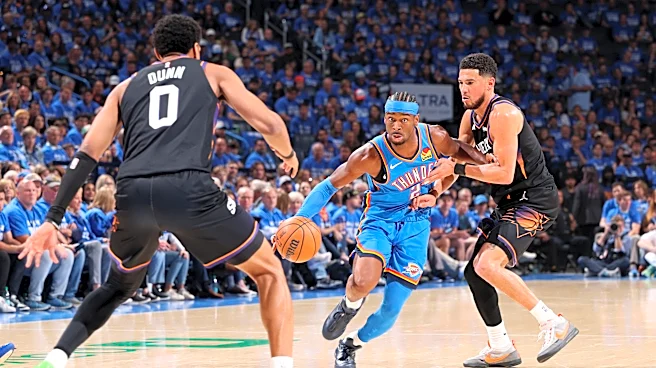
Then, the defensive trend was completely different in the second quarter: Jordan Ott left Ryan Dunn on him during the last four minutes of SGA’s time on the floor. And I understand it, and I found the choice interesting — Dunn is bigger, stronger, less quick than a guard, but mobile and long enough not to fall too far behind.
In reality, it’s just a variation of what was done in Q1: Dunn pressures high, Shai obviously beats him with speed, but Brooks is there to help and force him to stop his dribble, Oso is also there to provide support and contest if SGA gets through. Dunn is positioned well enough to contest this midrange shot once again.
In Q3 the team continued with the same game plan but Shai played differently, more intelligently: by forcing less on the tough midrange shots that didn’t seem to fall during this game (1-for-7), by drawing a few fouls, by playing with the aggressiveness imposed by the Suns. But also by playing more collectively — he understood it, and it was surely studied at halftime, but Shai took advantage of the excessive help to be more of a distributor (4 assists in Q3). He finishes the game with catastrophic percentages, but with offensive rhythm control worthy of a future two-time MVP.
This brings us back to what I said earlier: by focusing too much on one thing, you often end up forgetting the rest. It wasn’t the big three’s points that created the gap, but the baskets from players like Wallace (6 points), Mitchell and Joe (9 points each), or even Dort (8points). In itself, this tactical setup was good, but it was too focused on a single player. So, for the next games, why not let him finish a bit more at the rim instead of feeding his teammates? I think a middle ground can be found before the end of this series to limit the Thunder’s entire offense.