

Baseball produces plenty of Hall of Famers whose glory and stat lines fade with time. Sayings, however, tend to stick around, passed down from generation to generation like prized baseball cards.
“Keep your eye on the ball!”
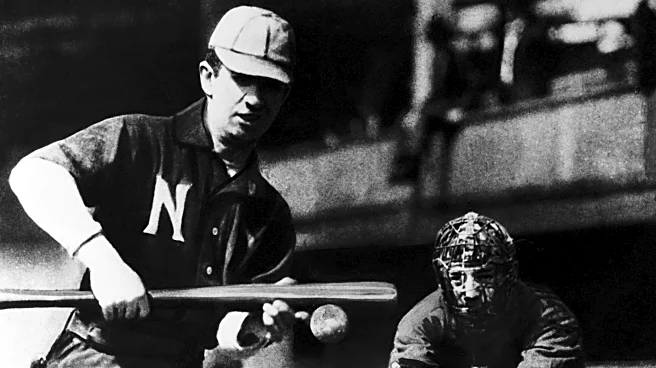
Most fans recognize the phrase. Far fewer know it came from Willie Keeler, a Hall of Fame outfielder and third baseman whose career helped shape how hitting itself was understood long before power numbers or analytics dominated the sport. More than a century later, players still
hear the same advice Willie preached shouted from big league stands and youth dugouts alike.
Keeler, one of the earliest stars in New York baseball history, would have celebrated his 154th birthday today.
William Henry Keeler
Born: March 3, 1872 (Brooklyn, NY)
Died: January 1, 1923 (Brooklyn, NY)
Yankees Tenure: 1903–09
Even by Deadball Era standards, Keeler did not look like a baseball legend. Listed at just 5-foot-4 and 140 pounds, he remains one of the smallest everyday players in major league history.
For comparison:
• Eddie Gaedel: 3-foot-7 (shortest player ever to appear in an MLB game)
• Phil Rizzuto: 5-foot-6, 150 pounds
• José Altuve: 5-foot-6, 166 pounds
Keeler was undersized even among baseball’s most famous undersized players.
But while he might have been small, he carried a remarkably big stick, literally. Keeler’s bat reportedly weighed up to 46 ounces. For context, Babe Ruth’s famous bat model weighed about 44.6 ounces. The image of one of the smallest players in baseball history swinging a heavier bat than the Sultan of Swat tells you almost everything you need to know about both the era and Keeler himself. It was simply a different game.
If legend serves correctly, Willie Keeler would have produced one of the most impressive spray charts in baseball history. He approached hitting as geometry rather than force, spraying line drives across the field, dropping bunts with intention, and treating each at-bat like a problem waiting to be solved.
His philosophy eventually became baseball scripture:
“Hit ’em where they ain’t.”
The results backed it up. Keeler finished with a .341 career batting average, 2,932 hits, and 16 seasons batting over .300. Of his 33 career home runs, only three cleared the fence, with most coming the old-fashioned way. Speed, bat control, and precision defined his success. When he retired in 1910, only Cap Anson had collected more hits in major league history.
That success eventually landed Keeler in the Baseball Writers’ Association of America’s early Hall of Fame voting, becoming part of the fourth induction class in 1939, one of the first groups honored before the Hall even had permanent walls.
Keeler’s most enduring accomplishment arrived in 1897, when he recorded a hit in 44 consecutive games for the old National League iteration of the Baltimore Orioles, made famous by future New York Giants manager John McGraw. For decades, the record felt untouchable. Travel was harsher, playing surfaces inconsistent, and roster stability nearly nonexistent during the Deadball Era. Sustained offensive performance was incredibly difficult, which made Keeler’s streak feel permanent.
It lasted 44 years.
Then, in 1941, Joe DiMaggio stepped to the plate at Yankee Stadium and changed baseball history. DiMaggio’s famous 56-game hitting streak truly began when he surpassed Keeler’s mark at 45 games. While DiMaggio’s run became immortal, it required chasing down a record that had already survived as many years as it was in games.
Entering the upcoming MLB season, the roll call of longest single-season hitting streaks in major league history remains:
• Joe DiMaggio — 56 games (1941)
• Pete Rose — 44 games (1978)
• Willie Keeler — 44 games (1897)
More than 125 years later, Keeler is still tied for the second-longest streak in major league history. That alone speaks to how extraordinary his consistency truly was. The longest active streak belongs to Luis Arraez, who entering the 2026 season carries a 15-game hitting streak. Arraez would need to hit safely for roughly a full calendar month to surpass Keeler and Rose.
Keeler joined the franchise during its transition from the disbanded, early-American League Baltimore Orioles into the New York Highlanders era, before the team officially adopted the Yankees name. Along with Pittsburgh’s Jack Chesbro, he was one of the more higher-profile names to join the nascent squad.
After batting .313 during his inaugural campaign with the Highlanders, his strongest season for the franchise came in 1904, when he hit .343 with a 147 OPS+ and remained among the league’s most reliable offensive players despite entering his thirties — which was considered quite old by the standards of the time. By the time his career ended in 1910, baseball itself was evolving toward a new era, leaving Keeler as a bridge between 19th-century baseball and the modern game that followed.
“Hit ’em where they ain’t” can sound almost humorous today, especially in an age of defensive positioning models and advanced analytics. Yet the principle has never changed. Baseball still rewards awareness, adjustment, and exploiting space on the field, whenever possible. Keeler simply explained the idea generations before technology tried to measure it.
That may ultimately be his greatest legacy. Not just a batting average or a streak, but a philosophy that survived every era that followed. Long before Joe DiMaggio’s elegance or Yogi Berra’s accidental wisdom, Keeler was offering baseball truths simple enough to last forever. In a way, he was Joe and Yogi before there was Joe and Yogi. Long after numbers evolve and records fall, the advice still holds true.
Happy birthday, Willie Keeler.
See more of the “Yankees Birthday of the Day” series here.