

The current negotiations over the next MLB collective bargaining agreement have captured the attention of many, with the salary cap arguments earning the most headlines. A lockout is likely after December 1. But how did we end up here? This series will look at a timeline of labor organizing in professional baseball, beginning in the 1800s and ending in the present day. It is almost 150 years of history, so not every detail is included, but the links provided are both references and a wealth of knowledge
for those interested in learning more.
Read part 1.
January 1966 – As previously mentioned, Judge Robert Cannon is recommended by the MLBPA’s search committee as the candidate to present to players for full-time executive director. However, he does not want to move to New York, and he wants to be compensated for the money he will lose from his judicial pension.
The league and owners are invested enough in Cannon that John Galbreath, the Pirates’ owner, offers to compensate Cannon for his lost income. It is not enough, and the relationship between the MLBPA and Cannon sours.
With their preferred candidate out of the running, the search committee turns to Marvin Miller. Miller, you might recall, is an economist and labor organizer who has worked with multiple unions previously. He agrees to take the job, pending a vote from the players.
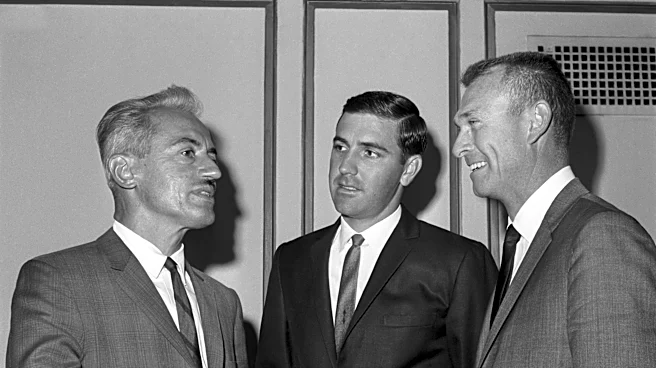
February/March 1966 – As Spring Training 1966 starts, Sandy Koufax and Don Drysdale hold out for better contracts from Walter O’Malley, Buzzie Bavasi, and the Los Angeles Dodgers. It will take too long to explain. Let me sum up. Bavasi refuses to give either player the raise they requested, pitting each against the other in salary negotiations. Ginger Drysdale, Don’s wife, suggests they negotiate as a single unit and engage representation. The players come together to ask for $1,000,000 over three years between the two of them, and employ J. William Hayes as their agent. Hayes is an entertainment lawyer. The Dodgers refuse to speak to Hayes, but do initially negotiate with Koufax and Drysdale as a unit. When negotiations do not get any traction, the players call the team’s bluff and do not show up for Spring Training. Instead, they sign on to a movie.
Hayes discovers a California law stemming from Olivia de Havilland’s lawsuit against Warner Bros. regarding personal service contracts. The law prohibits these contracts from lasting longer than seven years, and Hayes believes he can use it to challenge the reserve clause. O’Malley finds out and starts negotiating in earnest with his two pitchers. Koufax receives a contract for $125,000, and Drysdale receives a contract for $110,000. Alas, they do not become movie stars. Their holdout is the first domino in a chain of events lasting into the 1980s.
April 11, 1966 – During Spring Training 1966, Marvin Miller is also busy. He meets with teams in the Cactus League first, and it does not go terribly well. Even pointing out that their pension plan (which had ignited their latest unionization efforts) is depreciating in value due to inflation did not inspire a positive response. Players simply do not trust Miller, having bought into the owners’ narrative that they are lucky to play a game for a living and that a union guy is dangerous to them. In the Cactus League, he loses the player vote 102 to 17, likely in part because managers ran the votes. However, things are better for him in the Grapefruit League, and he wins the overall vote 489 to 136. Then his problems begin.
April – June 1966 – Somehow, Judge Cannon has returned. If you recall, he is the legal advisor for the MLBPA at this point, until Miller starts in his role. As such, he is in charge of drafting Miller’s contract. Unfortunately for Miller, Cannon is still salty about losing out on the executive director job that he decided he did not want. The owners are still working with Cannon as the MLBPA’s legal counsel, and together they are happy to make life difficult for the first full-time players’ representative.
In his talks with the players, Miller has agreed to a contract that would begin on July 1, 1966, and would last for five years. The original contract Cannon drafts is for two years and starts on January 1, 1967. Miller’s salary is $50,000/year, and he has an annual expense account of $20,000. However, Cannon also sneaks in a morals clause that allows for three days’ notice before termination for public ridicule or “moral turpitude.” There are no specifics as to what this might entail. Miller pushes back and insists on detailed clauses about how to use his expense account and what violations of the morals clause could consist of. He ultimately signs a contract for two and a half years.
And yet, getting paid will be tricky. The MLBPA’s assets consist of about $5700 in mid-1966. Plus maybe a filing cabinet? When Cannon was considered a sure thing, the owners were willing to continue their previous funding arrangement. They had been putting money in the MLBPA’s account, despite the fact that this is incredibly illegal and a violation of the Taft-Hartley Act. Actually, what they have been doing is diverting players’ pension money to the MLBPA. Now that Miller is the executive director, the owners are extremely concerned about the Taft-Hartley Act. They obviously cannot fund MLBPA anymore, as it would be illegal and unethical. Unfortunately for the owners, the Taft-Hartley Act applies to businesses and unions. By citing this law in this situation, the owners are admitting that they are a business, creating interstate commerce, and that the MLBPA is a union. Oops.
June 6, 1966 – One reason that the start date of Miller’s contract is a point of contention is that the players’ pension agreement will expire before the 1967 start date that Cannon proposed. If he is not working for them, he cannot negotiate on their behalf. When he keeps his start date of July 1, 1966, the owners schedule a meeting about the pension plan for June 6. The owners say Miller cannot join the meeting; Miller says the players will not attend if he cannot attend. Miller attends. The owners hand Miller and the player representatives a pension plan that they have drawn up by themselves, and say they are going to announce it at a forthcoming press conference. After overcoming his initial shock, Miller points out that this is another violation of federal labor laws. The commissioner, William Eckert, backs off after this. He cancels the press conference and schedules meetings for actual negotiations instead.
September 1966 – Funding is still a problem for Miller and the MLBPA after Miller starts his contract. Player dues are $50 annually, which is nowhere near enough money to run the MLBPA. Money no longer comes from the owners. The owners have been hoping that Miller will give up and go home due to the obstacles he is facing. However, Miller creates a group licensing program that allowed the MLBPA to monetize the players’ names, images, and likenesses. They sign a licensing deal with Coca-Cola, which uses player images on the bottom of bottle caps. When owners protest, Coca-Cola just airbrushes any team-related images off the caps. This campaign brings in $60,000 in 1966.
December 1966 – The pension problem is back. You may recall that previous union iterations had negotiated for percentages of television revenue from the World Series, and later the All-Star Game to be directed to player pensions. However, owners kept players in the dark by refusing to show them the television contracts. Going forward, owners want to eliminate the percentage math because the value of television rights, and subsequently its revenue, is rapidly increasing. They propose to add a fixed amount of four million dollars to the pension accounts annually. When Miller asks to see the television contracts, the owners refuse.
Miller wants to eliminate the players’ contribution to their pension. They currently pay $344 annually. He suggests that this money be directed instead to the MLBPA as dues, and the $50 dues be eliminated. The owners hate it. However, the plot thickens when Miller discovers that the owners have illegally distributed pension funds among themselves. He uses this to move negotiations forward and persuade the owners to accept his terms. In return, he accepts the fixed pension contribution from the owners. The players see an increase in their paychecks, and the MLBPA is funded through the group licensing program and increased dues.
In addition, Miller has won the goodwill of the players, who rallied behind him during the pension negotiations. The MLBPA has secured independent funding and consolidated support behind a player-friendly leader.