

With Charlie Hurley and Ambrose Fogarty absent on international duty for Eire, this fixture against Plymouth Argyle had an awkward look to it coming into the game.
Plymouth were in tenth place in the Second Division, but were only a point behind Sunderland. Their record away from Home Park was very credible too, with seven points from the same number of away games, including three victories and a draw. Sunderland were fresh from an away victory against Preston North End the previous week, which had
taken them up to fourth in the table, and there was just beginning to be a feeling that this could be the season the club returned to the top tier.
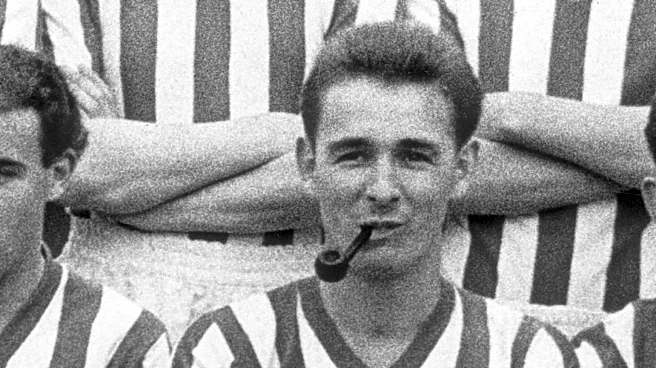
Brian Clough had joined the club for a record fee in the close season and was on nine goals coming into this game. Harry Hooper was returning to the right wing after injury, allowing George Herd to resume at inside-right.

Hurley’s absence was going to be filled by twenty-one-year-old Dickie Rooks. The popular local lad had made his debut towards the end of the previous season. This would be his sixth game for the first team.
Coming in at inside-left for Ambrose Fogarty was another promising youngster, Willie McPheat. The nineteen-year-old six-footer was a very different physical specimen to the diminutive Fogarty, but had many admirers within the club and the fanbase, and he was already being heralded as a Scottish international of the future.
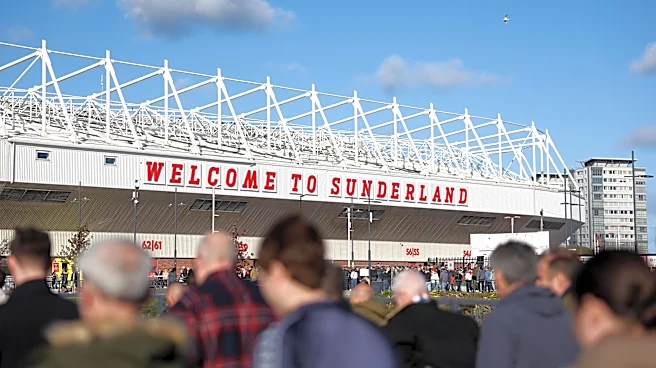
Over thirty thousand expectant fans were inside Roker Park as the game got off to a rip-roaring start.
Within the first minute, goalkeeper McLaren fumbled the ball under pressure from Clough, only to see the forwards’ attempt just shave the post, with the goal at his mercy.
Hooper and Herd on the right-hand side appeared delighted to be able to renew their partnership and, with some excellent prompting and passes from Stan Anderson at right-half, they tormented the Plymouth defence for the duration of this game.

Plymouth were really struggling to get a foothold in the game. It seemed only a matter of time before Sunderland would score. In nine minutes, that goal came, and what a goal it was. Full-back Cecil Irwin won the ball and angled a long pass to Hooper. He cut in from his wing, beating two defenders before rattling a rising shot past MacLaren to open the scoring.
Thirteen minutes later, Brian Clough opened his account for the day. Skipper Stan Anderson found Clough with a clever pass to the edge of the box. He dummied the ball and spun, completely outfoxing his marker, Fincham, before smashing the ball into the net.
Just before half-time, Clough struck again. The Hooper/Herd combination swept down the right, and Hooper arrowed a cross that Clough directed past McLaren to make it three goals to nil.
The half-time break was shortened to facilitate Plymouth making their train connection at Durham. The shortened break did not change the pattern of the game, however.
In fifty-four minutes, Clough completed his hat-trick. It was typical of Clough to score three goals that were all very different, as Hooper and Herd were the providers again. This time, it was Herd who directed a low cross towards Clough at the far post. Clough lost his footing in the melee for the ball but managed to hook it into the back of the net from his prone position to make the score four goals to nil.
Sunderland’s final goal of the game came on sixty-six minutes. George Herd, who probably deserved a goal for his performance, rocketed a shot from the edge of the box that was heading into the net, just under the bar. Bryce Fulton made an instinctive reaction save, reaching up to tip the ball over the bar. It was as good as any save an opposition goalkeeper had made at Roker Park that season. The problem was that he was a full-back, and the referee awarded a penalty!
Hooper made no mistake, burying the penna’ into the net for his second of the game.
Plymouth gamely tried to add a bit of respectability to the score and forced Peter Wakeham into his first real save of the game in the last fifteen minutes.
The victory moved Sunderland up to third in the table, which was actually where they finished the season, consigned to another term in the second tier as Leyton Orient were a point better off at the end of the campaign and joined champions Liverpool in Division One.
Apart from Clough, Herd and Hooper, Willie McPheat earned plaudits for his performance on a heavy pitch. Rooks, once he got over his nerves, ensured George Kirby got little more than a sniff of a chance.

Stan Anderson also played very well, though it was, in essence, a very good team performance as Alan Brown’s rebuild was starting to bear fruit.
Alf Greenly, writing in the Journal, championed Clough’s return to the England set-up in time for the World Cup in Chile. He wrote: “His play over 90 minutes stamps him as a footballer of world class. He is without exception the most unselfish centre-forward I have ever seen.”
Alan Sleeman, writing in the Sunday Sun, reported on the success of the Herd/Hooper partnership: “There have been doubters who questioned if Alan Brown’s H-Plan would ever work effectively. I know I was one. I felt two such ball players could never hit it off in a combination.”
Sleeman also added a classic line on Jim McNab, of whom he said: “McNab put the perpetual into motion and smashed into smithereens the danger from goal-getter Wilf Carter!”
Division Two
Date: 28.10.1961
Venue: Roker Park
Attendance: 30,023
Sunderland 5 – 0 Plymouth Argyle
Goal scorers: Clough 22, 43, 54 minutes; Hooper 9 and 66 minutes (pen).
Sunderland: Wakeham; Irwin; Ashurst; Anderson; Rooks; McNab; Hooper; Herd; Clough; McPheat; Overfield.
Plymouth Argyle: MacLaren; Robertson; Fulton; Williams; Fincham; Newman; Jackson; Carter; Kirby; Brown; Maloy.