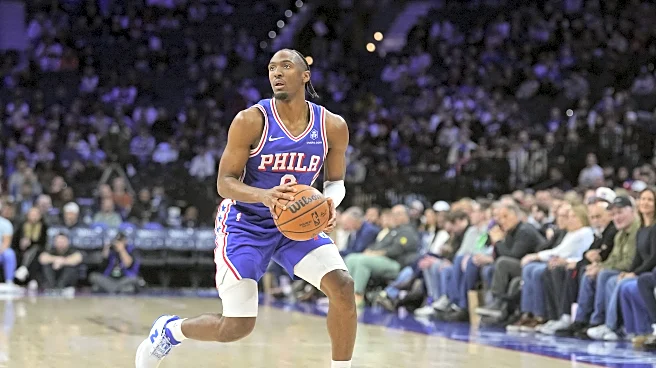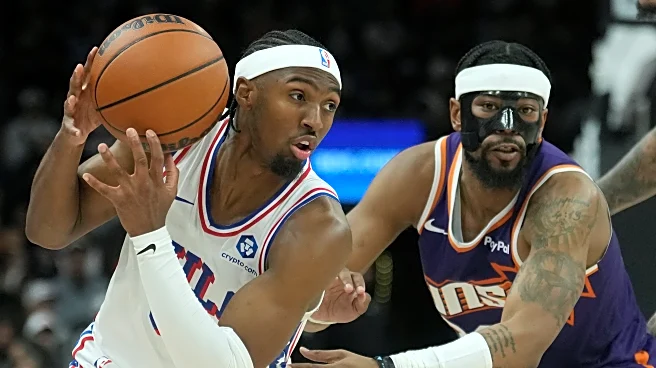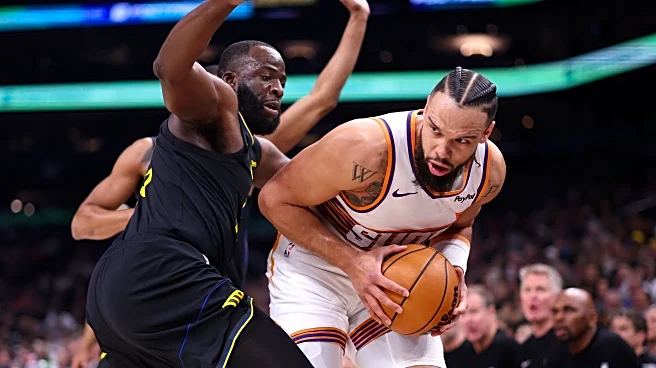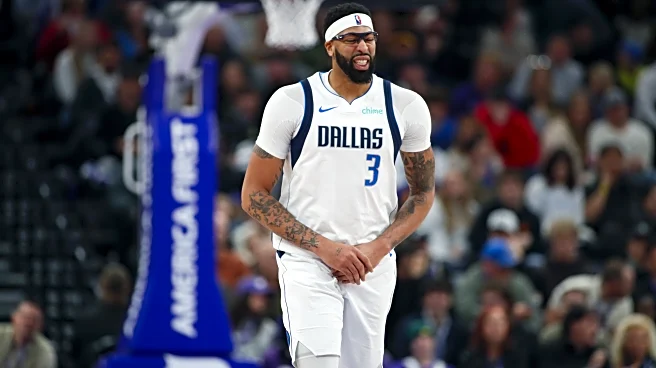
The Dallas Mavericks (12-23) looked lost Thursday in a 123-108 loss to the Philadelphia 76ers (18-14) at American Airlines Center. The offense was sluggish. The defense was porous. No one in blue could stay in front of Garland’s own Tyrese Maxey or rookie VJ Edgecombe, and Joel Embiid reaped some of the benefits of a defense that got sucked in on drive after drive to the hoop.
After shooting 65% from the field in the first quarter, the Mavericks shot just 38% in the final three. It was another horrible
outing from beyond the 3-point arc, as Dallas put in just 6-of-28 (21.4%) from deep in the loss. There was no firepower and no will to win in this bunch, as 2026 started with a thud.
Here are six more stats that illustrate the Mavericks’ futility on Thursday against the 76ers.
1: First-quarter 3-pointers attempted by the Mavericks
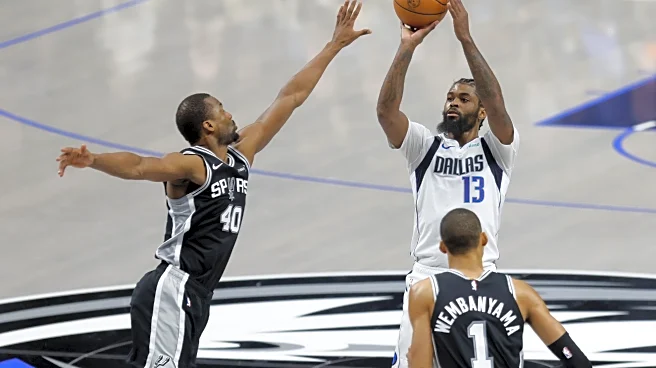
One is the loneliest number that you’ll ever do, and that’s how many 3-pointers the Mavericks attempted (and made) in the first quarter. Klay Thompson raised up and hit one from the right wing to give Dallas a 29-22 lead late in the frame. Yes, that’s correct — the Mavs went a full 10:13 to open an NBA game without shooting a single, solitary 3-pointer.
Ignoring the most important offensive weapon in the league for that long can only work for you if you’re dominating the opposition on the inside, and, if only for a quarter, Dallas was getting it done inside against Embiid and the Philadelphia front line. The Mavericks shot 70% on paint attempts in the first quarter on their way to a 33-27 lead after one. They outscored the 76ers 26-16 in the paint, but forgot about the 3-point line in the process.
This team simply cannot engineer the right shots on offense, whether through exploiting matchups or through the Flow system. The math would catch up with the Mavs as the game wore on, though.
17-2: 76ers’ run early in the second quarter
As in, the first few minutes of the second quarter. After Thompson drove through the lane on a finger-roll assisted by Brandon Williams for the first score of the second, the 76ers embarked on a 17-2 run over the next 3:27. Embiid, Paul George and Maxey abused a spongey Dallas defense to get whatever they wanted going to the bucket early in the frame.
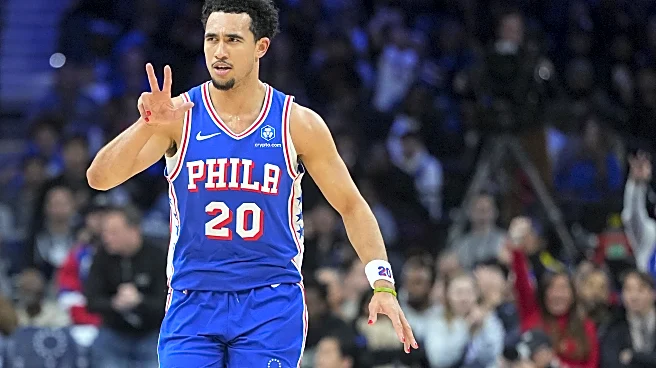
Maxey raised up for his second 3-ball of the game with 8:48 left in the second to give the 76ers a 40-37 lead. A minute later, Maxey found George occupying a wide open cutting lane down the heart of the lane for a vicious slam that put Philadelphia up 44-37 and forced a timeout from Mavs head coach Jason Kidd.
The Mavs scored just 24 points in the second quarter, as the quality of looks dove off a cliff and Dallas connected on just 2-of-9 from 3-point range. And on the other end, Philly poured in 41 points in the second as the Mavs’ repeated defensive lapses let the 76ers take over.
Maxey led all scorers with 16 points in the first half on 6-of-11 shooting, to go along with seven assists. George and Embiid, who did not play in the teams’ last meeting, a 121-114 Mavericks’ loss on Dec. 20, combined for 26 more in the first half on Thursday. Philadelphia took a 68-57 lead into the break.
22: Mavericks’ paint points in second and third quarters
As noted above, Dallas outscored the 76ers 26-16 in the paint in the first two quarters. They scored just 22 in the paint in the second and third quarters combined. Calling the Mavs’ offensive performance in the middle two quarters “lackluster” would be kind. Dallas shot just 19-of-47 (40.4%) overall in the second and third, when everything was one-on-one on offense. Ball movement was optional. The Mavs seemed almost disinterested in the task at hand at times. The viewing audience shares the sentiment.
There were no runs for either side in the third quarter. Philadelphia’s offense wasn’t near as sizzling as it was in the second, leaving an opening for the Mavs to work their way back into things, but Dallas showed no such gumption.
7: Naji Marshall’s early-fourth quarter scoring spurt
Naji Marshall showed a little of that much-needed gumption early in the fourth quarter as the Mavericks worked the 76ers’ lead down to four points with nine minutes left to play. Marshall scored seven points in the first three minutes of the fourth, scoring all three of his early field goals in the paint after scoring just two points in the first three quarters of play.
Marshall’s 3-point play on a tough drive brought Dallas to within 94-90 with 11:01 left in the game, and his slashing bucket two minutes later made it 98-94, but the Mavs couldn’t push past that four-point barrier. Philly responded with a little 12-4 spurt after that bucket to push the lead back up to 12 midway through the fourth.
Former Maverick Quinten Grimes played the two-man game perfectly to find Maxey wide open for a deep 3-pointer with four minutes left to play that gave Philadelphia its largest lead of the game, 115-101, and that was all she wrote.
79: Combined scoring from Embiid, Edgecombe and Maxey
The Mavericks’ defensive struggle against the 76ers started along the perimeter, and then worked its way inside as the game wore on. There is simply no guard combination on this Dallas roster that can keep up with a tandem like Maxey and Edgecombe. When they start to get whatever they want, either on ball reversals or drives through the lane, the Mavericks’ defense has to compensate. That leaves someone like Embiid consistently facing one defender, and he routinely shredded Davis and Daniel Gafford in one-on-one situations.
Maxey led all scorers with 34 points in the win and dished 10 assists for Philly. Edgecombe contributed 23 points and five rebounds, and Embiid chipped in 22 and six assists.
0: Second-half points scored by Cooper Flagg
Cooper Flagg was the forgotten man for the Mavericks in the second half. He only got up four shots after leading the Mavs with 12 points on 5-of-11 shooting in the first half.
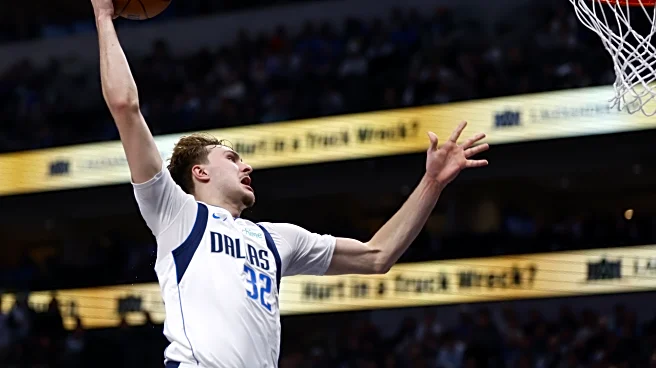
Flagg soared for three highlight dunks in the first half. When the offense devolved into a strained one-on-one spasm in the middle two quarters, you’d think Flagg would be one of the few Mavericks who could at least manufacture a bucket or two in that kind of game. It was a combination of poor ball movement in his direction and his own passivity as the game wore on that soured Flagg’s stat line in what turned into an ugly loss.