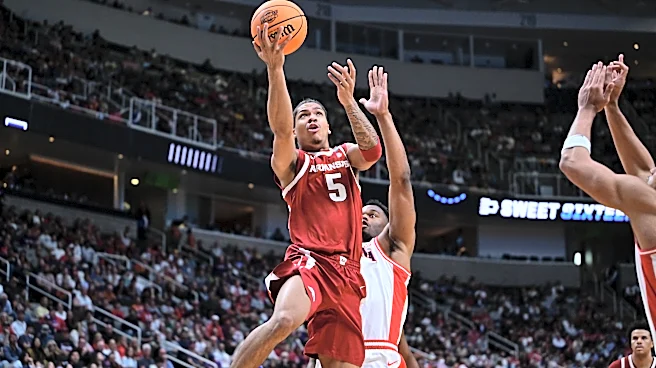



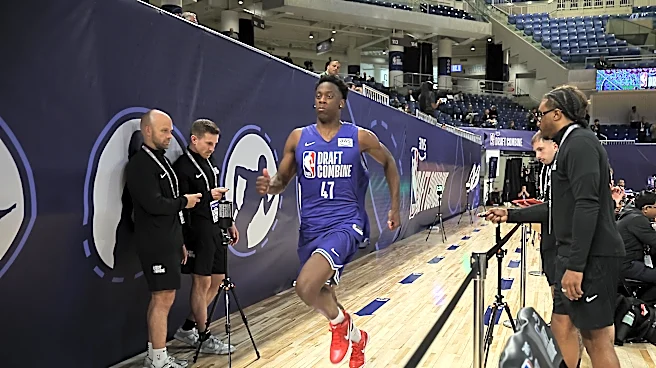

Darius Acuff Jr. of the Arkansas Razorbacks is perhaps the favorite small-ish point guard on the 2026 NBA Draftboard. Acuff’s offensive case speaks loudly enough to justify high-end lottery interest, but the questions surrounding his defensive effort and shot profile are real enough to split many evaluators. He was Arkansas’ engine as a freshman, scoring efficiently, passing at high volume and delivering some of the biggest late-season performances in the country. The question surrounding Acuff is not
whether he can score. It is whether a 6-foot-2 guard can pressure the rim enough, and whether he has the defensive buy-in and decision balance to be more than a regular-season shot-maker.
The basics
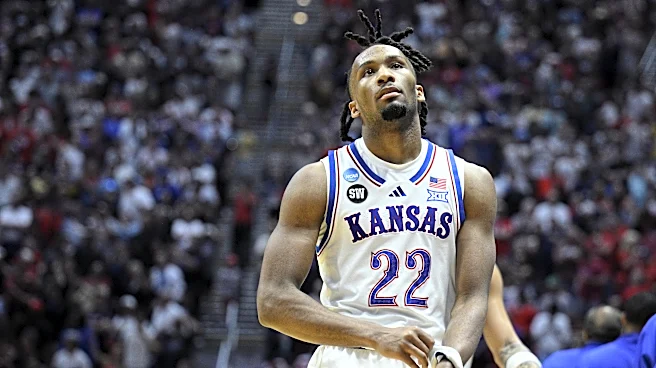
Acuff bolstered his standing in draft circles as the 2025-26 season progressed, becoming more of a riser during the SEC Tournament and the Razorbacks’ three NCAA Tournament games. He averaged 23.5 points, leading the conference, in 35.1 minutes per game in his only college season. He shot the lights out from 3-point range, at 44% on the year. That shooting puts him firmly above every point guard on the board save for Kansas’ Darryn Peterson and perhaps Illinois’ Keaton Wagler.
He is a pure scorer more than anything else at this point.
Acuff measured 6-foot-2 without shoes and about 186 pounds with a 6-foot-6.5 wingspan at the NBA Draft Combine, which gives him better length than the average small guard but still places him below the size threshold many teams now prefer for primary ball handlers. His athletic profile is more compact power, pace manipulation, and change-of-speed craft than overwhelming vertical pop. He can get a shoulder past defenders, stop quickly into pull-ups, and play through some contact because of his strength and low center of gravity, but he is not the type of guard who consistently erases mistakes with elite downhill burst.
That distinction matters. Acuff’s combine agility and sprint numbers support a functional mover, not a nuclear athlete, so his NBA separation has to come from handle, footwork, screen craft, and shooting gravity. The long arms give teams a reason to believe the defensive outcome is not hopeless, but the tape concerns are less about tools than engagement, screen navigation, and possession-to-possession awareness.
Strengths
Acuff’s hallmark, the thing that has brought him near the top of draft boards everywhere, is his shot creation with shooting touch. He can make pull-ups from deep, punish defenders who go under screens and shoot off balance without looking rushed. The free-throw and 3-point indicators both back up the touch, and his production suggests the jumper is not just a workout skill.
His second strength is advantage passing out of scoring pressure. He averaged 6.4 assists per game at Arkansas. He is not merely a microwave scorer — his assist volume, low turnover rate for his usage and comfort throwing lobs or hit-ahead passes give him a path to lead-guard status as a pro. When he gets two defenders involved, he can find the release valve quickly enough to punish help.
He also has competitive shot-making confidence. Acuff does not shrink from big moments, and for a smaller guard that matters because his offensive value has to be high-end. The pitch is that he can become the kind of guard who bends defensive coverages with range, tempo, and touch even when the initial action is contained.
Weaknesses
Acuff’s defensive presence is the headline risk associated with drafting him. Multiple scouting reports frame him as a targetable NBA defender because of size, inconsistent effort, poor screen navigation and shaky off-ball awareness. He doesn’t need to become a bona fide stopper, but he does need to compete hard enough to avoid being hunted off the floor. The current concern is that the defensive problems are not only physical; they include attention, assignment discipline and recovery effort.
The offensive translation also has a narrower runway than the raw numbers suggest. Acuff’s size means he must be exceptionally efficient as a creator, and several evaluators question whether he creates enough deep paint touches against length. If he settles for too many floaters and pull-ups, NBA teams may live with the highlights and win the possession math. His passing is good, but because he is scorer-first, teams will want to know whether he can organize an offense when the first scoring read is removed.
There is also a roster-building question. A team drafting Acuff is probably committing to building around his on-ball value while protecting him defensively. That is doable if the offense is special; it is dangerous if he is merely good.
Fit with the Mavericks
First of all, if the Mavericks stay at the No. 9 pick, Acuff will likely be gone, rendering the fit with the team moot, but anything can happen. The Mavs are already desperately small at the guard position. In an ideal world, they would have a chance at a bigger guard, but beggars can’t be choosers, of course.
He would immediately jump every point guard on the roster in terms of gravity, scoring punch and creation, save Kyrie Irving. Getting a hold of Acuff would make an interesting case for seeing what the Mavericks may be able to get in exchange for Irving, but of course, if they were going to trade Irving, 2026 draft picks would be the team’s primary target.
It’s fascinating and a little sad to say that, as desperately as the Mavericks need help at guard, Acuff and smaller point guards like him may not ultimately represent the best fit.
NBA Comparison
Some are saying Acuff reminds them of Stephon Marbury. Neither player is big or explosive, but they’re shifty and physical when attacking the rim. Both Acuff and Marbury initiate and take contact on drives. They step into 3-pointers and mid-range jumpers with similar mechanics behind their shots.
Others have said Acuff is similar to current Utah Jazz point guard Keyonte George, who broke out at the start of his third NBA season before injuries/unethical tanking saw his minutes decline later in the year. I’ve also heard comparisons to Oklahoma City Thunder guard Ajay Mitchell, who more than doubled his scoring from his rookie year (6.5 points) to his second year (13.6) in the NBA.