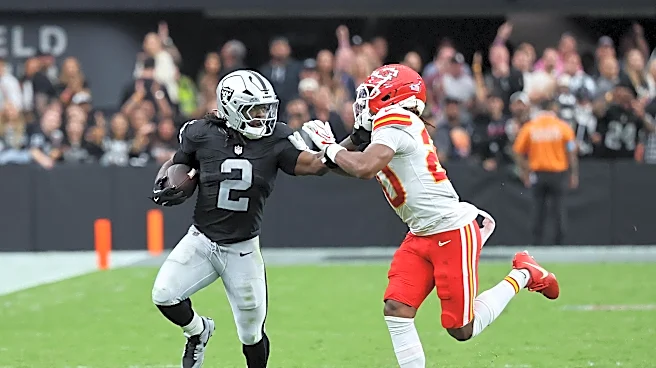


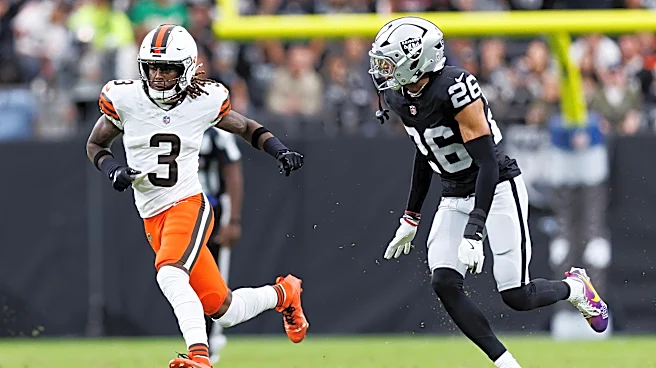
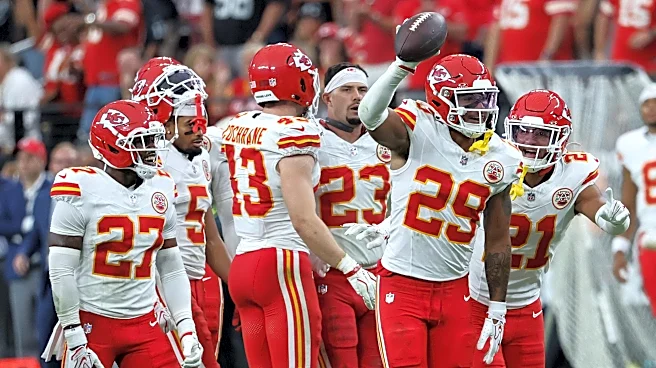
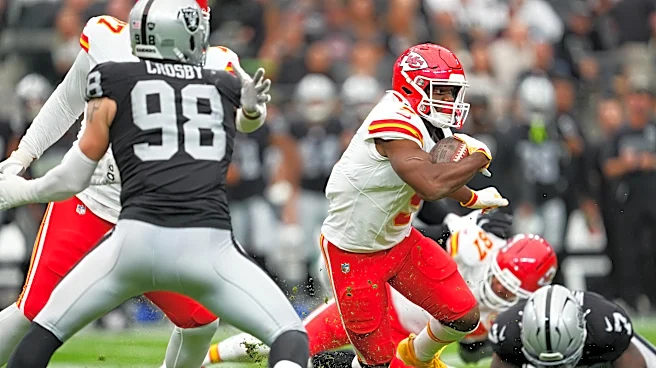
The Las Vegas Raiders didn’t run the ball efficiently against the Kansas City Chiefs. Before we dive into what they did wrong, credit must be given where credit is due. Peter Woods, Felix Anudike-Uzomah, Chris Jones and Khyiris Tonga did a helluva job giving the Raiders’ offensive line absolute fits in their run defense.
Throughout the entire game, the Chiefs defensive line initiated contact and brought the fight to the Raiders’ run blockers. Woods is a large man who plays angry; moving him continuously
was a problem, even with duos (double teams). In fact, the Chiefs’ defensive line did well at defeating double teams and combo blocks. When they weren’t outright defeating those blocks, they disrupted pathways for Raiders linemen to climb to the second level and block linebackers.
On one particular play, Chris Jones maintained 2-gap integrity by keeping outside leverage, temporarily opening the inside gap before defeating Caleb Rogers’ blocking attempt and forcing Mike Washington Jr. back toward his help. What looked like a play where the designed hole was open and a cutback lane formed ended up being a run stuff for the defense.
Spencer Burford has been a factor in the run game; when he succeeds, the run game is a beautiful thing to watch. However, when he is getting pancaked by a defensive tackle on the line of scrimmage, there is no hope. Burford got sat on his butt so fast by the man he was trying to block that it took a great reaction by Washington to avoid him and bounce the run outside to gain positive yards.
Klint Kubiak’s scheme could use some tweaks
When Kubiak told reporters he needs to scheme the run game better, he was spot on. Despite utilizing 12/13 personnel the most in the league, he’s not receiving the results he seeks. Part of it is actually the lack of creativity, surprising considering Kubiak’s chalkboard mastery of the passing attack. More often than not, the offensive player going in motion is leading the defense directly to the ball.
Lacking any consistent type of misdirection may work when you have a numbers advantage on the play side, or superior size and push upfront from the offensive line. But when enough weeks of film are available, tendencies begin to display themselves as they are formed. Like running inside zone on first downs, or running to the edges on second downs when not passing. There haven’t been many, if any, endarounds, fly sweeps, or counter plays. Not a lot of draws, nor many running back screens.
It was definitely something Chiefs defensive coordinator Steve Spagnuolo picked up on when studying film. How do we know this? The Chiefs defense made a concentrated effort to sell out against the run game. Whenever a receiver or tight end went in motion, the linebackers shifted over as soon as the offensive player crossed behind the center. A safety rolled into the box to overload a side of the line of scrimmage by creating a numbers advantage.
Figuring out a way to be less obvious with the run game is vital to getting it going again. The Raiders offensive line isn’t bad, and according to nearly every analytics site out there, they are a top-ten unit. But two things can be equally true: the run-block win rate can be ranked high, but when the defense brings extra heat, the unblocked defender is killing the effectiveness of the run game.
Not getting a push
Without being privileged to sit inside the offensive line room, it’s hard to speak on what exactly the blocking scheme is. Breaking down film, we have to slow it down to about 1/2 speed or lower to watch the line go through their assignments. Free agent Center, Tyler Linderbaum is the best at engaging in a duo block and then climbing to the second level. From time to time, Burford will pull and lead the running back through the hole.
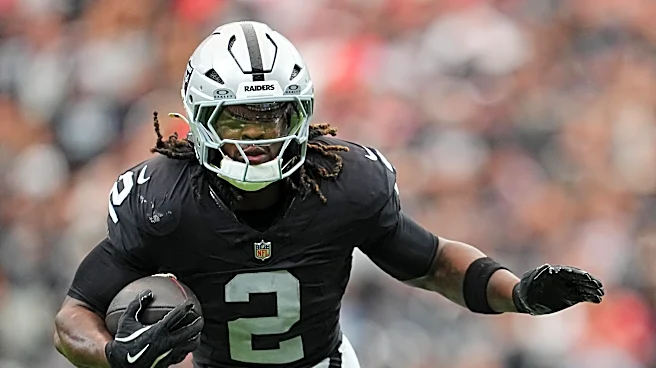
No push is most noticeable in short-yardage-to-go situations. The tush push run by Connor Heyward has been executed flawlessly; however, counting on the run from longer than three yards will make you hang your head. The Raiders run into the highest percentage of stacked boxes and consequently running back Ashton Jeanty has been hit in the backfield at an alarming rate.
Offensive linemen getting pushed into the backfield disrupts the scheme as a whole, not just the running back. In the Chiefs game alone, there were quite a few times when pulling and motioning blockers were not able to get to their assignments because they were disrupted by a fellow lineman getting blown up and pushed into their path.
Lacking vision, no trust and not enough burst
Any NFL running back worth a salt would admonish being compared to “T-rich,” Trent Richardson, who was ‘T-rash” when it came to field vision. Speed in the NFL is at a completely different level; players simply move faster than most can anticipate. Holes open and close in a fraction of a second, but that is on the running back to be able to see them, make quick decisions to change course and burst through them.
Which brings us to a lack of trust in the blocking. Either the running backs don’t see the hole or don’t think they can make it through in time. Whatever the case, some holes aren’t being run through. This is frustrating to watch and a shame. Raiders’ outside runs are being negatively impacted by runners looking for cutbacks instead of focusing on hitting holes. Not being able to burst through open gaps and creases is exactly why the running game has been struggling.