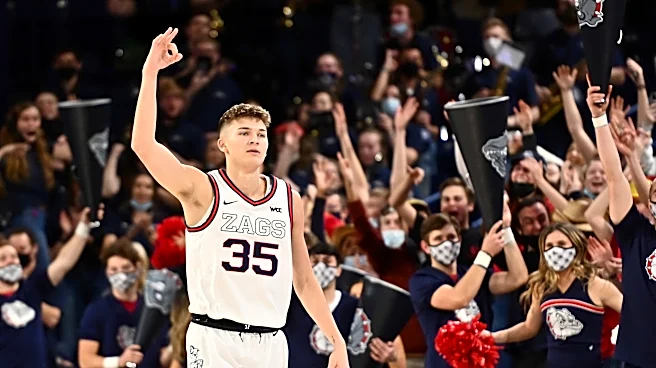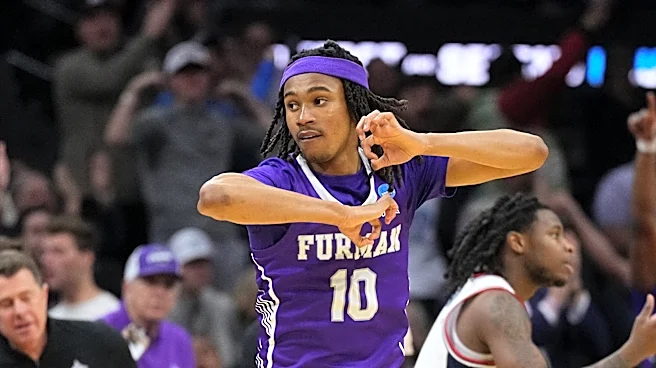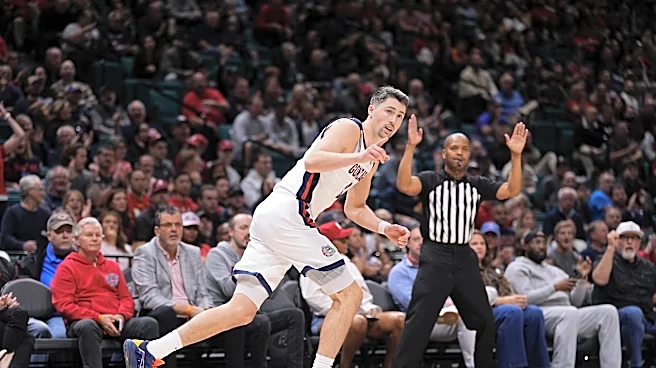

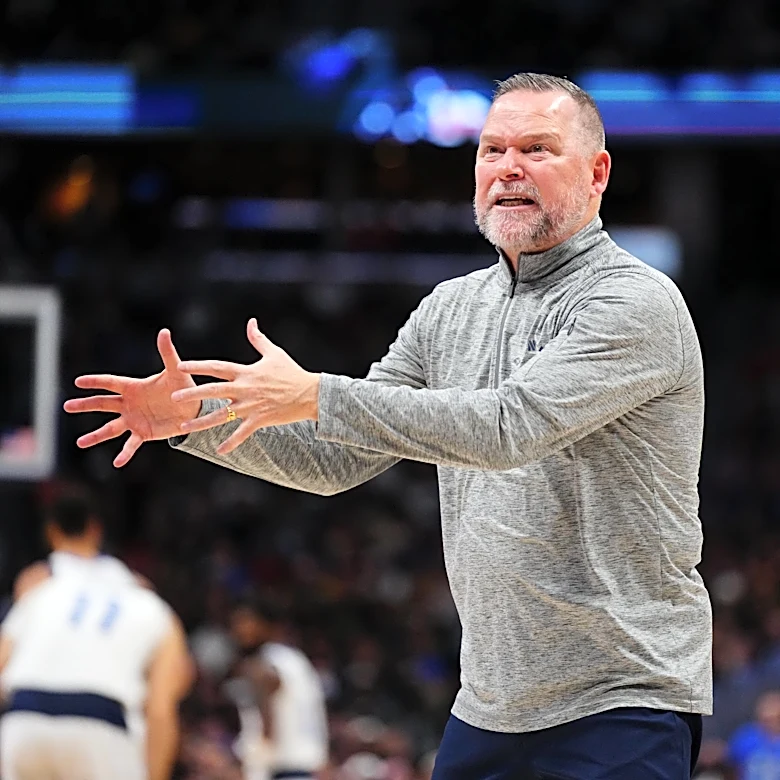



On November 3rd, 2025, Steele Venters finally played basketball again. It had been 961 days since his last game. Two torn ligaments. Two surgeries. Two full seasons watching from the bench while two different Gonzaga teams sent three-pointer after three-pointer clanging off the rim. When he checked in against Texas Southern midway through the first half at the McCarthey Athletic Center, the Gonzaga crowd rose to its feet and gave him the kind of ovation usually reserved for buzzer-beaters and championship
wins. He scored six points in 15 minutes. Modest numbers, sure. But nobody in that building was watching the box score. They were watching a local dude from a small town in central Washington finally, after all of it, get to do the thing he loved most.
But Venters played in only 27 games for the Bulldogs this season, and saw his role shrink as the year wore on, eventually falling out of the rotation completely. Earlier this week, he entered the transfer portal, and just yesterday he committed to the University of Washington, where he will chase a final year of eligibility in 2026-27, pending a medical waiver from the NCAA. The redemption arc is not finished. It has simply moved 280 miles west down that same stretch of I-90, from Spokane to Seattle. If there is any justice in college basketball, Zag fans everywhere will be rooting loudly for it to reach the ending it deserves.
The Kid From Ellensburg
If you’ve never been to Steele’s home town of Ellensburg, it’s a windswept college town that most Washingtonians know mainly as an I-90 pit stop between the mountains and Yakima. It is also, as it turns out, a fine place to develop a relentless work ethic and silky smooth jumpshot. Steele Venters grew up there, the son of Wade Venters, who played professionally overseas and at Central Washington, and who had also torn his own ACL along the way. He knew better than most what the game demands and what it can take away.
By his senior year at Ellensburg High School, Steele was averaging 23 points, eight rebounds and five assists per game, leading the Wildcats to a CWAC title while scoring over 1,200 career points and earning first-team AP 2A All-State honors. The big programs weren’t calling, so he committed to Eastern Washington as a walk-on and bet on himself instead. After redshirting his freshman year and getting a handful of games in the COVID-shortened 2020-21 season, he exploded as a sophomore: 16.7 points per game, 43.4% from three, sixth nationally, Second Team All-Big Sky. His junior year brought 15.3 points per game, two straight Big Sky regular season titles, an NIT run and the Big Sky Player of the Year award.
Then Came November
When Venters entered the transfer portal in April 2023, Gonzaga assistant Stephen Gentry was on the phone within minutes, beating roughly 25 other Division I coaches to the punch. It wasn’t a hard sell. A 6’7 wing coming off a 40% three-point season, brought in specifically to replace Julian Strawther, who had just been drafted by the Denver Nuggets, and who had grown up watching Gonzaga dominate the west coast from just a few hours away. He committed fast.
The timing, however, meant the hype of his decision to come to Gonzaga got a little lost in the shuffle. A week later Gonzaga landed Ryan Nembhard and Graham Ike in the same window, and those two understandably ate up most of the offseason oxygen. But Venters was a real piece of that puzzle, a proven high-volume shooter who could slot straight into the starting lineup alongside two of the best players Few had recruited in years. On paper, the 2023-24 Zags looked dangerous. Then came November.
Two days before the season opener against Yale, Venters went down in practice. Torn ACL, right knee. He had played 18 minutes in an exhibition win over Lewis-Clark State. That was it. He allowed himself about a week to be devastated, then put his head down and began the grinding work of injury rehab.
Then The Other One
By August 2024 he was fully cleared for action. But then, in his first live workout back, working with Coach Gentry on a simple shooting drill, he came off a ball screen, skip-stepped, went to re-attack and felt a pop. He looked back at Gentry, convinced someone had thrown something at his leg. Left Achilles, completely ruptured. He had been days from rejoining his teammates after a year of rehabilitation. Now he was starting over, on the other leg.
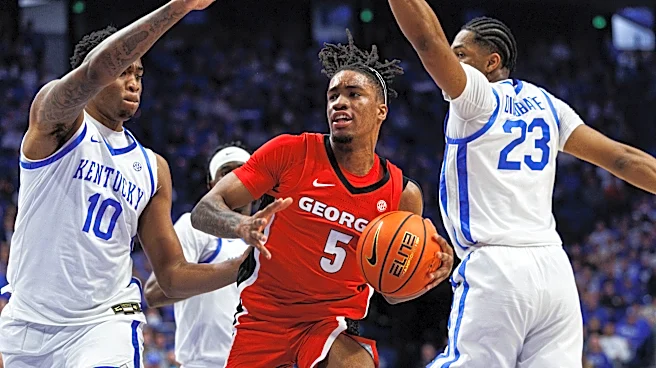
The previous season had been Gonzaga’s worst three-point shooting campaign in Mark Few’s 26 years as head coach, a miserable 35.4% from deep. Against Kentucky in overtime they went 4-of-20 on catch-and-shoot threes and lost by one. And through all of it, parked on the bench in street clothes with the same high-and-tight haircut and the same goatee and the same steady gaze he’d had since the day he committed, was Steele Venters. A career 40% shooter. Just sitting there. Watching. The proximity of the solution to the problem, night after night, felt nearly comedic.
By the summer of 2025 he was cleared for action, then practicing with the team in live drills, then winning the three-point contest at Kraziness in the Kennel in front of a crowd that had been waiting two years to see him shoot. He was named to the starting lineup to open the season. After 961 days, the wait was finally over.
The Season
At the Players Era Festival in Las Vegas he strung together outings of 12, 14 and 14 points against Alabama, Maryland and Oregon, splashing eight combined threes and looking every bit the shooter the program had waited two years to deploy. He made nine consecutive starts between December 5th and January 4th. In the Campbell game he threw down a one-handed dunk off a reconstructed Achilles that sent the bench into a frenzy.
But then the role started shrinking. Braden Huff’s knee injury in January pushed the team toward a more defensive configuration (never Steele’s strongest suit), while freshman Davis Fogle caught fire, averaging 20-plus minutes and double figures down the stretch. Venters went from starter to reserve to effectively invisible, logging single-digit minutes most nights and sitting out the final games entirely. He made just 6 of his final 23 threes as the minutes dried up. He didn’t play in the WCC Tournament or the NCAA Tournament.
If by that point in the season Few had any inkling Venters might transfer, reducing his minutes to near zero would have strengthened the medical waiver case considerably. Whether that was the calculus or not, Venters finished at 5.0 points per game in 15 minutes across 27 games.
What Comes Next
And now it’s official: Venters will be taking his talents west, 280 miles down I-90 to join Danny Sprinkle’s UW Huskies for his final year of eligibility. The question is how he’ll fit in.
If UW’s performance last year is any indication, Steele’s services will be highly valued in Seattle. Washington shot 31.5% from three in 2025-26, 288th in the country. Heading into 2026-27 the situation is even more dire: lead guard Quimari Peterson, forward Jacob Ognacevic and point guard Desmond Claude are gone to graduation, Hannes Steinbach is headed to the NBA draft, and Zoom Diallo, who averaged 15.7 points and 4.5 assists as a sophomore, just committed to Kentucky. Sprinkle is rebuilding from scratch, and his first two portal additions are both shooters: Parker Friedrichsen from Davidson at 40.5% from three, and then Venters.
The waiver is far from a sure thing. Venters will be entering his seventh year in college basketball having played in exactly three of them. The NCAA’s five-year clock does not care much about context, as Gonzaga fans learned last fall when Tyon Grant-Foster had his eligibility waiver denied three times before a Spokane County judge had to step in and settle it in court. The NCAA has shown repeatedly it will not simply do the right thing because the right thing is obvious.
If the waiver comes through, though, Sprinkle is getting a highly experienced veteran who’s shown unbelievable grit and diligence over the course of his career. A 6’7 wing who shot 43.4% from three as a sophomore and 45.7% as a junior before two years of injury buried the whole thing. There’s plenty of reason to believe that player is still in there and could re-emerge given the right opportunity in the right offensive scheme. There is a version of this story where Steele Venters gets his final year, gets big minutes at UW, and finally becomes the player everyone hoped to see three years ago. Gonzaga fans should hope for that happy ending for a dude who’s been through as much as Steele. It just might sting a little watching it happen in purple and gold instead of blue and white.