


In his season-ending press conference immediately after Boston’s first-round playoff exit, Brad Stevens made a comment about the state of the Celtics that reverberated through every offseason decision leading up to the start of the season.
“I think one of the things that we’ve gotta figure out is how to have more impact at the rim,” Stevens said. “I thought we struggled to get to where we wanted to go on offense.”
He had a point. In the regular season, the Celtics were dead last in volume inside of
5 feet, averaging 22 attempts per game. But on low volume came high efficiency, with the team’s 69% finishing on those attempts being second in the league. On top of that lack of attempts was a league-low in free throw attempts (18.7).
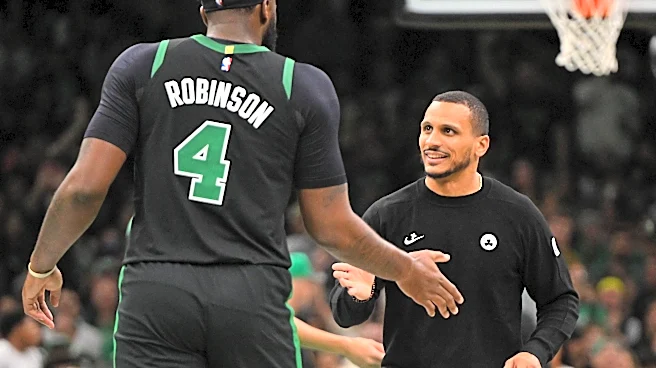
So, the Celtics made changes. They brought in Mitchell Robinson, one of the game’s best offensive rebounders after the Celtics averaged the lowest amount of putback points among all playoff teams (4.1). Then they swapped Paul George for Jaylen Brown, adding a shot creator that would offer a different kind of off-ball influence to open up Jayson Tatum’s own scoring creation.
As of Nov. 2, Boston’s 7-game starting sample has shown early returns in this area. As far as just touching the paint, they’re getting inside at an increased rate, jumping from 24.4 touches to 28.3. The Celtics entered their Rockets matchup 13th in field goal attempts inside of 5 feet, making a major leap of 28.3 attempts to last year’s 22.
There’s work to be done in their finishing on those attempts — they’re currently working at a 63% clip (17th in the league) — but the results are showing a team that’s making an effort to get more looks at close range.
This back-to-back showed two sides of that progress, with slight variations in personnel and significant variations in Joe Mazzulla’s lineups.
Orlando Magic
On the first night of their back-to-back, the Celtics got an Orlando team that’s missing key pieces and is in the process of developing a new identity under coach Sean Sweeney, yet still retains some of that gritty defensive identity with their available personnel.
For Boston, only Mitchell Robinson was absent from the rotation, and in that absence, we saw more of the freeflowing, fast-reacting movement of last year’s offense with Neemias Queta as the lone big on the floor.
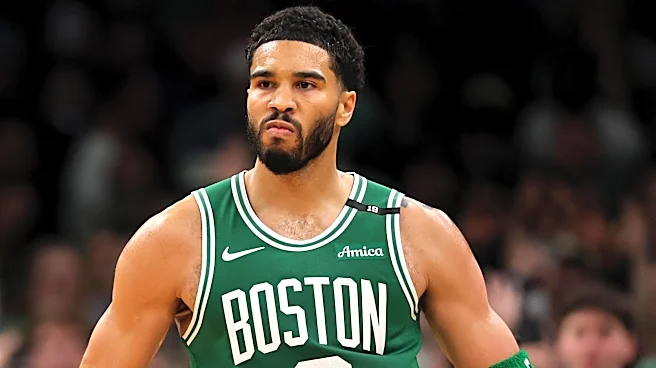
It’s no surprise that Robinson and Queta lead the team in paint touches, but behind them stand Boston’s two most important players in Tatum (3.5) and George (3). In this matchup, they shined both in their self-creation and in their playmaking inside the paint.
As a team Boston was 72% inside the restricted area, and Tatum’s gravity as a pick-and-roll ballhandler was a significant factor in creating looks for himself and for the roller.
Tatum’s high free throw rate has also been a major benefit of his driving aggression. The Celtics are currently averaging 28 attempts from the line, another significant jump from last year’s number. Tatum is currently at 10.2 attempts from the line.
Like Tatum, George is creating off the dribble, feeding the roll man, and comfortably playing off-ball.
It’s two players who have figured out how to put the ball into space. But for that to happen, you need good cutting instincts from those around them. That wasn’t an issue last year, and it’s definitely not an issue now. The Celtics are currently scoring 1.35 points per cut possession, nearly identical to last year’s 1.36 PPP.
This game was a good indicator of this team’s ceiling attacking the rim. You’re missing Robinson, who has struggled to adapt to his new role closer to the action on the perimeter, but you’re seeing Boston’s other two bigs look comfortable in their roles, while the team’s two stars acted as high-running motors to an efficient offense. When you can space the floor with shooters around Tatum and George and add in a rolling threat like Queta, the space to attack and the decisions you can make feel more abundant.
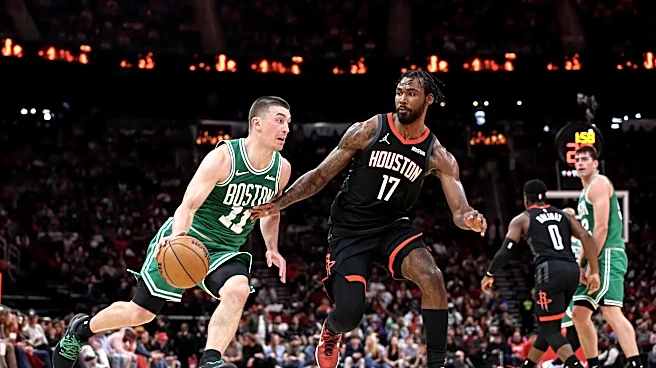
Houston Rockets
On the second night of their back-to-back, the Celtics were without their other primary offseason addition with Paul George getting a night off.
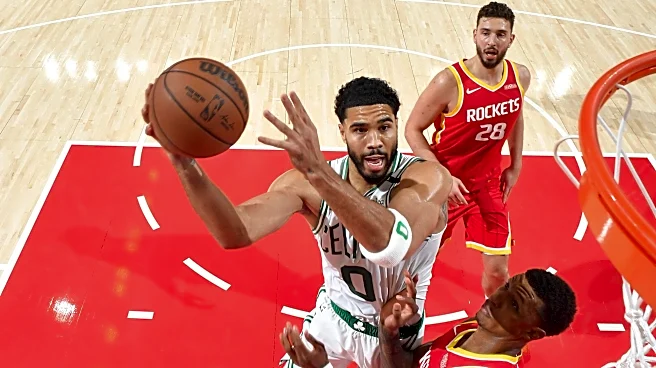
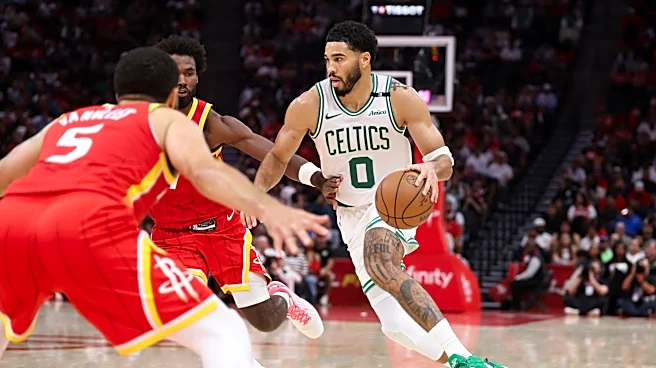
On a sluggish shooting night, the primary theme for this story’s subject was as follows: No Tatum=No Paint Pressure.
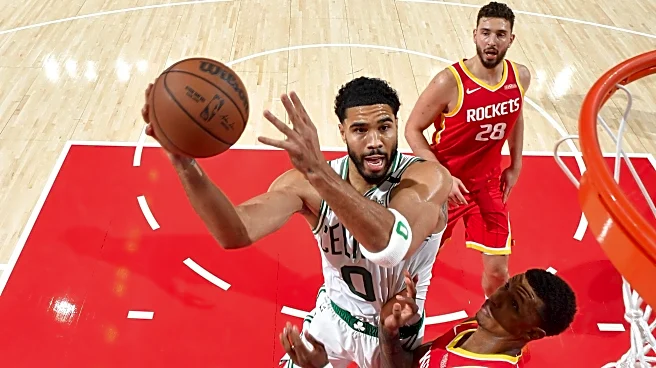
Without George’s primary option lineup, when Tatum stepped off the floor, getting inside the arc became a chore for Boston. In a shade under 16 minutes with Tatum resting, they were just 1-for-8 on shots inside the paint, with a single shot generated at the rim. With Tatum, they had 20 shots at the rim and were 70% on those shots, much more in line with what we’ve seen so far this season.
Along with his ability to create in isolation, Tatum’s gravity as a pick-and-roll threat opened up rim-runs for Mitchell Robinson and Queta, while his vision finding cutters particularly flashed early on.
The Celtics trailed by five when Tatum checked out with 1:39 left in the third quarter. When he returned with 7:02 left to go in the fourth quarter, it was a deficit of 16. With JT off the floor in general, the Celtics were outscored 35-18.
When he returned, it didn’t take long for the offense to get back into its previous flow. Tatum quickly assisted on a drive-and-kick three to Derrick White in the corner, hit Queta on a roll, and scored himself on a drive-and-finish within his first six possessions after checking back in. But by then, the Rockets had comfortably separated enough to bury them.
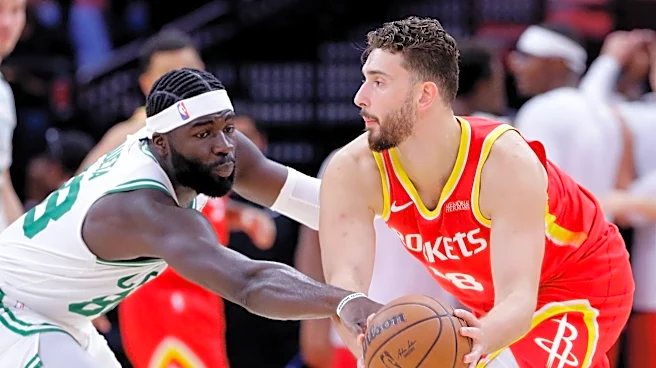
With a lack of paint pressure coming from the perimeter, Mazzulla experimented heavily with double-big rotations throughout the game, which in spurts gave Boston some more putback and lob options but wasn’t nearly enough to overcome poor shooting from the outside and a tough night on drives. The Queta-Robinson combo was featured most prominently, finishing the night with 4:42 on the floor together. With those two sharing the floor, the Celtics were 3-for-3 at the rim, two of which came from Queta and the other from Robinson.
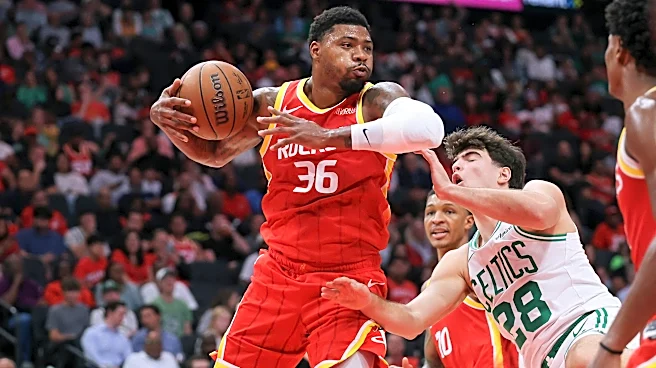
Even without an interior enforcer like Steven Adams, the Rockets are an exceptionally difficult team to get a step on. They have a collection of lengthy wing defenders like Amen Thompson, Tari Eason and Kevin Durant and feisty point-of-attack guards in Marcus Smart, Fred VanVleet and Reed Sheppard. Add to that disciplined help on the nail, and even if your last line of defense is Alperen Sengun, the defense is designed to make it drudgerous just to get to that weak link. And it just so happens that their weak link still finished with a pair of blocks and steals on Monday night.
If the Orlando game was a sign of what they could be, Houston was a sign of how far they have to go to get there. Missing George’s ballhandling was a predictable blow, but a lack of influence in the paint from those not named Jayson Tatum against a quality defense does show that they have a lot to work on.
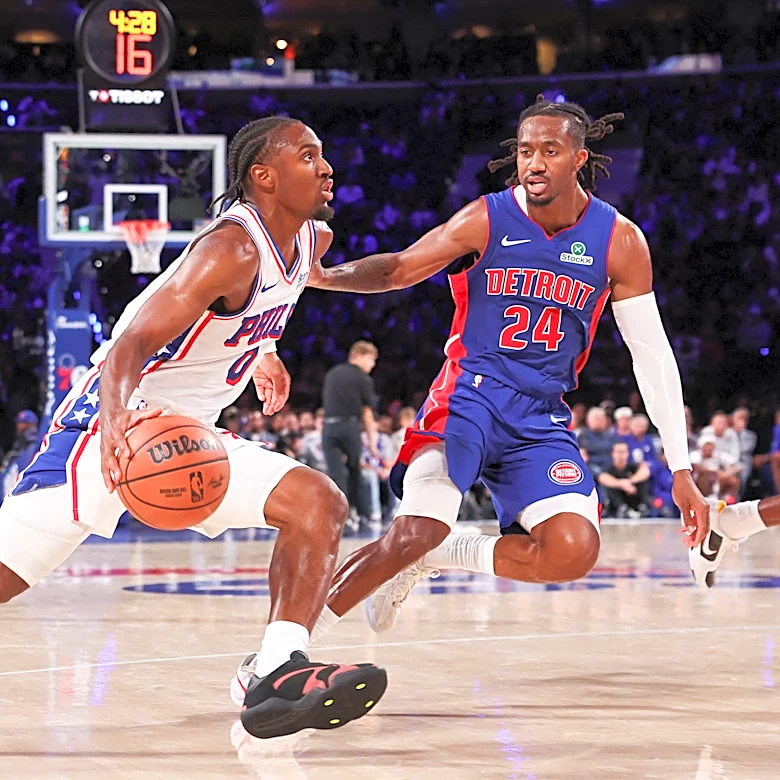
The road ahead is long to figure out what kind of impact this team can have from close range. They can’t all be against a Chicago, and they won’t all be against a Houston or Detroit, but it’s important that every step of the way, we keep tabs on the progress of this team’s still-developing interior identity.