



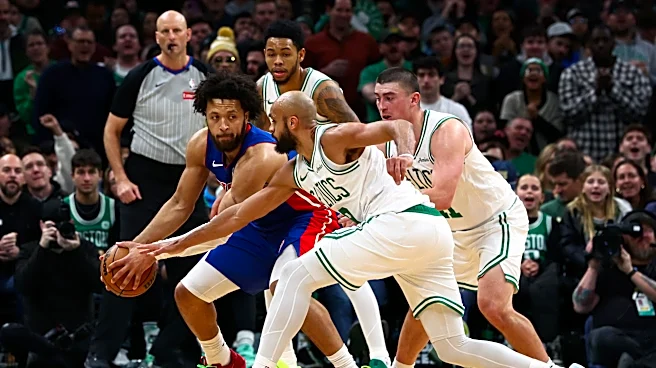

The Celtics, we are reminded, were 3-11 against the best teams in the league during the past season.
This is, at first glance, a problematic record for a franchise that won 56 games who many considered to be a contender. It suggests that the team has an obvious problem in need of a fix.
It also requires just a smidgen of context.
Of those 14 games, only three were played with Jayson Tatum, and of those three, Jaylen Brown was missing for all of one game (vs. the Knicks) and most of the another (Spurs).
The only game where the Celtics had a healthy lineup was a win against the Thunder that ended their 16-game winning streak.
There’s also the matter of clutch performance.
During the past season, the Celtics were abysmal in clutch situations. They were 16-17, ranking them 19th in the league. Clutch performance and performance against the best teams in the league go hand-in-hand. You are typically not going to blow out one of the league’s top teams.
In 2024-25, Boston was the best team in the league in clutch performance. They were 24-11—appearing in about as many clutch situations as this year’s team—but they had several advantages going for them, not the least of which was Jayson Tatum. Tatum was Boston’s leading clutch scorer, and while the presence of Jrue Holiday and other veterans can’t be discounted in terms of ‘keeping cool’ and setting up the offense, the reality is that the Celtics lost 30% of their clutch scoring with Tatum’s injury. From last year to this, Boston’s clutch scoring went from 10.0 points in the final five minutes to 8.2.
Defense doesn’t really enter into the picture, as Boston’s clutch defense actually improved from the prior season to this one. Two seasons ago, Boston was allowing 8.7 points during clutch time, and that was down an entire point to just 7.7 this season.
The problem the Celtics had against the best teams in the league is reflected in their struggles to score during clutch situations in general.
And that is tied to the fact that the Celtics were missing Jayson Tatum.
It’s also tied to the relative inexperience of key rotation players for the Celtics.
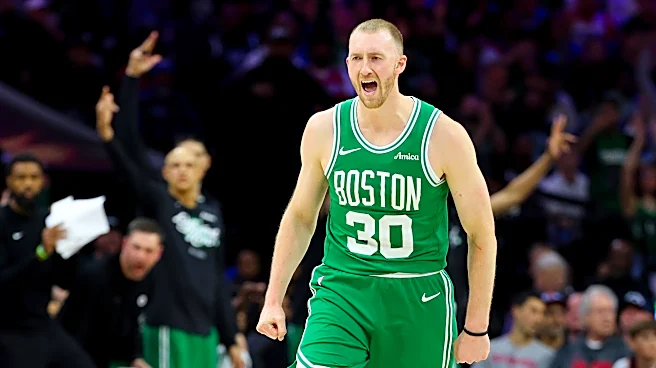
For example, second year player Baylor Scheierman appeared in 14 clutch situations, and averaged two and a half minutes of clutch time play, which meant he was on the court for half of the typical clutch scenario in 14 of the team’s 33 clutch games. Neemias Queta, in his first year as a starter, logged 2.6 minutes per game in 25 appearances. Sam Hauser logged 2.6 minutes as well, in 22 appearances, and Jordan Walsh logged 2.2 minutes in 13 appearances.
Contrast that with the 2024-25 stats, which saw Scheierman appearing in just two games, Queta in 10, and Hauser in 13. Jordan Walsh appeared in only one clutch game.

Now, this is potentially an argument for the C’s bringing in an experienced veteran, but ultimately, if you want to stay a contender in this salary cap era, you need to grow your own talent, and that means putting them in challenging situations and letting them develop. There’s a balance to be found here, and there are personnel decisions that need to be made based on what guys like Mazzulla and Stevens see in terms of the potential of these players, but with all this in mind, the main thing going into next season when it comes to clutch situations is having a fully healthy, fully integrated Jayson Tatum.
In his end-of-season wrap-up, Brad Stevens mentioned that the C’s needed to get better first looks, and that the C’s needed to get better at attacking the rim. Now a strong measure of that is going to come from a more confident Jayson Tatum, but I think some of it is also going to come from the growth and development of Hugo Gonzalez. I think that, like Scheierman, he’s preparing for a sophomore leap.
Mind you, I think the C’s would benefit from a veteran addition—but I tend to think that smaller moves will suffice.
We also need to talk about coaching.
But before we do that, it’s good to remember is that this was Joe Mazzulla’s fourth year as a head coach — the fourth year for a coach who is not yet 38 years old.
It’s a bit early, in my opinion, to declare him a ‘regular season only’ coach.
One of the things about Mazzulla that I think he needs to work on is the dichotomy between saying things like, “there’s no difference between a preseason game, regular season game, playoff game,” and shortening his rotation to the point where key players from the regular season barely saw enough time on the court to get into a rhythm during the playoffs. The attitude is there, but the actions need to back it up.
I don’t think that the C’s need to make major changes in the coaching staff. I don’t necessarily think that the C’s have any weaknesses that can be cured by adding different voices to the bench. I think the weaknesses that were on display in the C’s losses to the Sixers come down to failure to prep and failure to adjust. Now adding a skilled X’s and O’s guy might help somewhat, but the important thing is not bringing in an X’s and O’s guy — it’s being willing to listen to that guy when he’s saying something that goes against your first instincts. It’s also Mazzulla owning the mistakes he made during the Sixers series. From what I’ve seen, I don’t think that’s going to be a problem.
The reality, from my perspective, is that the Celtics are a lot closer to the top than certain stats from the regular season indicate—specifically their poor clutch play and their record against other contenders.
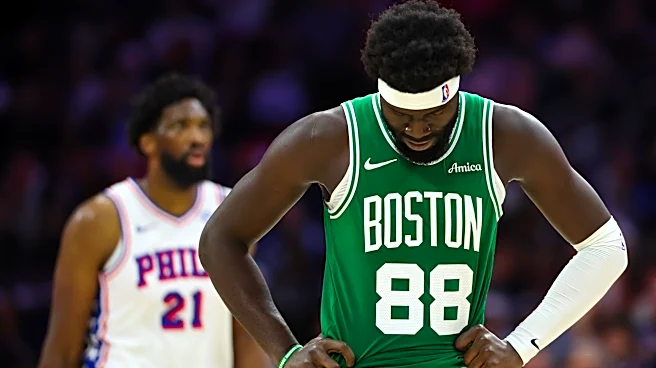
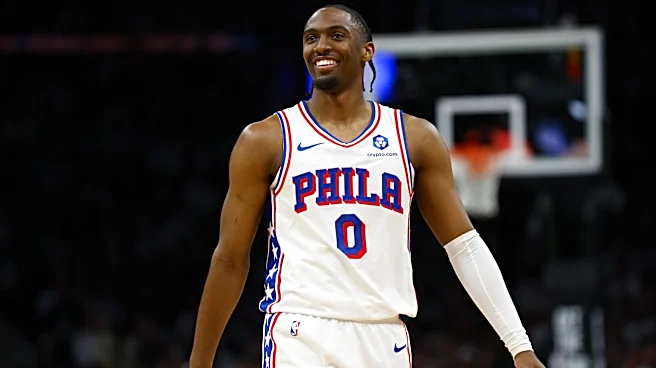
I also think that the best takeaway from the first-round loss to the Sixers should be a wakeup call to Joe Mazzulla and I think he’ll respond well to it. I don’t think that this loss revealed major structural issues with the lineup—but I do think it revealed some flaws in Mazzulla’s approach to playoff ball that he might have been able to shrug off after the loss to the Knicks last season.
Understand, I’m not saying that no changes need to be made to the roster or the coaching staff, but I’m saying that the right changes might not be as drastic as the ones that have been bandied about in this unexpectedly early off-season.