




The New York Black Yankees were a Negro Leagues team that existed from 1931 to 1948. True to their name, they called Yankee Stadium home from 1940 onwards until their demise. They were not a particularly successful franchise, with a 258-497 overall record, but they count among their alumni such legends as Satchel Paige, Ted Radcliffe, Willie Wells, and many more. Today, we celebrate the birthday of a player who isn’t quite at the same status as those luminaries, but had a very nice career of his own.
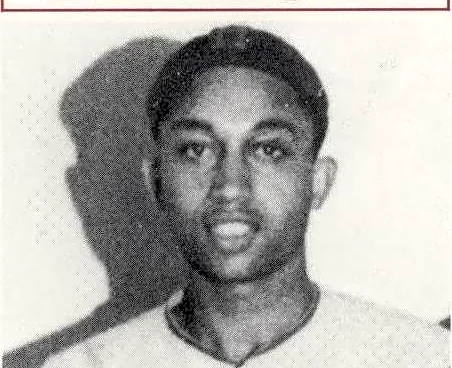
George Giles
Born: May 2, 1909 (Junction City, KS)
Died: March 3, 1992 (Topeka, KS)
Black Yankees Tenure: 1936-37
George Giles was a precocious talent. He was only 17 years of age when he got his first taste of (semi-) pro baseball with the Gilkerson’s Union Giants, an independent barnstorming Black team that played mainly in the Midwest. He was the starting first baseman on one of the most successful iterations of the club, and many of his teammates on the 1926 squad, like Lefty Brown and Steel Arm Davis, were/would go on to be Negro League stars.
If that wasn’t impressive enough, consider this; the Kansas City Monarchs, one of the most successful Negro league teams, signed Giles the following year. He started 59 games for them and hit .269/.330/.360, good for a 92 OPS+. Not bad at all for an 18-year old playing in the highest level available to him — and Giles was just getting started. In 1928, his OPS+ improved to 113, and from there the speedy Giles settled in as a comfortably above-average regular, making up for his rather pedestrian power numbers (career .112 ISO) by consistently posting high averages and OBPs (career .316 and .386, respectively).
When Giles joined the New York Black Yankees in 1936, he was still only 27, but his career was in its twilight. His first season was pretty rough, as he struggled to the tune of a .273/.356/.356 line (84 OPS+). However, he managed to rebound in 1937, posting a prime DJ LeMahieu-esque .327/.395/.453 line (114 OPS+) in 39 games. Unfortunately, despite Giles’ best efforts, the fortunes of his ballclub followed the opposite trajectory; the Black Yankees enjoyed a 30-19 campaign in 1936, but struggled to a 23-33 finish in 1937. It’s unclear whether he was released or traded, but by the time the 1938 season rolled around, Giles was no longer a Yankee. He spent what would be his final year in pro baseball with the Pittsburgh Crawfords, hitting .298 in 59 plate appearances across 14 games.
I realize that this summary of Giles’ playing career is painfully short. Unfortunately, there simply isn’t much readily available information on his exploits as a player, despite the fact that he was a very good hitter who was an All-Star in 1935. It is nothing short of a travesty that his story, along with countless other Black players of his time, has been neglected for so long. While long overdue, it’s at least heartening to see the recent wave of recognition and renewed attention that the Negro Leagues is receiving. One can only hope that more details about Giles and his career surface in the coming years.
Indeed, a Giles renaissance might already be burgeoning. This 2021 piece in the Manhattan Mercury (the local newspaper for Manhattan, KS, where Giles lived most of his life) offers a vividly rendered glimpse into Giles’ career and life, including quotes from Giles himself from past interviews for the Mercury and other local outlets. The whole piece is fascinating, but Giles’ recollections of the abhorrent conditions he endured as a Black ballplayer on the road are particularly striking. In one quote, he says he used to lay newspapers on the beds of seedy motels, claiming that it warded off bedbugs. In another, he remembers how when he played against a white team in his barnstorming days, his opponents stayed at a hotel, while his team was forced to change into their uniforms in a farmer’s barn. It’s truly depressing stuff, but it needs to be told.
Given the countless hardships he endured as a player, I can only hope Giles lived a full and fulfilling post-playing life. The Mercury article gives me hope that this was the case. After working a number of jobs, Giles opened a small inn named George’s Motel in Kansas which served the Black community, providing the kind of accommodations that were unavailable to him during his playing days. And in his autumnal years, he got to witness his grandson Brian Giles — no, not that one — make his MLB debut in 1981 with the New York Mets. What a moment that must have been for him.
A final detail from that Mercury piece — when asked whether George would have been proud to see his grandson surpass his achievements by reaching the major leagues, Brian rejected that premise, saying, “Actually, I think he was more successful, doing what he did in times that presented African-American ballplayers (with challenges).” As we try to properly appreciate the Negro Leagues and Black ballplayers of the past, this perspective is something we must not forget. It’s not enough to say that the Negro Leagues were major leagues in terms of quality of play; we must also acknowledge the various ways in which Black players and their communities were held back by racism — and question the notion that those are relics of the past.
All stats from Seamheads.com.
See more of the “Yankees Birthday of the Day” series here.