




At long last, the 2026 World Cup is here, with the United States Men’s National Team serving as co-hosts and looking to achieve a program-best finish under the watchful eye of Mauricio Pochettino. A challenging but superable Group D awaits, particularly under the new rules, with up to three teams advancing to the tournament’s Round of 32. First on the docket is a familiar Paraguay, which is participating in the final competition for the ninth time and reached the quarterfinals in 2010. SoFi Stadium
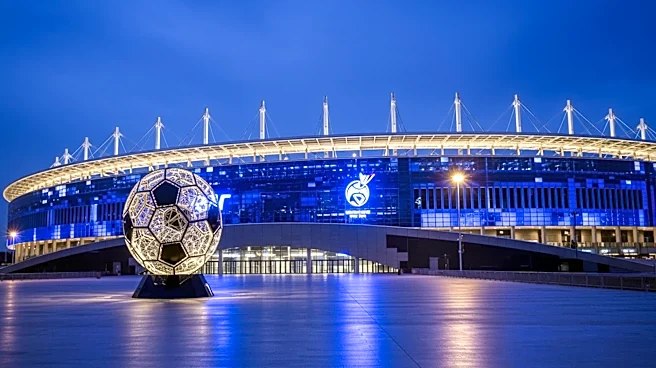
in Inglewood, California – a 70,240-seat state-of-the-art sports and entertainment venue with a “natural grass system” – hosts the opening fixture.
This is the tenth all-time meeting between the two nations, with the USMNT holding a 5-2-2 advantage and winning a November 2025 friendly (2-1). Ranked 40th internationally by FIFA (prior to the June 10th update), Paraguay qualified for the World Cup for the first time since 2010 by finishing sixth in the CONMEBOL table with a 7-7-4 record, embarking on a sharp turnaround after a dismal start and reeling off crucial victories against Brazil (1-0), Argentina (2-1), and Uruguay (2-0). Recent friendlies include a win over Greece (1-0), a defeat to Morocco (1-2), and a positive result against Nicaragua (4-0).
After nine months of leading Costa Rica, Gustavo Alfaro was appointed to the manager role with Paraguay following the 2024 Copa América. The peripatetic 63-year-old Argentine has racked up decades of experience at the club and international levels, with stops at Rosario Central, Al-Ahli, Arsenal de Sarandí, Huracán, Boca Juniors, and Ecuador, claiming the 2007 Copa Sudamericana, the 2012 Primera División Clausura, the Copa Argentina, and two Supercopa Argentina titles. He has attempted to maximize the limited windows of his tenure, endeavoring to put together “the ideal structure” ahead of the final tournament but acknowledging that “the ideal does not exist in football.”
Alfaro named a 26-player roster for the World Cup. The domestic División de Honor is home to three of the call-ups, while 12 compete in Argentina and Brazil and six are on the books of European clubs. Notable absences include Agustín Sández, Ronaldo Martínez, Óscar Romero, Mathías Villasanti, Ángel Romero, and Carlos Coronel.
***
GOALKEEPERS (3): Gatito Fernández (Cerro Porteño), Orlando Gill (San Lorenzo), Gastón Olveira (Olimpia)
DEFENDERS (8): Gustavo Velázquez (Cerro Porteño), Omar Alderete (Sunderland), Juan José Cáceres (Dynamo Moscow), Fabián Balbuena (Grêmio), Júnior Alonso (Atlético Mineiro), José Canale (Lanús), Gustavo Gómez (Palmeiras), Alexandro Maidana (Talleres)
MIDFIELDERS (10): Ramón Sosa (Palmeiras), Diego Gómez (Brighton & Hove Albion), Miguel Almirón (Atlanta United), Maurício (Palmeiras), Andrés Cubas (Vancouver Whitecaps), Damián Bobadilla (São Paulo), Kaku (Al Ain), Braian Ojeda (Orlando City), Matías Galarza (Atlanta United), Gustavo Caballero (Portsmouth)
FORWARDS (5): Antonio Sanabria (Cremonese), Álex Arce (Independiente Rivadavia), Julio Enciso (Strasbourg), Gabriel Ávalos (Independiente), Isidro Pitta (Red Bull Bragantino)
***
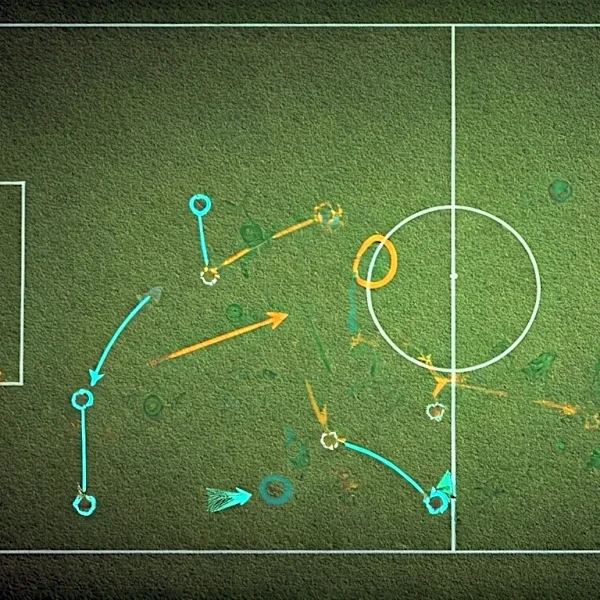
Alfaro has shifted between the 4-4-2 and 4-2-3-1 formations but appears to lean toward the latter, focusing on “organization, commitment, and discipline” and a desire “to be highly physical and to capitalize on every opportunity.” His main aim is keeping the defensive structure and “traditional Paraguayan strength,” along with a focus on heading. He puts a priority on “cutting off space, compact lines, and winning duels,” having “produced the most clearances and aerial duels in CONMEBOL qualifying.” Quick passing facilitates breaking behind the opponent’s lines, with a desire to push the tempo and play with an unyielding passion.

Seizing upon the number-one role for the first time in his career during qualifying, Roberto “Gatito” Fernández grabbed the reins despite some struggles at the club level that include long stretches on the bench. The 38-year-old Cerro Porteño goalkeeper is considered a “very important player” due to his composure and willingness to leave his line to chase the ball, coming up big during the chaotic moments. Standing at six feet, three inches tall, he is primarily a shot stopper and aims to protect the net with a precautionary style, parrying away his saves instead of making catches. His work in the build-up is minimal and mostly focused on short-range passing, although his long-distance distribution tends to be accurate and can spring the transition game.
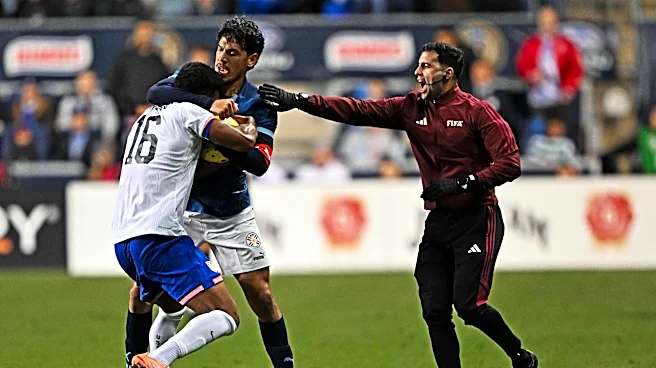
USMNT fans should already be familiar with Gustavo Gómez after his tussle with Alex Freeman during last November’s friendly, but the captain is a key member of the defense and serves as a “sheriff.” The 33-year-old Palmeiras centre-back dominates in the air, shuts down wide attackers with powerful slide tackles, and registers regular interceptions while also making his mark in the final third with regular finishes. Sunderland’s Omar Alderete was a reliable asset during qualifying and registered crucial goals in victories against Argentina and Chile, displaying strength in both sides of one-on-one battles. He can line up at fullback and covers large portions of ground, particularly to the touchlines, which results in winning possession with direct movement and spraying his passes around the formation. Fabián Balbuena of Grêmio is often the first option when building out of the back, making the crucial decision whether to play at a more gradual pace or catch the opponent napping with an attempt up the field. The prototypical defender can swarm the lanes, dominates in the shoulder-to-shoulder game, clears up anything in his area in the air or on the ground, and can turn home set pieces at a regular rate.
Júnior Alonso is an active and present dynamo on the outside of the formation by playing a plethora of passes and making regular dribbling runs to drag possession into the final third. Also capable of lining up centrally, the 33-year-old Atlético Mineiro fullback is known for his “effective ball control,” appears relentless in pursuit, and tracks back with excellent pace and timing. Dynamo Moscow’s Juan Cáceres has an impressive burst of speed, displays “aggression” in the tackle, joins the attack, takes an active role in the build-up, and creates chances. The Argentina-born defender embodies the modern iteration of his position: chasing down wingers with relish, making overlapping runs, leading the transition, and creating in the wide zones. A latecomer who made his senior international debut in his mid-30s, Gustavo Velázquez of Cerro Porteño will slide centrally when needed, providing agility and sharpness in the touch. As is the expectation, his aerial game results in much needed headers in the final third, with his five-foot-ten frame belying a dangerous and productive presence on set pieces.
Andrés Cubas provides cover with “tackles, interceptions, and one-on-one defending” in crucial areas, which adds “cover, breaks up counter-attacks,” and enables the fullbacks to “remain in more advanced positions.” A “pitbull” who protects his area and projects security, the 30-year-old Vancouver Whitecaps six is one of the more accurate distributors in Major League Soccer and focuses on dispensing long-range passing. Damián Bobadilla of São Paulo takes an active role in the build-up and nets the occasional finish at the club level, continuing to increase his production as his theoretical prime nears. He is a master of the late run into the box with shrewd movement and a keen sense of timing while also displaying a delicate touch on the ball and the skill to thread through multiple lines of the opponent. Julio Enciso of Strasbourg had three critical finishes during qualifying and has the capacity to “terrorize with his trickery,” thriving in a variety of roles with his “verticality and mobility.” His dribbling can advance the game into the final third or break down crowded groups, with agile turns and tight cuts setting up the window for an assist or one of his curling long-range shots. Diego Gómez is a “top technician with a fantastic vision,” exhibiting “smart movement” and looking to occupy “advanced central positions in the half spaces” or clog the middle with strong challenges. Total Football Analysis describes him as an “imposing” two-way presence whose “strong legs are his most effective weapons in duels” and with the stamina to push the tempo for the full 90 minutes.
Miguel Almirón perhaps lacks the explosive nature of his 20s and the seeming ability to score at any moment, but his “vision and intelligent movement” still inspire the support of the manager. The 32-year-old Atlanta United attacker likes to check back in order to receive the ball and tends to take a long touch around the defender, sprinting forward and breaking out in transition. Palmeiras’ Ramón Sosa is a hard-working player who is constantly looking to beat opponents off the dribble, takes an active role with loads of passing, and tracks deep in order to harry his opposing number. He boasts “pace and trickery” with a “directness, straight-line speed, quick feet, and appetite to get off shots,” galloping into the open space and looking to curl around fullbacks in search of a window. Matías Galarza came on strong during qualifying with two game-winning goals against Uruguay and Peru while also displaying the full-field pressure that adds to the overall team tactics. Left Back Football notes “a strength and mobility to be dominant in duels” and “the potential to be a world-class ball-carrier,” serving as a sturdy clog in the low block and a masterful progressor, respectively.
With only seven goals in 48 caps for Paraguay, there is an obvious desire for Antonio “Tonny” Sanabria to be more effective in the final third, yet his impact goes beyond adding to the scoreline. The 30-year-old Cremonese striker hustles around the field, handles business in the aerial duels, and will drop deep in the formation in order to claim possession and aid in the build-up phase. He has the patience to create his own opportunities and dribble through contact, with a keen eye for picking the right pass or occasionally lining up a long-distance shot that tests the opposing goalkeeper. However, his best efforts come from as close to the net as possible, whether as the recipient of direct service or using his guile to pounce on loose balls in the midst of a scramble. Gabriel Ávalos of Independiente is a big presence at six feet, three inches tall yet has the agility to deliver sublime vertical finishes and lunging volleys with utterly perfect timing. The forward from Hohenau covers large amounts of ground in order to aid teammates and plays the typical target role with deft touches and the strength to out-duel physical centre-backs.
After the years of waiting, consternation, and preparation, the World Cup is here for the taking as 48 teams compete for glory. The USMNT will need to produce a string of strong efforts and emerge from a fairly difficult group that could prove quite challenging. Three points in the first match would start the tournament on the right foot, but Paraguay should prove a stern test.
The match is scheduled for Friday, June 12th at 9:00 p.m. Eastern, 6:00 p.m. Pacific. Viewing options include FOX, Telemundo, Peacock, and FuboTV (free trial).