


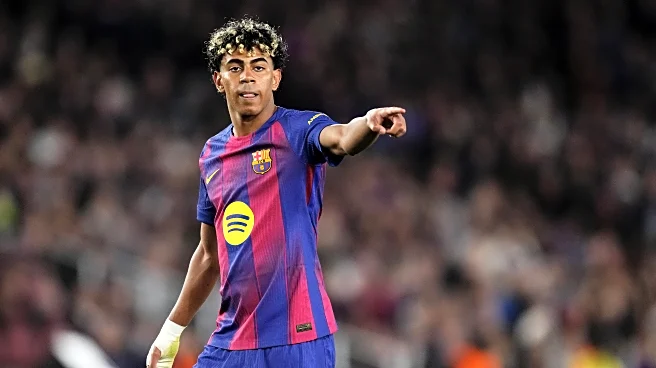
Real Madrid are using advanced biomechanical analysis as part of Jude Bellingham’s recovery from his recent hamstring injury, according to physiotherapist Angel Villanueva.
The process involves a video-based motion capture system capable of analyzing movement patterns in both 2D and 3D, allowing Madrid’s medical staff to monitor the midfielder’s mechanics in real time. The technology is commonly used in elite performance laboratories to detect subtle asymmetries, compensations, or weaknesses in the kinetic
chain that may not be visible to the naked eye.
After a muscle injury, ensuring proper muscle activation without overloading surrounding areas is critical. The system provides immediate visual feedback, allowing Bellingham and the medical staff to compare his movement with optimal patterns during rehabilitation sessions.
“This technology allows us to detect asymmetries, compensations or residual weaknesses in the kinetic chain that are not visible to the naked eye,” Villanueva explained.
The data also allows for controlled and objective progression during recovery, measuring improvements in sprint mechanics, knee flexion angles, and lumbopelvic positioning during changes of direction.
Villanueva previously suggested that inefficient running mechanics may have contributed to the original injury, making the correction of Bellingham’s movement patterns a central focus of his rehabilitation.