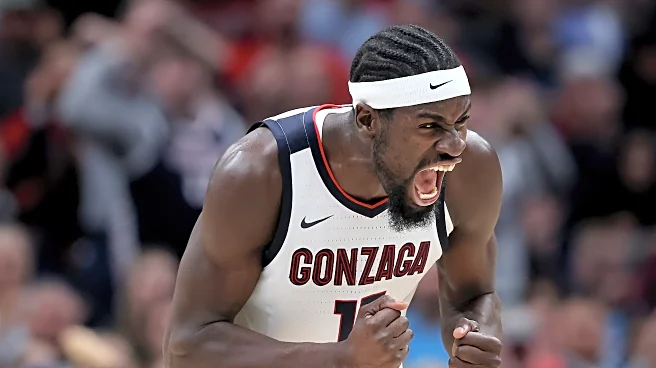



It’s never clean when Gonzaga faces UCLA, and it’s rarely an easy win. The series between the two best teams on the west coast has settled into a familiar rhythm defined by physicality, narrow margins, and extended stretches where neither team finds sustained offensive flow. This meeting between the No. 8-ranked Bulldogs and the No. 25-ranked Bruins fit that profile from the opening minutes of this year’s Battle in Seattle in Climate Pledge Arena. Unlike their meeting last year, the Zags were able
to walk away from this one with a W.
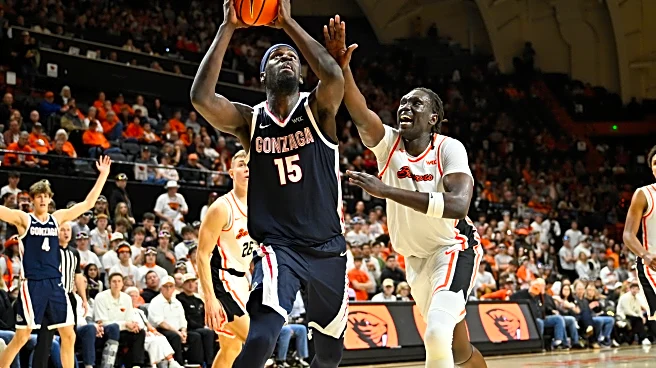
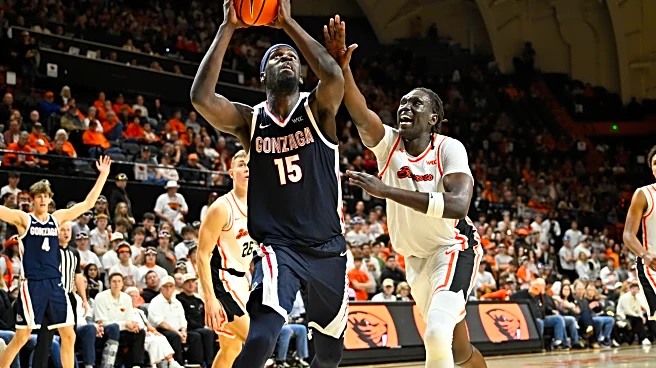
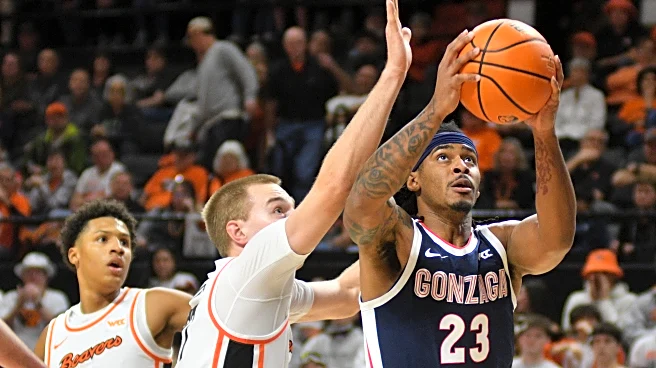
Gonzaga’s advantage came once again from its frontcourt, where Graham Ike and Braden Huff accounted for 46 of Gonzaga’s 82 points on a combined 16-28 from the field and 12-17 from the free throw line. They were aided by a 12 point performance from Mario Saint-Supery as well as nine points from Adam Miller who was a perfect 3-3 from the field.
The Bulldogs pulled away late for a 10-point win that was far closer than the final score suggests. It was yet another nail-biting chapter to one of college basketball’s best rivalries. It was a grind that hinged on composure and endurance far more than on tempo and execution.
Graham Ike’s career night
Graham Ike carried the Zags for long stretches and also came up with several of the game’s most clutch buckets, finishing with a game-high 25 points in 36 minutes, the second-heaviest workload of his Gonzaga career. UCLA threw coverage after coverage at him from every spot on the floor. The dude endured everything from single coverage to hard doubles and late triples, and none of it consistently disrupted his ability to score. Ike’s points came whether the shot was within the rhythm of the offense or not, which mattered a lot in a game that rarely allowed flow, and his presence forced UCLA into constant defensive adjustment.
But the more revealing number came elsewhere. Ike also led the Zags with five assists, a career-high, and proof of just how much UCLA’s defensive pressure stagnated Gonzaga’s guard play and shut down its ability to generate playmaking from the wings. With only 13 assists on 28 made field goals as a team, the Zags leaned heavily on its bigs to read doubles and move the ball out of congestion. Luckily for them, the dude is an absolute force of nature, and been playing lately with a focus and poise that now feels fully settled and maximally potent.
Braden Huff delivers
Braden Huff once again proved why Gonzaga’s frontcourt is the best scoring duo in the nation, scoring 21 points on 7-of-12 shooting and repeatedly converting through contact. Because Ike draws so much defensive attention, UCLA struggled to keep Huff off his spots in the low post, and when help arrived, it often came late or from poor angles, sending Huff to the line or conceding position deep in the paint. His effort helped Gonzaga finish with a +7 rebounding edge and a +13 advantage in free-throw attempts. He also hit the game’s momentum-shifting three-pointer to whip the Seattle crowd into a frenzy and send the Bruins back to a timeout to regroup.
But Huff’s presence mattered most during Gonzaga’s stabilizing runs, particularly after UCLA briefly took the lead early in the second half. His ability to generate reliable interior offense prevented momentum from swinging decisively for the Bruins, even as they continued to find ways to disrupt Gonzaga’s offensive execution.
Jalen Warley makes winning plays
Jalen Warley finished with just four points on 1-5 shooting in 21 minutes, a line that dramatically undersells how instrumental he was in Gonzaga’s second-half push to reclaim a comfortable lead. As the game narrowed and UCLA began pressing for momentum, Warley’s decision making, athleticism, and ability to shift tempo were THE reason that the Bulldogs were able stay on top.
Several of UCLA’s late attempts to build momentum stalled with Warley staying in front on the perimeter or cleaning up the possession on the glass, turning potential runs into empty trips. That pattern showed up repeatedly down the stretch and helped stabilize the final eight minutes of a game where neither team had been able to string together sustained scoring.
When Gonzaga needed to stop the game entirely, Warley pushed downhill, drew contact, and put the score in the officials’ hands, including a key trip to the line that capped an eight-point run and produced the first real cushion of the second half for the Zags. The free throws themselves left something to be desired, as he went 2-6 in a game where Gonzaga left plenty of points at the line (20-32 on the night… yikes), yet the decision to attack the rim in those moments mattered more than the efficiency.
Credit where it’s due:
UCLA’s defense set the terms of the night. Possessions felt provisional, never quite settling, as Gonzaga spent long stretches reacting rather than flowing, reading coverage late and finishing actions under pressure rather than in rhythm. Just 13 assists on 28 field goals tell part of the story, but the more telling signal came at the rim, where UCLA piled up nine blocks and forced Gonzaga to earn everything it converted.
Gonzaga’s perimeter players struggled to adjust to UCLA’s pressure, with the Bruins consistently jumping passing lanes and crowding ballhandlers at the point of attack. Too many passes left the hand late or without purpose, leading to near-turnovers and broken possessions, an area that will need tightening before Gonzaga moves into conference play.
That same aggression bent the game in the other direction as well, though. UCLA’s resistance around the basket frequently arrived a step late, and when it did, it arrived with contact, sending Gonzaga to the line again and again. UCLA succeeded in making the game uncomfortable, but the cost of that discomfort showed up possession by possession, until Gonzaga’s advantage at the line and in the paint finally tilted the scales.
Final Thoughts
UCLA played tough for 40 minutes and forced Gonzaga to execute late in possessions for the entirety of regulation. The Bulldogs responded well enough to win, which is what counts most, especially if that win settles the score from last season’s loss and adds another key win against a ranked team to the Selection Sunday bona fides.
At the same time, outside of Graham Ike and Braden Huff, it never felt like a clean Gonzaga performance. UCLA’s perimeter pressure kept pulling the offense away from its usual sequencing and into stretches where the ball stuck and reads came late. Gonzaga survived those moments with reliable interior scoring and some spectacular late-game defense, but the discomfort was intense, and it showed precisely where this offense still needs to develop.
Gonzaga’s remaining Quad 1 opportunities are limited from here on, and teams like Saint Mary’s offer far less margin for sloppy passing and playmaking on the perimeter. Those are games the Bulldogs will need to take, and Saturday’s matchup with UCLA made clear that they’re going to need some better answers in those situations than they’ve been able to come up with so far this season. The encouraging part is that Gonzaga continues to win while working through those hiccups.
All of that aside, a win still counts as a win, and it rarely comes easily when these two teams share the floor. Gonzaga handled the moments it needed to handle, survived the discomfort, and walked out with the victory. There remains plenty to clean up, but there is also plenty of season left, and games like this tend to reveal as much about where a team can go as where it currently stands.