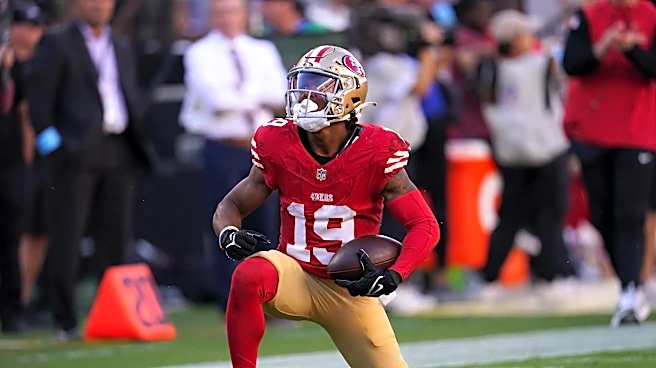

One month removed from the start of free agency, the San Francisco 49ers have made some solid moves.
ESPN’s Seth Walder took a crack at grading the San Francisco 49ers’ two biggest free agency moves of the offseason in Mike Evans and Osa Odighizuwa—and it’s pretty positive. Since we like it when nice things are said about the 49ers, and they mention who won the Odighizuwa trade, it’s probably worth a look.
We’ll start with the Odighizuwa trade, which Walder gave a B grade to—but that’s not the good
part of this story.
The “B” grade is about what I’d give it, but more notable is the grade to the trade partner in this. C+ to the Dallas Cowboys. Which means the 49ers won the trade according to these analysts, and that always makes things better. Walder made the case that Dallas traded the wrong player — Odighizuwa is three years younger than Kenny Clark, outperformed him in pass rush win rate and pressure rate last season, and costs nearly five million dollars less. Then again, this is the same organization that traded Micah Parsons to Green Bay — receiving Clark and two first-round picks in return. Yes, I’m aware Parsons tore his ACL and made the Cowboys look like geniuses that same season. The thing is, now they’ve shipped off Odighizuwa, the youngest and best of their defensive tackles, for a third-round pick. Very Cowboys of them.
“Though he had only 3.5 sacks last season with the Cowboys,” Walder wrote, “Odighizuwa recorded a pass rush win rate in the 84th percentile at defensive tackle and a pressure rate in the 66th percentile.”
No argument here. Odighizuwa isn’t going to get sacks. Then again, he doesn’t need them. You know who does get them? Nick Bosa. What the 49ers needed on the interior wasn’t another highlight-reel finisher — it was someone who could collapse the pocket and make Bosa’s job less impossible.
That’s what Odighizuwa is for. When you have a legitimate interior disruptor eating up double teams, edge rushers don’t get tripled. Bosa has dealt with that problem more than he should have to. Add an edge rusher in the draft who can hold up on the other side, and suddenly you’re looking at a four-man front that can generate pressure without sending five. That’s when this defense starts looking like something from 2019.
The 49ers also don’t owe Odighizuwa a dollar beyond 2026. The $16.75 million this year is real money, but the non-guaranteed years give them flexibility a big free agent signing would not. So that’s two starters traded away in two years for draft picks. A serviceable defensive line, dismantled. Again, Cowboys.
Then there’s the Evans signing.
“Evans, 32, is coming off an injury-shortened season,” Walder wrote, noting it was the first year Evans failed to reach 1,000 yards receiving, as well as Evans’ yards per route, which declined from 2.6 in 2024 to 1.8 in 2025.
Here’s the counter: if you’re going to bet on a player having an injury-shortened down year rather than a cliff, a one-year deal is exactly how you make that bet. The 49ers aren’t locked in past 2026. If Evans plays eight games again, they move on. If he’s the Evans of 2024, then this offense with Brock Purdy, Christian McCaffrey, George Kittle, and a healthy Ricky Pearsall developing behind him is genuinely dangerous.
The A-minus feels right. The risk is real, but the structure of the deal prices it in correctly.
A month out from the start of free agency, the 49ers addressed two legitimate needs without blowing up their cap or gutting their draft. While we can nitpick Walder’s conclusions on their grading, both grades themselves seem fair. What would you give the grades of these acquisitions?