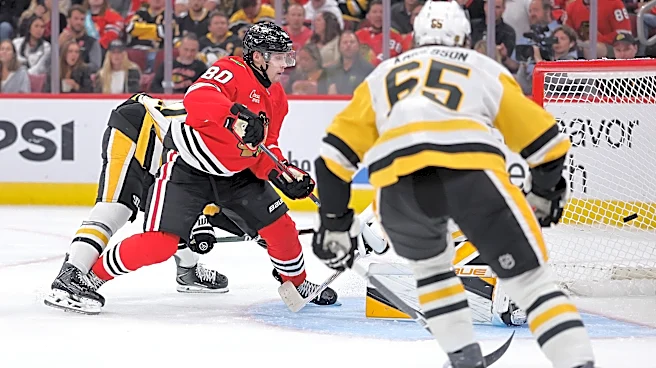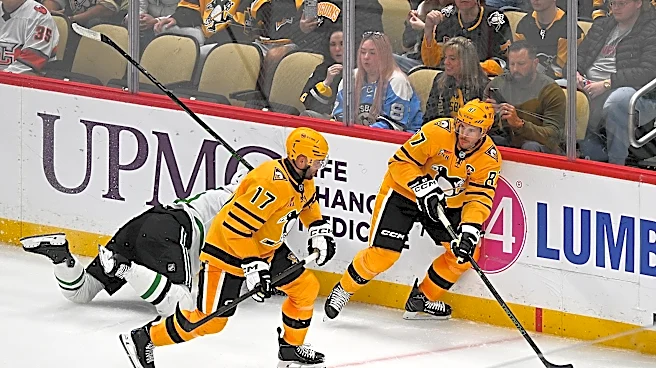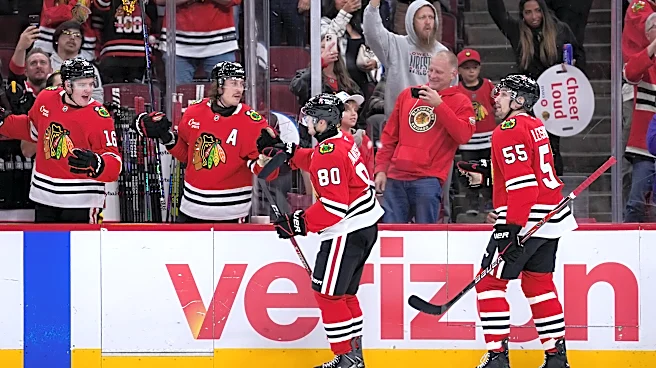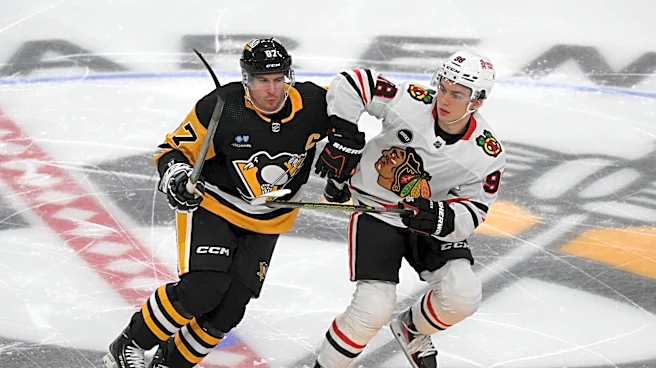






I am not going to say the Pittsburgh Penguins played a perfectly clean, crisp game on Tuesday night against the Chicago Blackhawks.
Because they didn’t.
They were sloppy at times, some of their puck management and puck support was bad, and they did not capitalize on enough opportunities against a Blackhawks team that was, to be fair, probably even worse.
And that last part really is the main point here. The Penguins weren’t great. But neither was the team that beat them. The Penguins have reason to
be disappointed and frustrated with the way they played (and they should be), but they controlled enough of that game at 5-on-5 that it was probably a passable enough performance to walk out of their with two points.
One of the main reasons they didn’t is the simple reality they just didn’t get enough saves.
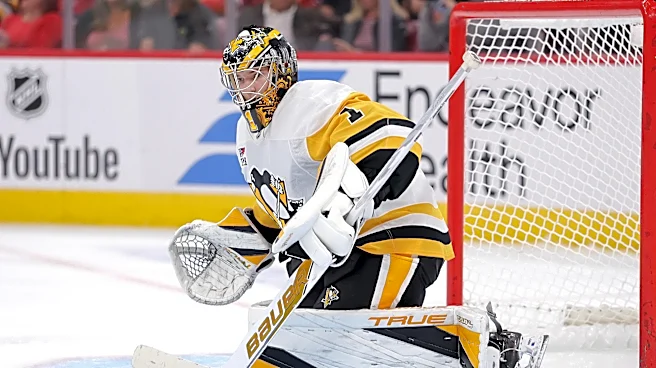
For as good as Sergei Murashov was in Columbus on Friday, basically stealing them a point against the Blue Jackets, he was that bad on Tuesday in Chicago, probably costing them at least one point.
As sloppy as the Penguins were, I’m not sure they were four goals against (excluding the fifth goal, an empty net goal) bad. Chicago didn’t have THAT many chances, and every publicly available piece of data suggests the same thing.
The fourth goal was an absolute crusher, not only by how bad it was, but because it came in the final five minutes after the Penguins had fought back from a two-goal deficit. It’s simply a shot that can’t go in, from that spot, from that angle in that moment. Or any moment. It can’t. Historically, it doesn’t (MoneyPuck had that shot at 0.01 expected goals).
But here’s the other thing about this game — I keep seeing that you can’t really fault him for the other three goals because they weren’t necessarily his fault. Maybe they weren’t entirely his fault. But “not entirely his fault,” and “no chance to be stopped,” are two very different things.
Sometimes your goalie does have to make a stop they are not fully expected to make.
The first goal? That’s just bad hockey by the Penguins.
The third goal is a tough cross-ice pass that you’d like to see not get through.
But I don’t think the second goal is unstoppable. The fourth goal certainly isn’t. Beyond that, I’m not sure there were *that* many shots that he was asked to make overly challenging saves on. He didn’t even have to face 20 shots. Even when the team in front of him was guilty of bad puck management or puck support, they rebounded and did not always allow a shot or chance. The scoring chance numbers were heavily tilted in the Penguins’ favor.
Again: they weren’t great. But probably weren’t all that good. But they should have been good enough given what the opponent was also doing.
This isn’t meant to sound overly critical of Murashov from a big picture perspective. I like him a lot. You should, too. None of this means you stop playing him, or send him down, or that he’s bad and going to be bad. He might be the highest ceiling young player the Penguins have, at a position that can significantly change a team’s timeline to contend and its chances to contend (both short-term and long-term). But as I’ve said in the past here, while all of that is very true, the reality is that all of the upside and potential is coming from the most volatile position on the ice in terms of performance and projected performance.
That’s especially true for young players at the position.
You’re going to get games like Friday in Columbus from him.
You’re also going to get games and moments like Tuesday in Chicago.
It’s just something you have to be ready for.
It’s seven games, and that’s far too early to really know what type of team you have or what it is capable of. That is true across the league. But I said at the start of the season that goaltending will be the biggest determining factor in whether or not this is a playoff team or a lottery team. I am sticking with that.
More quick Penguins thoughts
1. As frustrating as I found Murashov’s performance on Tuesday to be, there was another big factor in the Penguins losing that game.
Their power play.
They have now gone five consecutive games without scoring a goal, and have not found the back of the net since the second game of the season against the Montreal Canadiens. That’s not good enough. What’s even worse than the lack of goals is that the unit is back in one of those ruts where it’s not even close to scoring.
The last two attempts on Tuesday were better in terms of puck movement, and they at least seemed to adjust to the pressure teams have been applying to them, but special teams was the other big factor on Tuesday.
An 0-for-4 night on the power play and only 1-for-2 on the penalty kill is a good way to lose a winnable game to a bad team. Or any team, for that matter.
2. Rickard Rakell is playing more minutes per game than he ever has in his career. Almost 20 per game. More than two minutes more per game than he has averaged over his career.
He has zero goals and two assists.
Prior to Sidney Crosby’s two goals on Tuesday, the top line has consistently been one of the Penguins biggest problems this season. Bryan Rust has shown some flashes and at least scored a couple of goals. Maybe Tuesday was the jumpstart Crosby needed. Still waiting on Rakell.
3. I love what the Nicholas Robertson-Blake Lizotte-Connor Dewar line is doing. It’s steamrolling teams in tough minutes, and that’s good. But how much longer can you keep Robertson on the fourth line? Especially when the first line has at least one guy at the moment that’s not doing anything? Robertson has, in my opinion, been one of their best players over the past two games, and he keeps scoring goals. On a per-60-minute basis, he’s been one of the best goal-scorers in the league the past few years. He is showing why. When do you move him back up and give him a little bit of a longer leash?
4. Egor Chinakhov has not scored a goal since the season-opener, but I do not think he has been as invisible as some have suggested. I think he’s close.