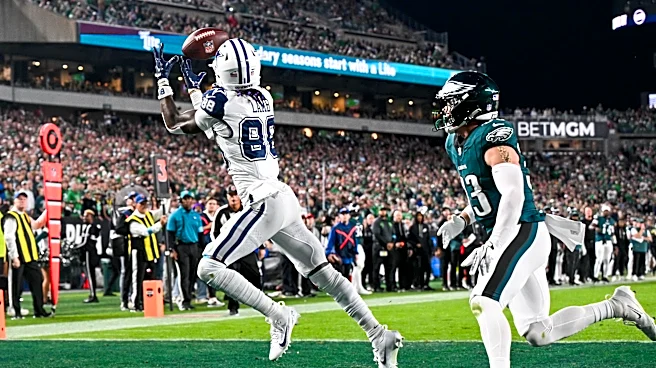



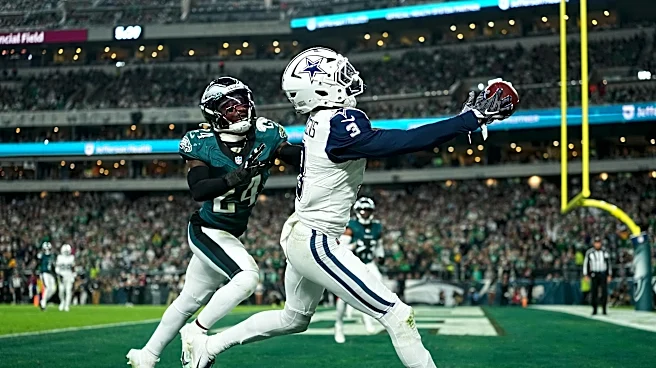

The Cowboys ran over Philadelphia in Week 7, after six weeks of the Dallas Cowboys struggling to establish a consistent running game. That inconsistency left QB Dak Prescott to carry an offense that too often became predictable.
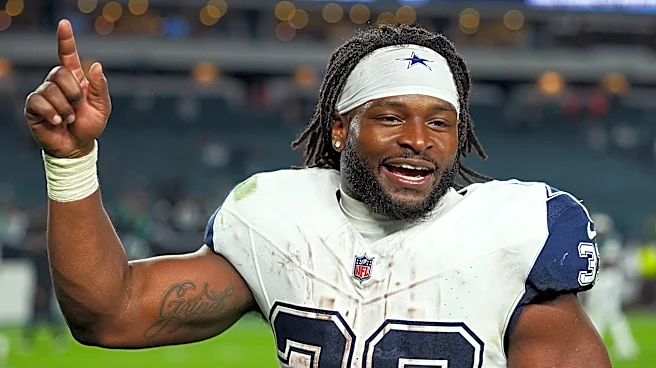
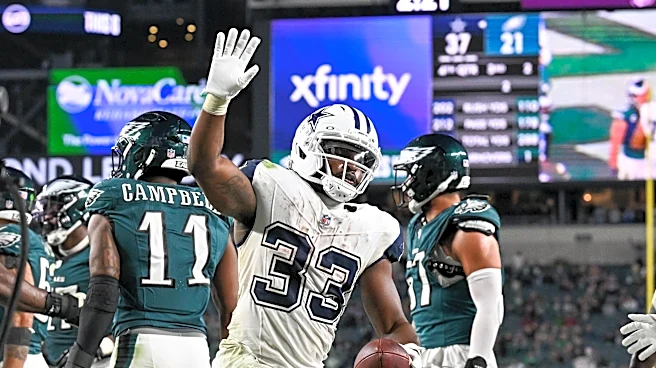
On Monday night, Brian Schottenheimer finally committed to a different approach, and Javonte Williams showed exactly what this offense can look like when Dallas gives its running back room to work. Williams delivered a career night against the Philadelphia Eagles, rushing
for 155 yards and a touchdown as the Cowboys earned a much-needed 38-21 divisional victory.
Williams’ performance was not just a personal milestone. It was a reminder of what Dallas had been missing throughout the first six games of the season: a physical, dependable rushing attack capable of controlling the pace, wearing down a defense and opening opportunities for the passing game.
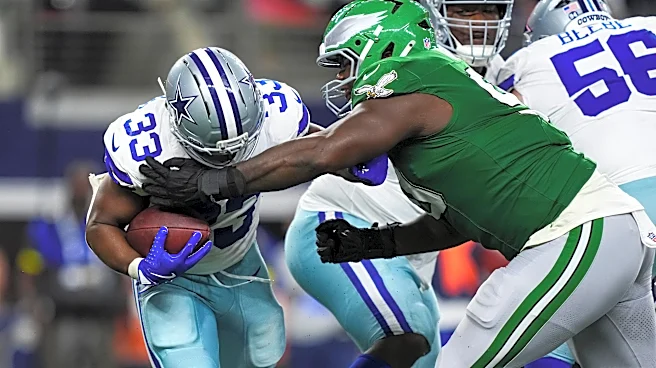
The Cowboys entered Monday averaging just 76 rushing yards per game, ranking near the bottom of the league. Against Philadelphia, they piled up 204 rushing yards on 38 carries, averaging 5.4 yards per attempt. That is the kind of offensive identity Dallas has been searching for, and Williams was at the center of it.
Williams showed what happens when Dallas commits to the run
Williams finished the game averaging 6.2 yards per carry. His workload was just as important as his production. After receiving only 11 carries against Green Bay the previous week, Williams finally got the repeated opportunities needed to establish a rhythm and punish a defense that struggled to adjust.
The fourth-quarter numbers tell the story. Williams ripped off a 34-yard run that helped Dallas extend its lead, then continued to move the chains as the Cowboys leaned on the ground game to close out the victory. With the Eagles struggling to get off blocks, Williams repeatedly found open space and made Philadelphia pay.
Troy Aikman even pointed out just how thoroughly the Cowboys’ offensive line had won the battle up front. On one run, left guard Tyler Smith was left looking for someone to block as the running back raced past him into the open field. It was a striking image of the control Dallas had established at the line of scrimmage. It feels like forever since we’ve seen that.
Williams deserves plenty of credit for taking advantage of those openings. He ran with decisiveness, showed the acceleration to turn successful blocks into explosive gains and continued to make positive plays as the game wore on. But the performance was also a testament to the offensive line, which created the kind of running lanes that had been largely absent during the Cowboys’ early-season struggles.
The running game made life easier for Dak Prescott
The most important consequence of Williams’ performance may have been what it did for the rest of the offense. After Prescott threw four interceptions across the previous two games, Dallas needed a more balanced attack that did not require its quarterback to manufacture every scoring opportunity.
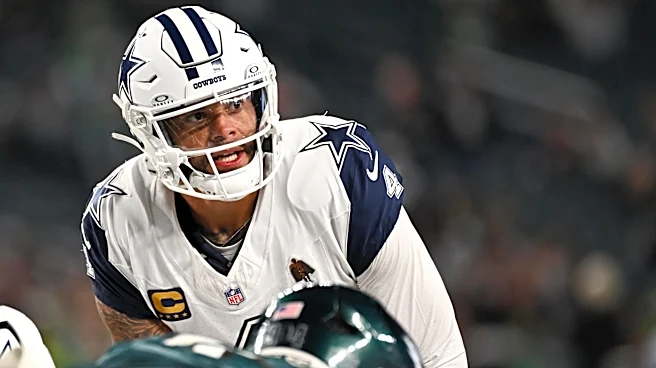
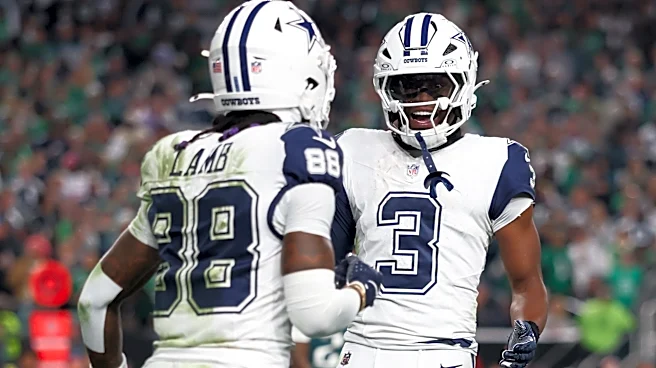
Prescott responded with 212 passing yards, three touchdown passes and zero interceptions, finishing with a 118.1 passer rating. He connected with CeeDee Lamb for two touchdowns and George Pickens for another, while the running game forced Philadelphia to respect the possibility of a handoff on every possession. Dallas finished with 416 total yards and scored on seven of its nine possessions. That is a significant improvement for an offense that had scored just 29 combined points in its previous two games.
The balance was the difference. When Williams and the offensive line consistently gained yards on the ground, Prescott did not have to drop back and face an obvious passing situation on every important down. The Cowboys could use play-action, attack mismatches and give their receivers more opportunities to make plays against a defense that could no longer focus exclusively on the passing game.
Williams had his first game of the season with more than 20 carries, and Dallas looked far more comfortable offensively as a result. It is a reminder that play-calling is not only about finding the perfect individual play. It is also about giving your best players enough opportunities to influence the game. Williams had been productive in scoring situations before Monday, but he had not consistently received the volume needed to take over a game, until Monday.
This needs to become the Cowboys’ identity
One victory does not erase the problems Dallas showed in its first six games. The Cowboys still have to prove they can execute consistently, avoid costly penalties and produce this kind of performance against opponents that aren’t as banged up as the 2026 Eagles.
Even so, the Eagles still had much of their starting defensive front and secondary available, including Jalen Carter, Jordan Davis, Quinyon Mitchell and Cooper DeJean. Yet Philadelphia failed to record a sack, a quarterback hit or a tackle for loss against the Cowboys’ offense. Dallas controlled the line of scrimmage, protected Prescott and repeatedly created opportunities for Williams to make explosive plays.
Williams’ career night was the headline, but the larger takeaway is about how Dallas should operate moving forward. The Cowboys have the talent to be dangerous through the air, and Prescott remains capable of producing big numbers when the offense is functioning properly. What they needed was a way to make the entire offense work together. Against Philadelphia, they found it.
Now the challenge is to make sure this was not simply a one-night breakthrough. If Williams continues to receive a meaningful workload and the offensive line keeps creating room to run, the Cowboys have a much clearer path toward becoming the balanced offense they expected to be when the season began.