
The in the lab feature has just gotten off the ground, but we have already had a number of excellent questions and comments. We are here to talk Astros baseball and do so in a systematic way, but we are also here to learn more about the game and the numbers that people use. One of the questions was about BPO itself and whether it has stood up to rigorous analysis. Obviously, we are early in the process, but what we can do is look at other numbers that have been tested and compare BPO to them.
So,
in this edition we will be adding OPS+ and wRC+. OPS+ can be found at baseball-reference.com. Players are compared with the league average after ballpark effects are considered. That is one major difference with BPO. For the time being, it is raw data, so it does not include park effects. However, that can be added down the line. wRC+ is a Fangraphs statistic that is similar to OPS+ except it does include a base running component. Again, it is normed with ballpark effects. In each and every case, 100 is average and everything above 100 is good and everything under 100 is below average.
BPO will be different because we did not include every single big league hitter in the matrix. We have exclusively only included players with 200 or more plate appearances. Therefore, our medians will be higher. I have also included the positional median because it makes little sense to compare a catcher to a first baseman. Since we are only looking at regular players it makes more sense to compare them with regular players. For third basemen, the median BPO was a mere .666 which comes in under the overall median of .678.
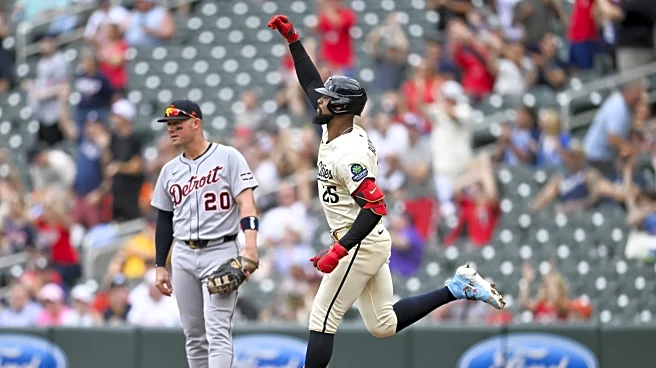
We should start with the differences in the numbers. Much of that can be explained with the difference between the overall major league average and the average of just looking at regular players. The other parts can be explained through the difference in home ballparks. In particular, Correa spent much of the season in Minnesota. Target Field was a 102 which means that two percent more runs were scored there than the average big league park. Daikan Park was exactly average with a 100 park factor. So, Correa might have had an overall park effect of 101.
I should note that his BPO as an Astro was .711. So, obviously, we could be a little more bullish on him than the overall season numbers would indicate. That being said, it has to be somewhat disappointing to see that the player with the third highest BPO on the trade block. Sometimes, that can be about expecting regression. Sometimes it is simply about players like him being more marketable than the alternatives.
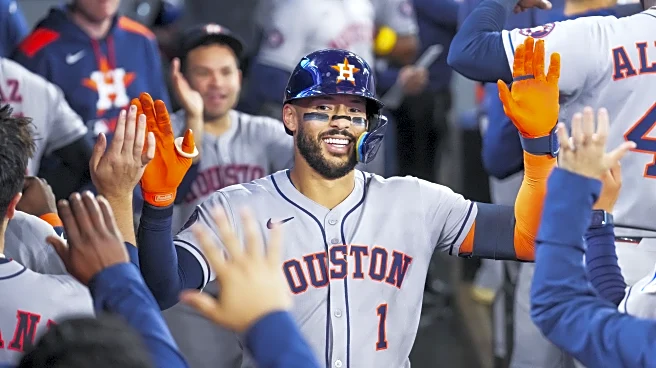
However, we cannot get around how the Correa trade complicates things for the Astros. Like a fraternity party, making deals like this can be a lot like binge drinking. Like most Astros fans, I was pretty giddy when the move was first announced. One of our favorite sons was coming home. Yet, it is impossible to ignore the fact that his presence complicates things. Isaac Paredes needs to play somewhere. He has better numbers than every other infielder except Jeremy Pena, but as we sit, he does not have a spot.
The other complication is that Correa’s production has been very volatile since he left Houston in 2021. He led off his Twins career with a strong .784 BPO in 2022. He followed that up with a puny .625 the next season. Some of that can be blamed on injuries. Then, he had what could be the best season of his career in terms of percentage numbers. He had a .908 BPO in 2024, but it came in an injury shortened season. So, which Correa will the Astros be getting?
If we look at the glass as half full, we can hope that a move to third base in addition to being in familiar surroundings will make him more durable and more successful. He himself said that playing third was a lot less taxing on him than playing shortstop. Yet, we cannot get past the fact that he is not getting any younger and he has had injury problems for nearly his entire career.
Unfortunately, statistics are not equipped to deal with the impact of a Carlos Correa by themselves. Obviously, there are clubhouse considerations like leadership and chemistry. He was a very vocal and impactful leader the first go around and he can be again. Moreover, there is the added benefit of watching a potential Hall of Famer finish his career with the team he started with. He is sitting at 45.7 BWAR for instance. I have looked at his Hall of Fame credentials before. He is not there yet, but if he gets between ten and 15 more WAR over the next five or six seasons he could be a borderline Hall of Famer. Add to that whatever postseason numbers he could add and he could very easily become a borderline Hall of Fame candidate.
He currently sits 35th in the Hall of Fame index amongst shortstops. Give him just ten more BWAR and FWAR and becomes similar to Luis Aparicio and Bert Campaneris. If he added 15 more WAR in both sources then he would be similar to Willie Wells, Joe Sewell, and Joe Tinker. All of them are Hall of Famers. The Astros could definitely get some marketing out of both Correa and Altuve playing together and inching their way towards Cooperstown.
Unfortunately, watching both add to their Hall of Fame resumes don’t necessarily add more wins to the 2026 ledger. That is the balance you play when you make moves for emotional reasons. It might increase fan interest and attendance some. It might increase revenues, so it is not nothing. Every organization should consider the fan experience and the relationship certain players have with the community. The Astros will make the same kind of decision when they decide whether to bring Justin Verlander back or not. Eventually, there are too many instances where emotions take over. Was Correa a bridge too far? It’s impossible to know at this point.