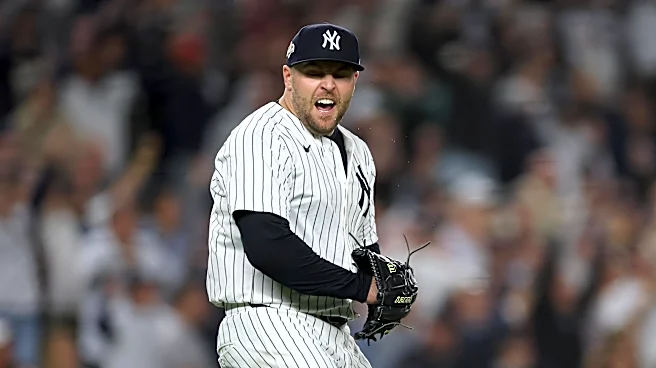





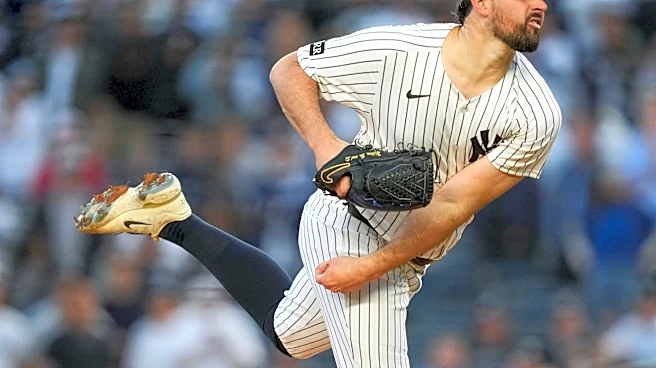
The Yankees bullpen has stabilized somewhat of late, posting a sub-1.00 ERA in the month of May. A lot of this is driven by a left-on-base rate of around 90-percent, which is likely to regress from its unsustainably high point. All the same, leads have felt safer than in the first few weeks of the season, and a big part of that is closer David Bednar settling into his season, posting a 2.08 ERA in his last eight appearances as opposed to a much more uneven 5.40 ERA in his first seven.
We join Bednar
with one out in the eighth of the series opener against the Rangers. The bases are loaded after Fernando Cruz hit a batter and surrendered a single and a walk, and Bednar is tasked with not only escaping this bases-loaded jam but also completing the five-out save. He has a three-run cushion thanks to a pair of doubles from Cody Bellinger and home runs from Ryan McMahon and Jazz Chisholm Jr., but none of that is safe with the Corey Seager at the plate as the potential go-ahead run.
Bednar has typically thrown a first-pitch curveball to most of the batters he has faced this year so Seager is surely hunting the breaking ball. Perhaps Bednar and Austin Wells anticipate this, because they instead throw a first-pitch four-seamer.
Indeed, it appears Seager is hunting the curveball here, because he is completely fooled by the elevated heater and fires an awkward emergency hack check swing sword for strike one. It’s such savvy pitch from Bednar, starting down the same tunnel as a curveball might if he was trying to throw one in the zone to steal a called strike one.
Now that Seager has shown a willingness to chase the heater above the zone, and considering how Bednar executed the first pitch to the precise target he intended to hit, the logical move is to see if he can hit the exact same spot with another four-seamer.
That’s just what Bednar does, and Seager cannot stop himself from chasing again. The four-seamer looks so good out of Bednar’s hand, but its borderline elite induced vertical movement mean it never drops into the zone the way the hitter is expecting.
Two fastballs and two pieces of perfect execution — no reason for Bednar to deviate from course here. Keep climbing the ladder and see if Seager will get himself out.
This four-seamer sails a bit to high to elicit a chase from Seager. It’s not a complete waste pitch — it’s better to miss to high than in the zone, plus it keeps Seager’s eye level elevated above the zone.
I was fully expecting Bednar to go to the off-speed here, partially to leverage the three straight elevated fastballs he threw into a chase on something with downward breaking movement below the zone and partially to reset Seager’s eye level to low which would allow Bednar to go back upstairs if he misses. However, Bednar is apparently feeling his four-seamer, because he throws a fourth straight one targeting the location as he has the whole encounter.
What a huge pitch for the crucial strikeout! Bednar nails his spot above the zone up and in. Seager never made the adjustment to this pitch and whiffs underneath, putting Bednar one out away from escaping the inherited jam unscathed.
Here’s the full sequence:

There are several things I love about this sequence. First, look at that tight grouping of fastballs on the pitch chart — that’s commanding your spot. Second, this encounter tells me that Bednar has regained confidence in his fastball. He had been throwing mostly curveballs and splitters in recent appearances after his four-seamer got tagged in the first handful of his appearances. His fastball is excellent in its own right, and it makes his secondary pitches all the more deadly when he’s commanding the heater to the edges of the zone.
Finally, this exemplifies something Joe Girardi was talking about on the broadcast. When calling pitches, he employed a two-part philosophy. He either called pitches to a hitter’s weakness, knowing he could exploit a certain pitch or location to induce a whiff or weak contact, or he called pitches to a hitter’s strength but thrown to a spot where it’s hard to do damage. Bednar goes with the latter route in this sequence against Seager. The scouting report reveals how well Seager hits elevated fastballs. Bednar therefore throws the pitch that will make Seager’s eyes light up, but in this case elevated too high for Seager to make contact but close enough to the zone that Seager can’t help but chase. This tells me that Bednar, Wells, and the rest of the Yankees’ pitching room is doing their homework on all the hitters they face, which helps to explain the stellar start to the season by pretty much the entire staff.